Blogging by Numbers

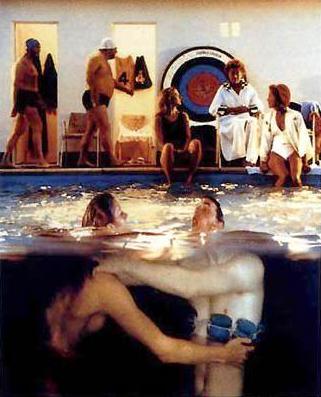
Drowning by Numbers Poster
1988 Poster of Drowning by Numbers
by Peter Greenaway
(With number 44 in the background)
In his 1988 movie 'Drowning by Numbers', British Director tells the strange story of three women belonging to three generations in a same family, who bear the same name and cause their husbands to drown, one in a bath, one in the sea, one in a swimming-pool.

The result is a fascinating, intriguing, weird black comedy. The local coroner is drawn into a plot to disguise the murders. As the plot progresses, his son explains the rules of various games played by the characters as if they were ancient traditions, while the numbers 1 to 100 successively appear in ascending order, either seen in the background or spoken by the characters.

Fear of Drowning by Numbers
Most of the games played in the film were invented for its purpose, using rules that are so complex that Greenaway later published a whole book dedicated to explaining them, entitled 'Fear of Drowning by Numbers'. That a whole book was needed to explain rules of a movie built all around constraints reminded me of the works by members, especially 'La Vie Mode d'Emploi' (Life: A User Manual) by .

, the Ouvroir de Littérature Potentielle (Workshop of Potential Literature), is a group of writers and mathematicians who seek to create literary works using constrained writing techniques. They use constraints as a means of triggering their ideas and inspiration.
Quand tout est permis, rien n'est possible.
If everything is allowed, nothing is possible. ()
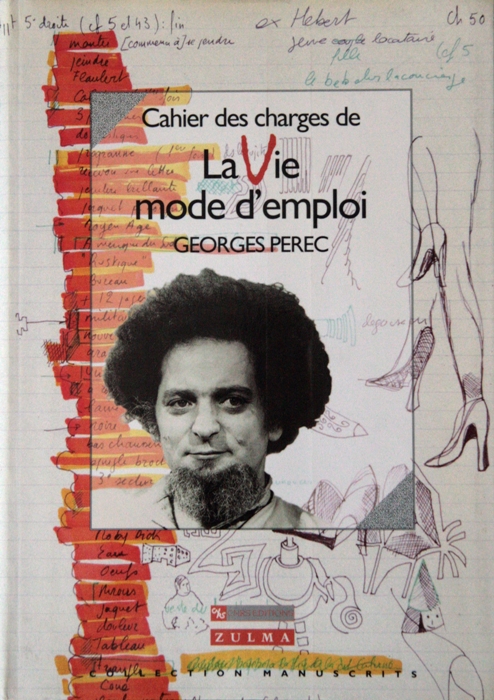
Georges Perec especially, certainly the most famous OuLiPo member with Raymond Queneau and , wrote the best part of his work using lipograms, palindromes and various kinds of constrained writing. His masterly book, 'La Vie Mode d'Emploi' (Life: A User Manual) is a complex (patch)work built according to a complex plan of constraints.

Cahier des charges de La Vie Mode d'Emploi
This fascinating book tells the lives and thoughts of the inhabitants of a fictitious building in Paris. Although it is a book that can be read and enjoyed without being concerned with the constraints, one quickly discovers that there are complicated games going on all over the place, and try to find the constraints like a detective. You will only find a small part of them anyway: here also, a whole dedicated book had to been published, that contains their inventory.

Unlike 'Fear of Drowning by numbers' though, the 'Cahier des charges de La Vie Mode d'Emploi' — the title means 'Specifications of Life: a User Manual', yet the book has not been translated into English — has not been published by its author, but exegetes after he died.

I have blogged using constraints myself in a couple of occasions, for fun and as a help at times of lack of inspiration. I assigned myself the thematic constraint 'Write about the 5 senses and Paris' once. It ended up in five blogs about , , , , and . Another time, it was 'Use the names of at least 10 movies by Alfred Hitchcock'. I am not sure anyone noticed the titles hidden despite several clues, but I enjoyed writing it.
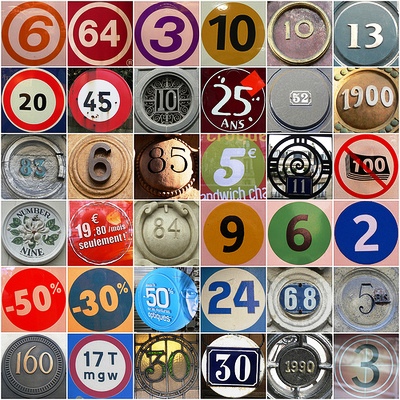
Numbers
From now on, I will obey the constraint 'Write blogs on topics one can associate with successive ascending numbers'. Hopefully, this constraint will stimulate my imagination. We'll see until what number I succeed in following the rule, be it agreed that I will probably interpolate 'normal' blogs between the 'blogs by numbers' sometimes, in particular in response to a special event or for an anniversary.

Historic Pictures

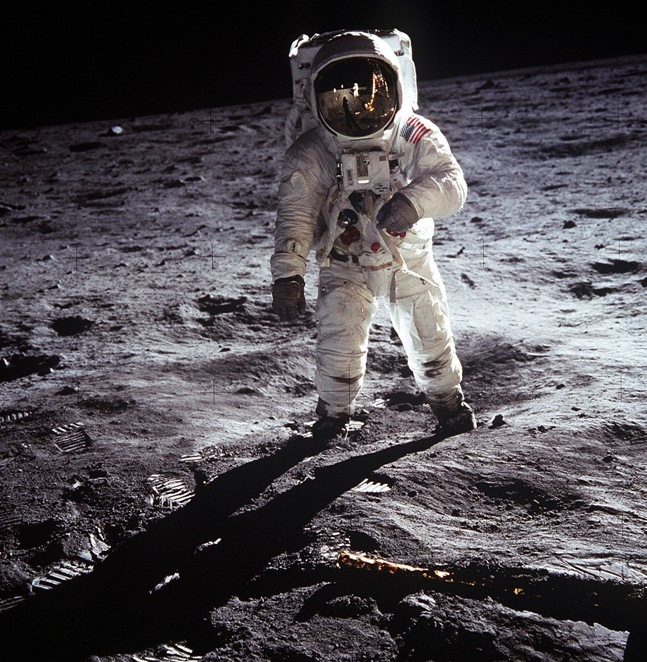
Buzz Aldrin on the Moon

Several years ago, I was given a book entitled Chronique du vingtième siècle (The 20th Century Saga), edited by newspaper.

It is a huge book (1350 pages, A4 size) that contains excerpts of most relevant articles published in French newspapers in the 20th century. 'Sarajevo: Archduke shot dead' (June, 1914); 'Lindbergh flies over the Atlantic' (May, 1927); 'Paris is now free' (August, 1944); 'Explorers on the Moon' (July, 1969), and so on.

You have a strange feeling when you read articles written many decades ago, on the very day historic events happened. They fill in a gap between personal experience and what you have been told. Obviously, the journalists who wrote the articles could not know about a future that is part of a well-known past for present readers. Yet, paradoxically, such a lack of knowledge adds a lot. When an event happened long time ago, before you were born, or able to understand it, you see it as a piece of History; almost an abstraction. On the opposite, when you can remember a event, how you heard of it, what you thought about it at the time, it is part of *your* history. Quite not the same.

Churchill, Roosevelt and Stalin in Yalta

When you read articles in such a book, you feel as if this gap has been filled in. Past events become more real, because you hear about them happening 'live'. Furthermore, beside words, you see pictures, some of which are known throughout the world: Churchill, Roosevelt and Stalin in Yalta. Edwin 'Buzz' Aldrin on the moon, photographed by Neil Armstrong who appears also as a reflection on the visor of Aldrin's helmet. Vietnamese girl , badly burnt, running down a road after a Napalm attack...

'Napalm Girl' by Nick Ut

It works with articles, it works with photos. It works also with films. I remember the year 1989 very well: resistance and demonstrations in communist countries, protesters in Tiananmen Square, the . The youngest cannot remember how hopeful we Westerners felt at the time, and how sad and angry after the massacre  in Beijing. Yet, thanks to the movie below — that I have displayed — they can feel the same as we did, 20 years ago exactly, when the desperate action of the testified about what the courage of a unique human being can be.

The Unknown Rebel

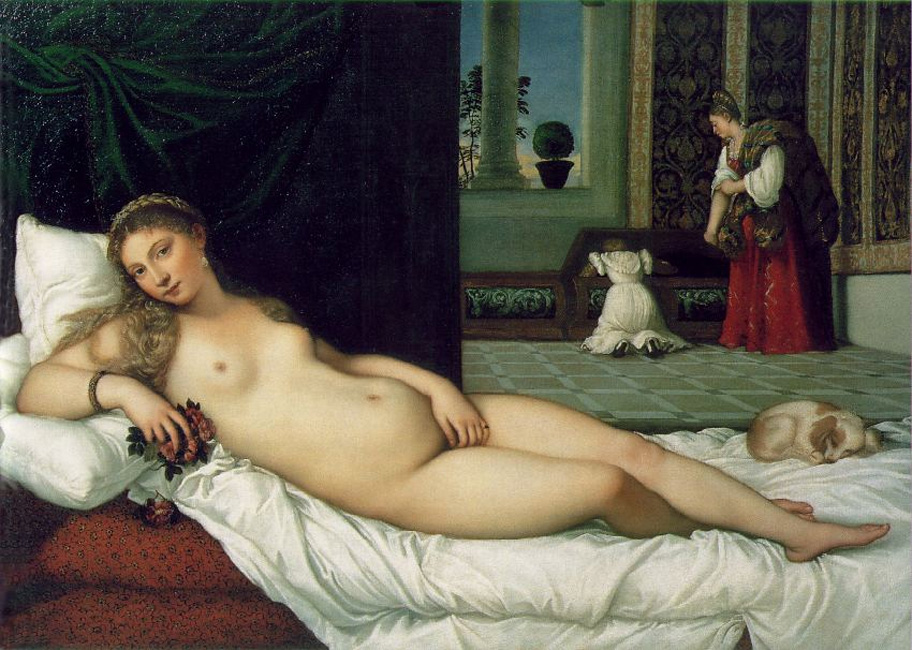
Venus of Urbino

Venus of Urbino by Titian
Venus of Urbino by Titian (1538)
Oil on canvas, 119 x 165 cm — Galleria degli Uffizi, Florence
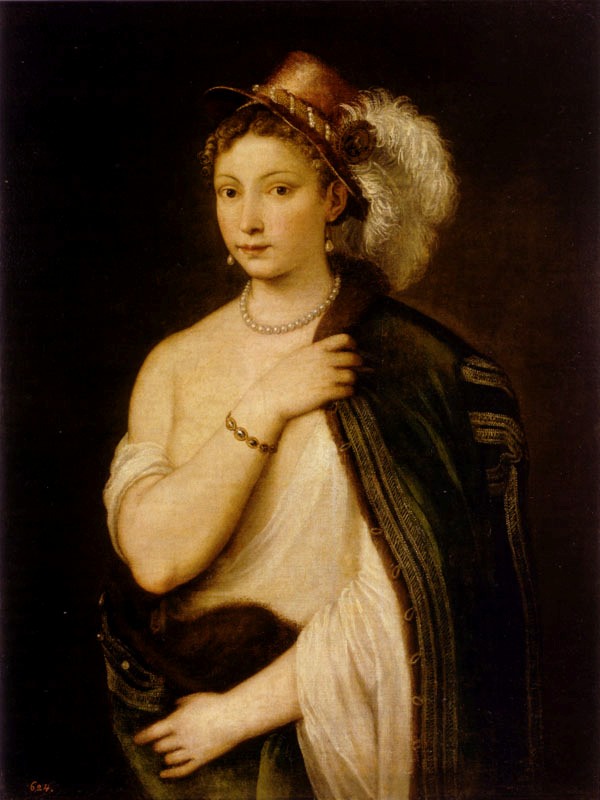
I had known her for years, we had never meet though. About two years ago, I had hoped we would, at an exhibition dedicated to Tiziano Vecellio, aka Titian, held in the Palais du Luxembourg, the Museum of French Senate in Paris.

Titian — Portrait of a young woman
Portrait of a young woman (1536)
Oil on canvas, 96 x 75 cm
State Hermitage Museum, St. Petersburg
Yet, she stood me up. Well, as a matter of fact, she came, but she came on disguise, dressed as the young lady with an elegant feathered hat on the right side. I once wrote a blog about our quasi-meeting.

Because she was not allowed to travel to Paris, I had to go to Florence, the city where she has lived for about four centuries. I am just back from a five-day vacation trip there. As you can imagine, my eyes are still full of a lot of wonderful images: paintings, frescoes, statues, by Botticelli, Giotto, Lippi, Fra Angelico, Leonardo, Michelangelo, Donatello, and so forth, displayed in many places in the city. I am going to blog about them soon, yet on my first day in Florence the main thing was: I went to the Uffizi Gallery and I have met her at last!
Even the most perfect reproduction of a work of art is lacking in one element: its presence in time and space, its unique existence at the place where it happens to be." (Walter Benjamin)
In 'Little History of Photography' first, then in his famous essay The Work of Art in the Age of Mechanical Reproduction, Marxist philosopher Walter Benjamin used the word aura to describe the specificity of the work of art, which is unique, linked to a special place, and is part of history. According to him, and without going into details, mechanical reproduction of artworks by means of modern techniques such as photo and cinema frees them from place and ritual, and results in a loss of their aura. Although I don't agree with many developments of Benjamin's theories in terms of mass culture, I did feel Venus' aura in the Uffizi Gallery in a much deeper way than when I looked at her reproductions.

Thousands of pages have been written about this great painting. There have been endless commentaries and discussions about the meaning of Venus' open eyes that look directly at us, her left hand location, the bouquet in her right hand, the dog asleep at her feet, the two handmaidens in the background rummaging in what seems to be a wedding chest, the plant pot near a column on the window ledge, and many other details in the painting.

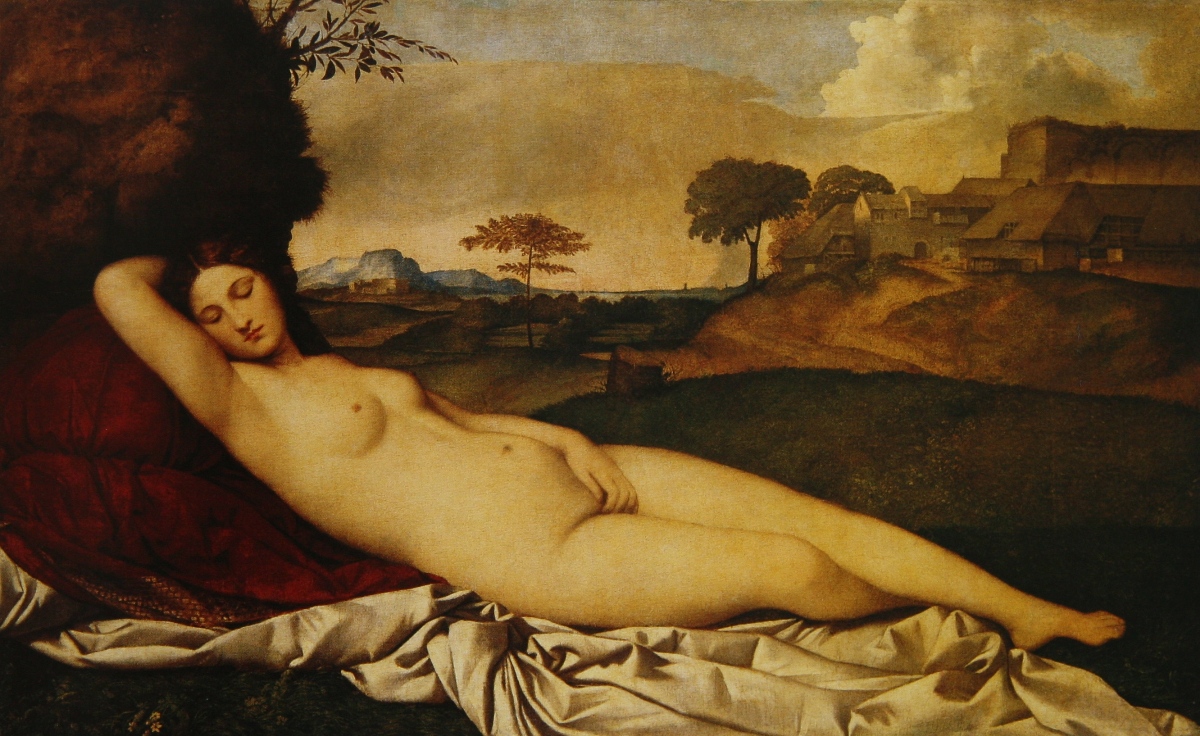
Sleeping Venus by Giorgione
Sleeping Venus by Giorgione & Titian (1510)
Oil on canvas, 108 x 175 cm — Gemäldegalerie, Dresden
I won't add to so many erudite works. To me, the Venus of Urbino is simply one among the most beautiful pieces of arts ever, as well as a big step towards modernity in painting. There is little doubt that Titian took the topic of the Venus of Urbino from a painting by Giorgione, the Sleeping Venus (also known as the Venus of Dresden), he himself finished after his friend and master died.
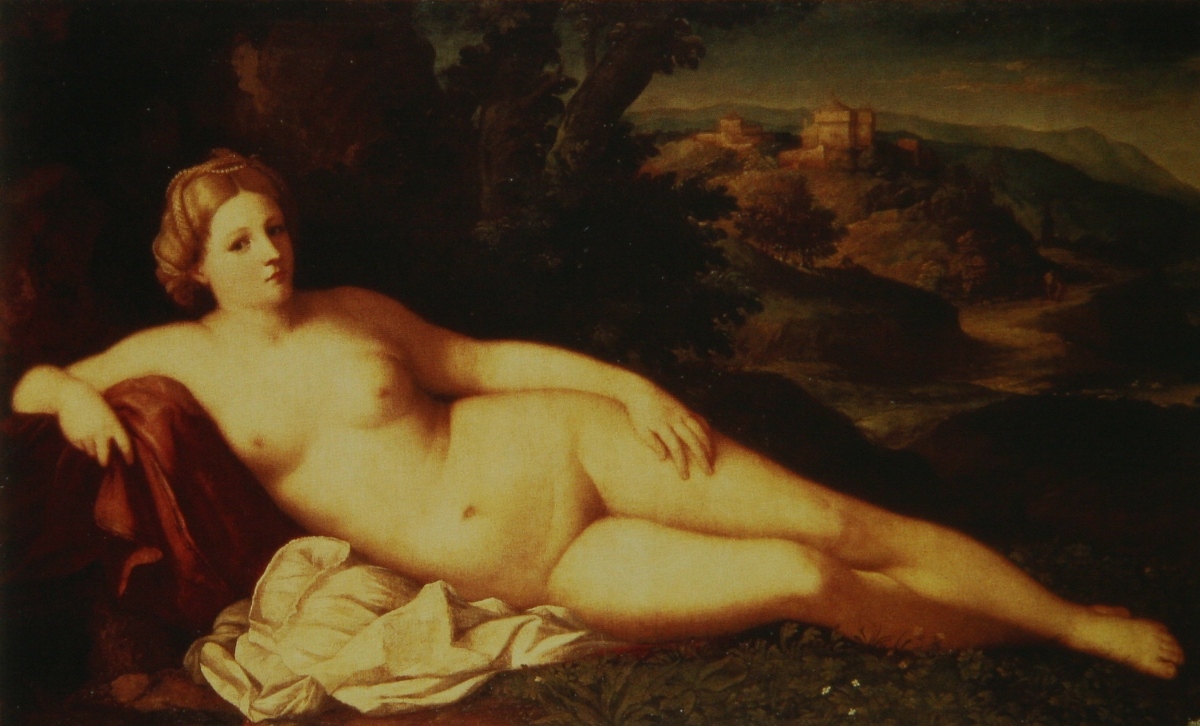
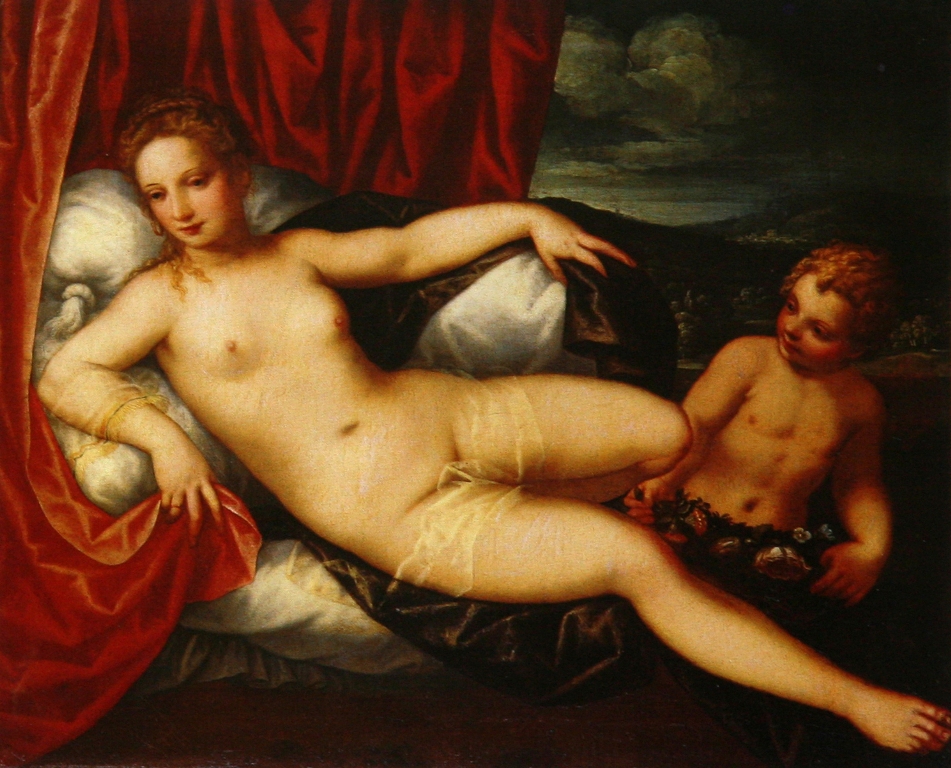
Venus by Palma Vecchio
Venus  by Palma Vecchio (ca 1520)
Oil on canvas, 113 x 186 cm — Gemäldegalerie, Dresden

Perhaps he knew also of the Venus by Palma Vecchio, where the nude woman, who lies in the country like in the canvas by Giorgione, gets the Venus of Urbino's wide open eyes.

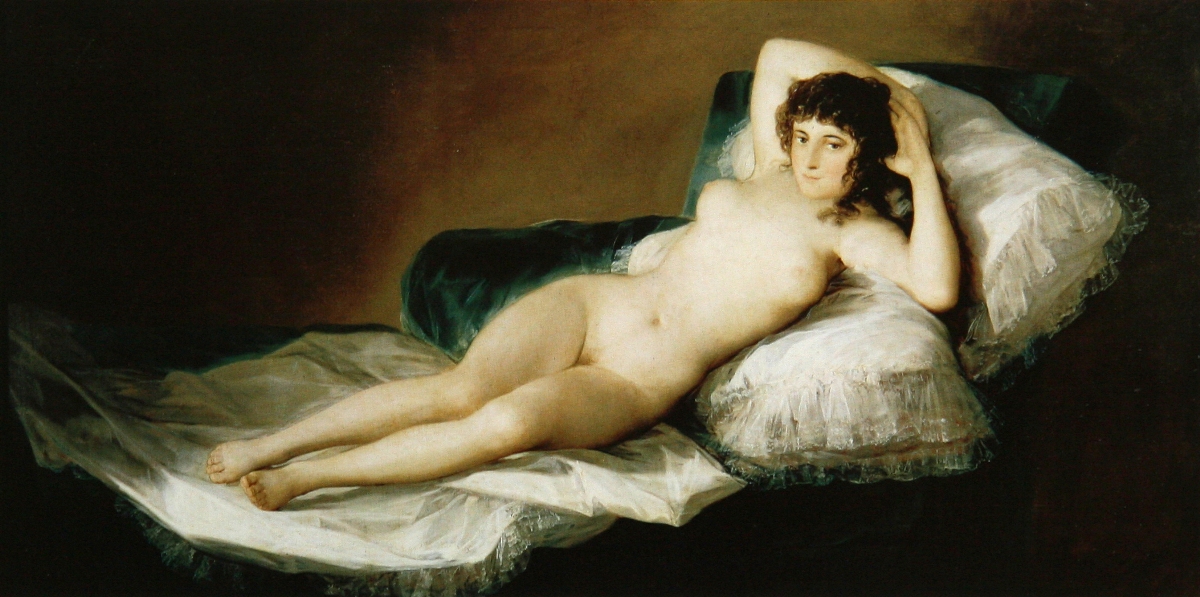
Titian's Venus of Urbino in turn inspired countless painters over the centuries in one of major topics of Western Art: the reclining female nude. It includes such huge painters as Francisco de Goya and, especially, Édouard Manet when he painted Olympia, more than three hundred years later.

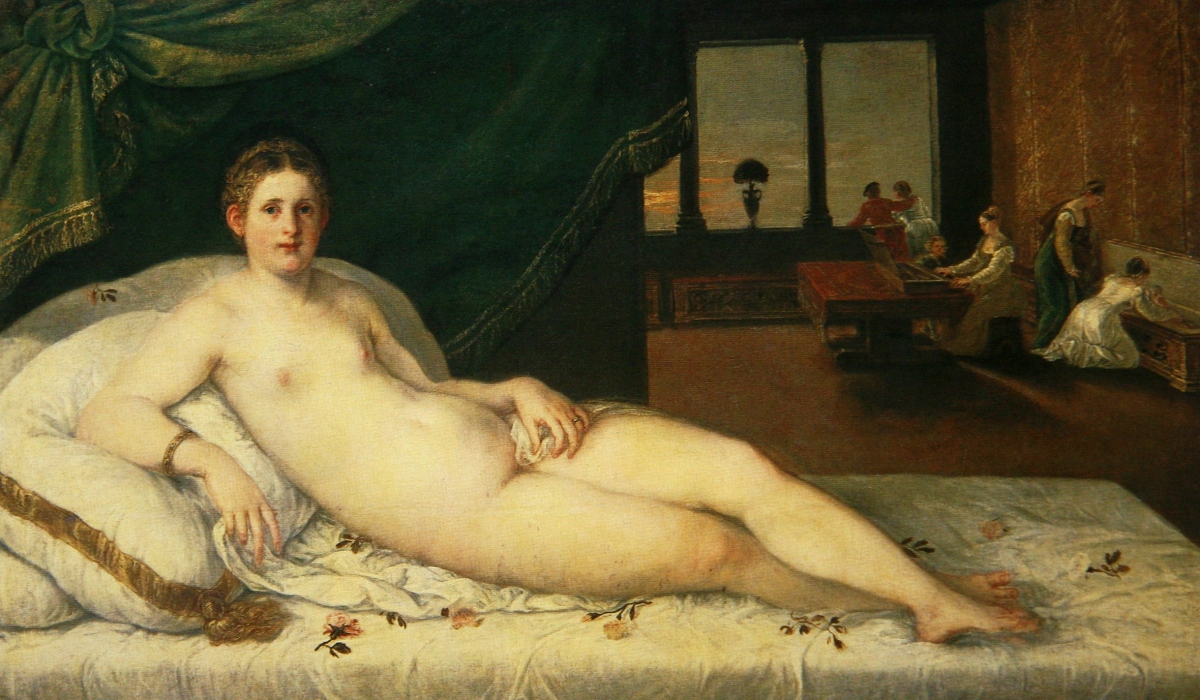
Venus by Lambert Sustris
Venus by Lambert Sustris (1558)
Oil on canvas, 116 x 186 cm — Rijksmuseum, Amsterdam
Venus and Cupid by Johann Rottenhammer
Venus and Cupid by Johann Rottenhammer (ca 1610)
Oil on canvas — Gemäldegalerie, Dresden
La maja desnuda by Goya
La maja desnuda by Francisco Goya (1805)
Oil on canvas, 87 x 190 cm — Museo del Prado, Madrid
Olympia by Manet
Olympia by Edgard Manet (1863)
Oil on canvas, 130 x 190 cm — Musée d'Orsay, Paris

Persepolis

Persepolis by Marianne Satrapi
Marjane Satrapi is an Iranian/French graphic novelist. She was born in 1969 in Rasht, in the North of Iran, and now lives and works in Paris. She became famous because of her critically acclaimed autobiographical graphic novels Persepolis, which describe her childhood and adolescence in Iran and Europe.

Persepolis graphic novels were adapted by herself and Vincent Parronaud into an essentially black-and-white animated film bearing the same name. The movie was called 'islamophobe' and 'anti-iranian' by the Iranian President Mahmoud Ahmadinejad, thus it is not allowed for broadcast in Iran. Yet it is not a political movie. It deals with life in the real world. It is a work of poetry for all of us to delight in.

Image
When the movie starts, Marjane is a child. She lives in Tehran, in a progressive family involved with the socialist movements. She attends the Lycée Français in Tehran, and witnesses the growing oppression of civil liberties and the everyday-life consequences of Iranian politics. Then comes the Iranian revolution, the fall of the Shah, and the regime of Ayatollah Khomeini. After days of elation, disillusion follows quickly. Political opponents are put in jail again, many are executed, and islamist rules are imposed. Then the Iran-Iraq war starts. At the age of 14, her parents send Marjane to Vienna, Austria, to flee the Iranian regime. She discovers Europe, boys, and loneliness. She comes back to Iran.

The movie relates with realism and humour Marjane's years of hardship, she shared with million young Iranians of the time: overnight obligation to wear a veil, search for forbidden pirated audio cassettes, secret parties with friends where you dance and drink alcohol despite police raids.

Persepolis was awarded the Special Jury Prize in Cannes Film Festival in May 2007. Last Year, it was given the Better First Movie Award in the Cesar Award, the National film award for France. It also competed in Hollywood for the Oscar, as a nominee for best animated film, but had no chance against Disney's blockbuster Ratatouille.


Persepolis Trailer


Persepolis is a simple story told by simple means. It consists essentially of a series of monochrome drawings, their bold black lines washed with nuances of gray. Its flat, stylized depiction of the world — the streets and buildings of Tehran and Vienna in particular — turns geography into poetry. Yet it is good to be reminded that animation is rooted not in any particular technique, but in the impulse to bring static images to life.

Lily of the Valley

Lily of the valleyAlthough it was pretty early when I left home this morning, there were people on the sidewalks already, at every street corner. You may find it strange to hear that Frenchmen were awake early on the morning of a national holiday, especially on May Day: it is also Labour Day in France and many countries, a day where most people don't work then. There was good reason for it though: these people were vendors of lilies of the valley.

Lily of the valley, “le muguet”, is not any flower for the French. Although it is native to Japan, it became acclimated to Western Europe many centuries ago. In medieval France, it was considered the symbol of spring and nature's revival, and the emblem of a joyous, more-or-less pagan holiday, celebrating the return of nice weather and promises of spring's planting, and seeking Heaven's favour for harvests to come.

On May first, 1561, after he was given a sprig of Lily of the valley as a lucky charm, French King Charles IX decided he would give a sprig to every lady in his court on May 1st, every year from then on. A tradition was born. In France, is not permitted to sell things in the streets without a licence, but this is an exception: thanks to the nice tradition, everyone, not only florists, is allowed to sell lily of the valley in French streets on May Day.

Everywhere today, you will see people clutching their lily of the valley, to be offered to their wife, husband, girlfriend, boyfriend, parents, dinner host, boss, secretary, and so forth. As for me, I bought a couple of flowers this morning, and picked the sprig above on the internet for you. Happy May Day, and Good Luck!
[repost]
Related Posts Widget for Blogs by LinkWithin

Home

Atom
Feed
Timeless Music
The Magic Flute
by W. A. Mozart


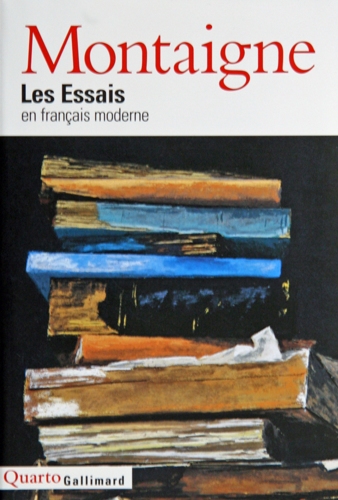
Timeless Reading
Les Essais
by Michel de Montaigne