Showing posts with label art. Show all posts

Art in San Diego

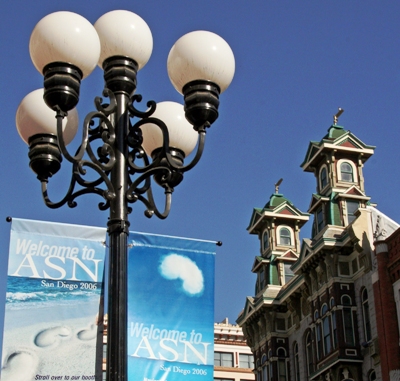
Building in Gaslamp
The twin-towered Louis Bank of Commerce
The annual conference of the ASN, , was held in San Diego two weeks ago.

There was a lot of interesting stuff for a nephrologist there. No topic for this blog though. Rather than blogging about work, I will rather show photos taken while I strolled around in the city's streets and museums, either on the day before the Convention began this year, either during a previous stay in 2006, when another ASN Renal Week was held there.

Architecture. There are beautiful buildings in San Diego. In Gaslamp quarter especially, many houses are remarkable. The twin-towered building above is located at 837 Fifth Avenue. Its top floor used to be a house of prostitution and the first floor an Oyster Bar where operated for a time.

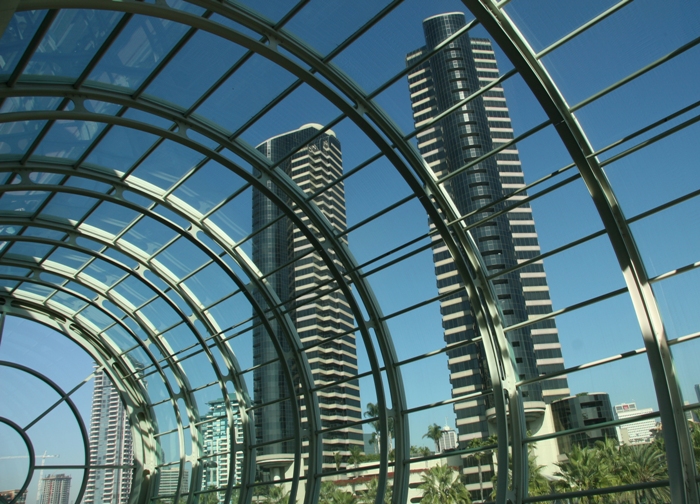
Inside the Convention Center
From inside the Convention Centre
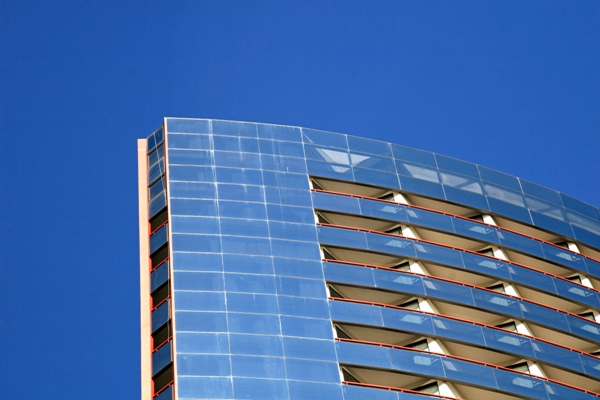
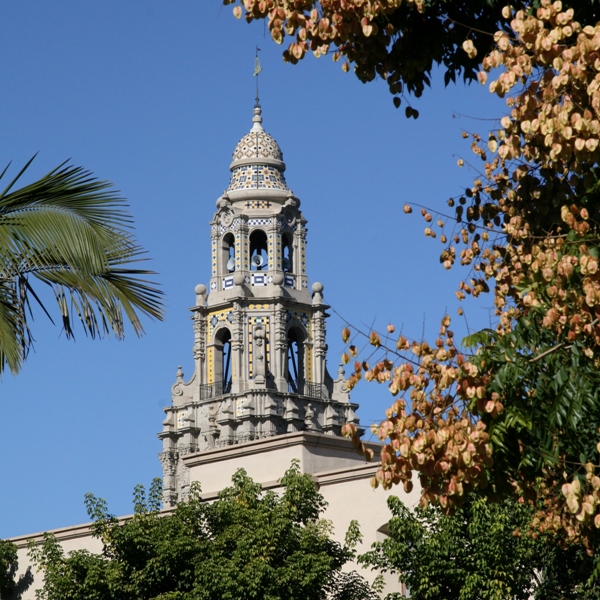
The Convention Centre itself is beautiful work, and many skyscrapers are beautiful as well. In Balboa Park on the contrary, buildings are essentially 20th century pitiful attempts to reproduce Spanish mostly, Tuscan sometimes, buildings of the baroque style... with stucco. The California Tower of the Museum of Man is nice though.
Marriott Hotel, San Diego
              Marriott Hotel
California Tower
California Tower
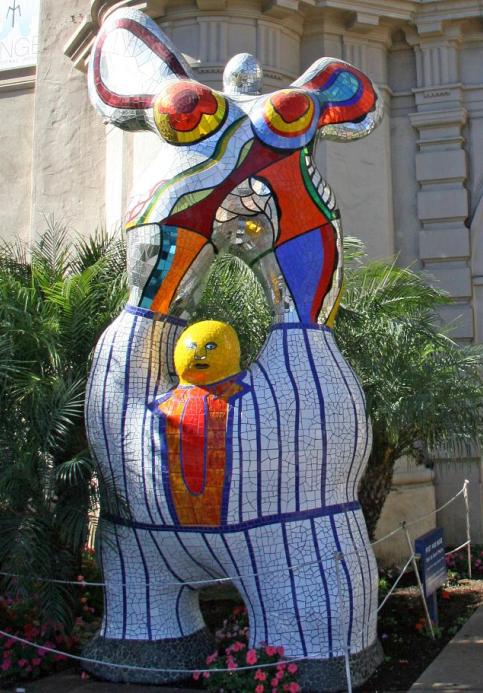
Sculpture. French sculptor lived in San Diego from 1994 to 2002. She had solvent-related emphysema, and enjoyed the paradise weather of the area. Yet it did not prevent her from dying of pulmonary failure.

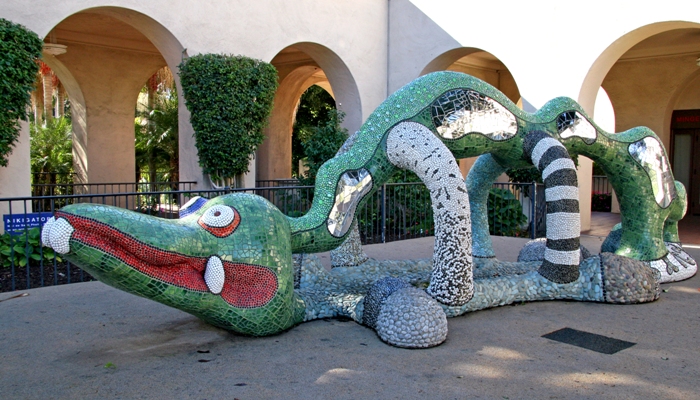
Two sculptures by her are exhibited in Balboa Park, in front of the : Poet/Muse and Nikigator. Children love the latter especially, some kind of dragon they are often brave enough to sit astride.
Poet and Muse — Niki de Saint-Phalle
Poet and Muse
Nikigator — Niki de Saint-Phalle
      Nikigator
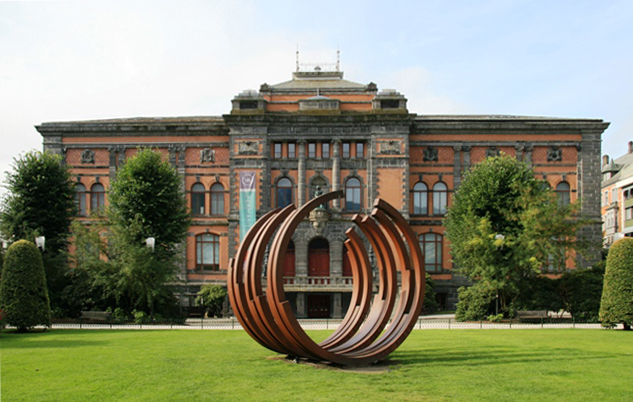
Bernar Venet's Arcs in Bergen (2006)
Bergen (2006)
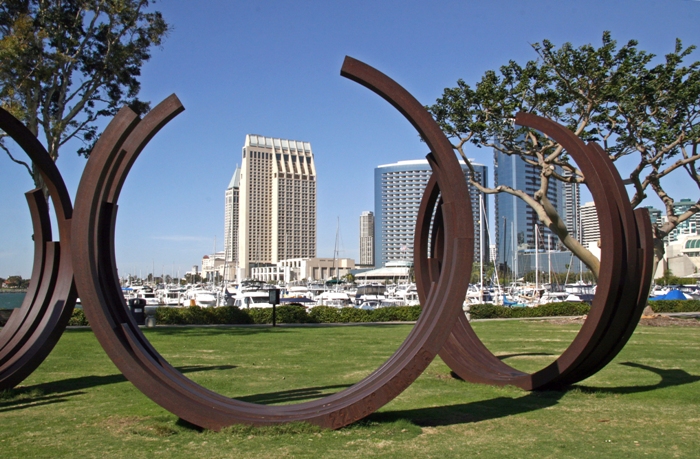
Bernar Venet's Arcs in San Diego (2009)
San Diego (2009)
Another French Sculptor, , was much in evidence in several places in the city, although temporarily only. You know what? I believe this guy is following me: everywhere I go, I see his iron arcs.

When I had vacation in Norway in 2006, they were exhibited in Bergen. When I attended the annual conference of the French Society of Nephrology in Bordeaux two years ago, they were exhibited there. And at present they are exhibited in San Diego too!

Sorry Bernar, but you'll have to resign yourself: I will never buy any, my kitchen is too small.

Painting. Close to the Mingei Museum in Balboa Park, the displayed artworks by Picasso and Miró especially, in a temporary exhibition. I liked a couple, essentially a drawing by Picasso of a Minotaur stroking a sleeping woman. There was an exhibition of Calder Jewelry too. I don't like Calder's mobiles that much. I didn't like his massive earrings, tiaras and necklace either.

Anyway, the main reason why I went to Balboa park was the Museum of Art permanent exhibition, with several Renaissance paintings I had been longing for three years to see again. There are paintings by Rogier Van Der Weyden, Giotto, Titian, and others, Flemish and Italian. Here come a few words about my three favourite.
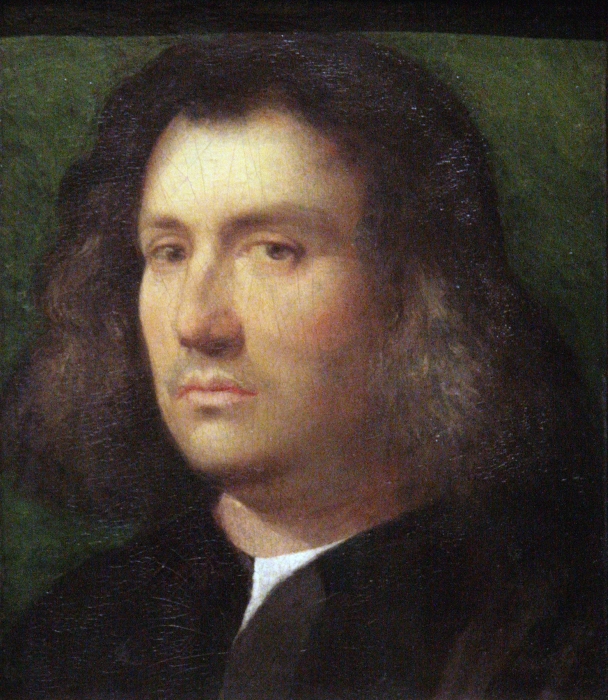
Giorgione — Portrait of a Man
Oil on panel, 1506

Portrait of a Man, by Giorgione.
This painting is one of the greatest Renaissance portraits in my opinion. The composition is closely cropped around the head of the sitter. The setting or props often used at the time to animate portraits are absent, yet the man's turning gaze and ambiguous expression make the portrait wholly engaging and alive.

Giorgione was friend of Titian (who finished his Sleeping Venus after his early death, a painting that foreshadowed my beloved Venus of Urbino — see a ). He was unprecedented in his ability to describe warm flesh and soft hair. Quoting , Giorgione's 'modern manner' sought to paint 'living and natural things', several years before arrived on the Italian scene.

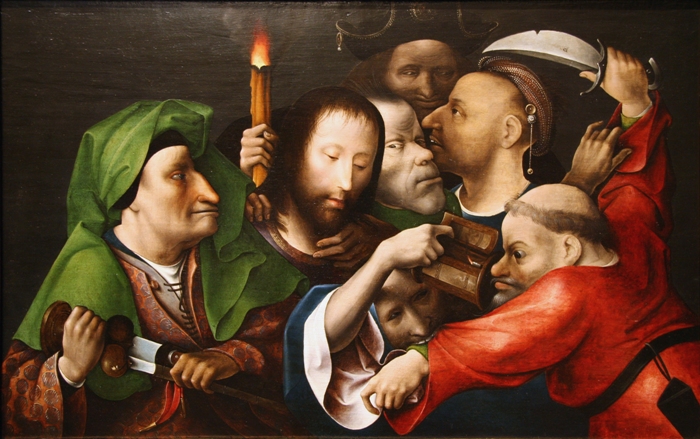
Hyeronimus Bosch — Arrest of Christ
Hieronymus Bosch — Arrest of Christ
Oil on panel, ca. 1516

The Arrest of Christ, by H. Bosch.
The painting depicts Jesus's arrest outside of Gethsemane. To the right, Peter raises a sword in defence of Jesus. He has just cut the ear from the High Priest's servant, who bites his arm and thrusts a lantern in his face. The grotesque figures of his tormenters contrast with the serene image of Jesus himself.

I love the way Bosch, in this painting, distorts the characters into something like caricature. Can you believe this was painted 500 years ago?
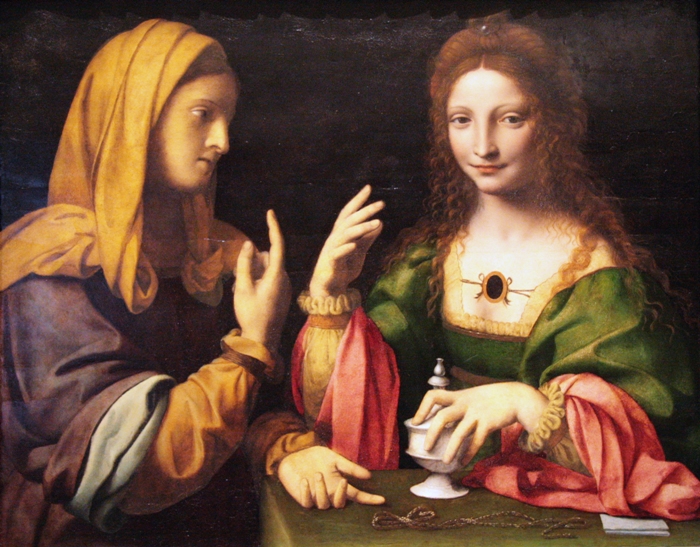
Bernardino Luini — The Conversion of the Magdalene
B. Luini — The Conversion of the Magdalene
Oil on panel, ca. 1520

The Conversion of the Magdalene,
by Bernardino Luini.
This is the moment when Mary Magdalene, the attractive and fashionable woman on the right, decides to put aside her finery (like the necklace on the table) and old life, and follow Jesus, like her sister Martha (on the left) previously. She holds an unguent jar, a symbol of her act of anointing Jesus's feet.

Bernardino Luini was among Leonardo da Vinci's closest followers in Milan. One can find a lot of Leonardo typical features in this painting: the characteristic figure types especially, with the mysterious, seductive smile of Magdalene, and the distinctive gesturing hands that animate the narrative.

So... after one day in the streets and museums of the city, I had my eyes and camera full of pictures. It was just time to go to the Convention Centre and attend the Conference.
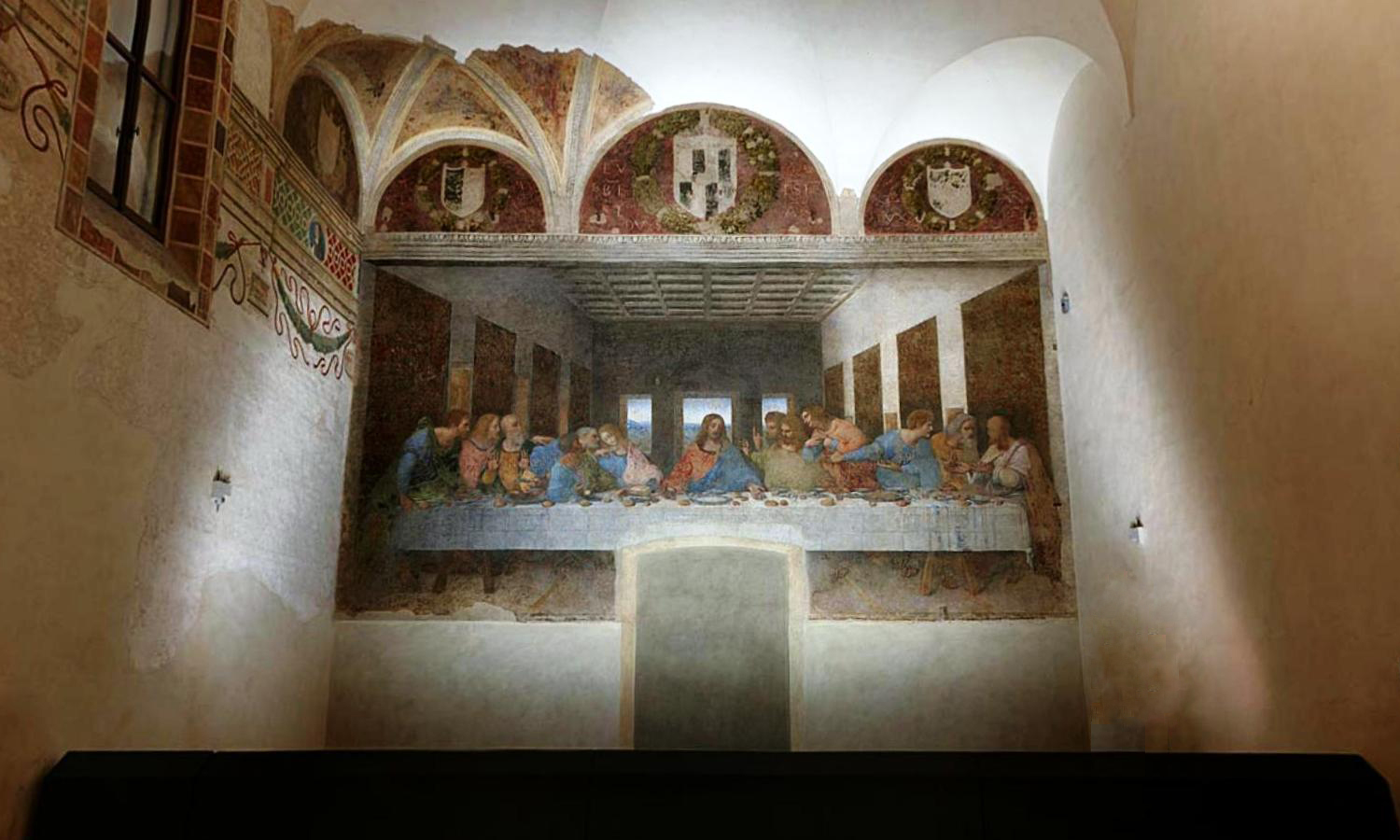
Thirteen at the Table

Leonardo's Last Supper
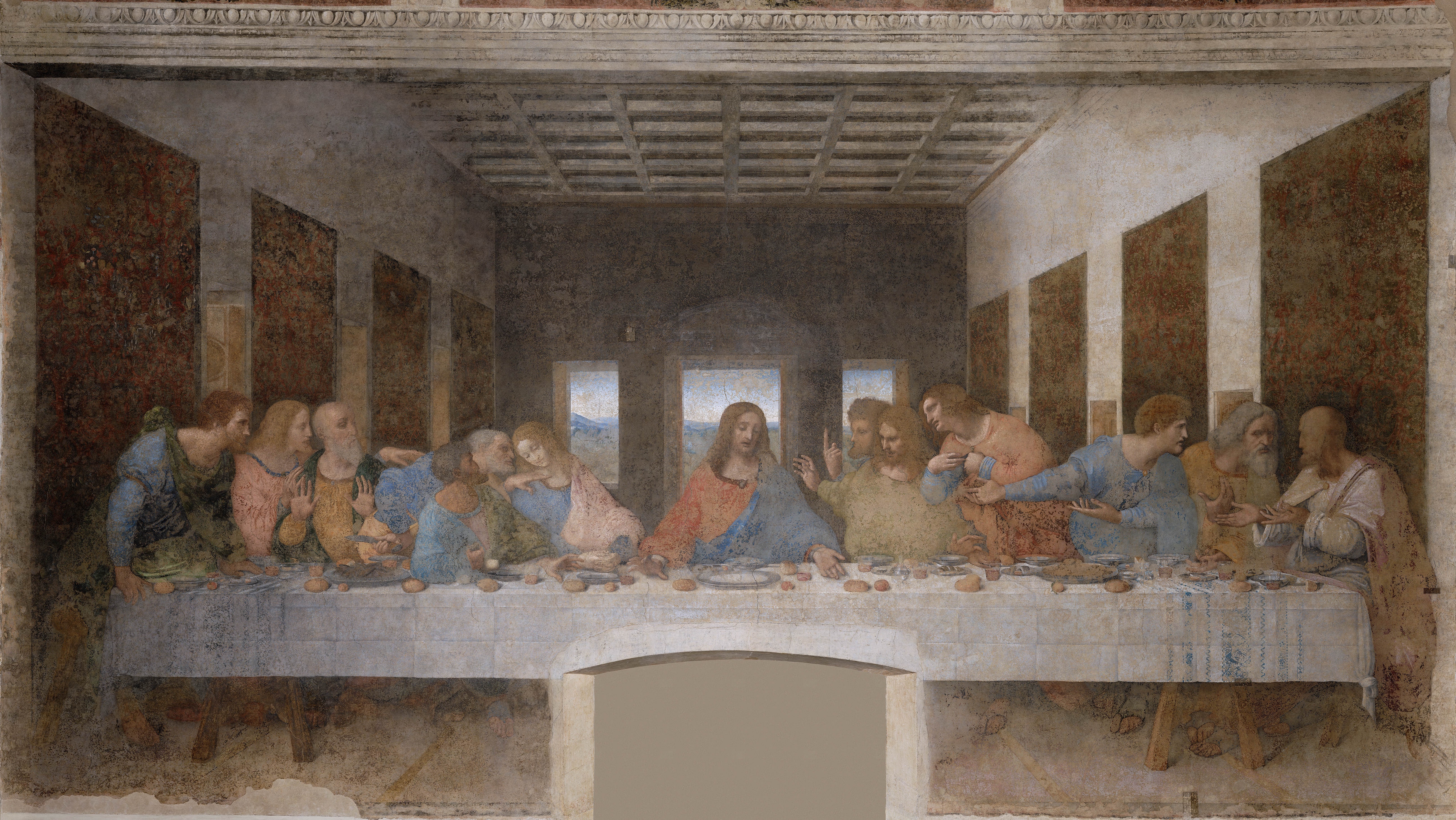
Il Cenacolo (The Last Supper)
by Leonardo Da Vinci (1495-1498)
Refectory of Santa Maria delle Grazie (Milan).

Last may, I went to Italy twice. I spent five days of vacation in Florence, then attended a Conference in Milan. Due to lack of time, I wrote only, and .

I do love Italy, and Italians. There is a lightness, a Joie de Vivre in the air of most Italian towns, you will hardly find anywhere else. Also, Art is everywhere.

In Florence first, then in Milan, I was stunned by frescoes. There's always a difference between looking at a reproduction and seeing an artwork for real. named this specificity of artwork, which is unique, linked to a special place, and part of history.

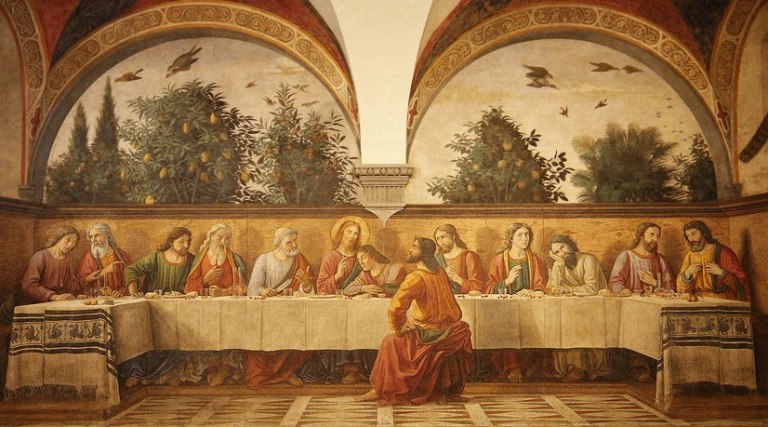
Il Cenacolo by Ghirlandaio
Il Cenacolo by Ghirlandaio (1448)

Frescoes certainly have an aura, because they are part of the place on which they were painted. Also, frescoes are impressive because they are very large. Characters painted are taller than you sometimes. You may feel as if you were a witness of the scene.

It was the case in particular in — the city with 70 museums — with frescoes by Filipino Lippi and Domenico Ghirlandaio, in and the , famous for the great Last Supper fresco, Ghirlandaio painted in 1488.

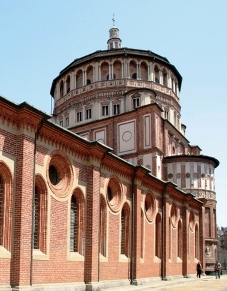
Santa Maria Delle Grazie (Milan)

It was the case also in in Milan, a red brick church and monastery built in the 15th century where Leonardo da Vinci painted his Last Supper, Il Cenacolo, in the refectory of the monastery from 1495 to 1498.

Because it was a long-term work, Leonardo did not paint on wet plaster but on a dry wall. Strictly speaking, the painting is not a fresco then. It is a mural painting. Unfortunately, because of the method used, the work deteriorated quickly and its restoration has been a never-ending task.

If you want to see the painting, you must book in advance, and arrive on time. You will then be admitted among a small group of visitors (around 25 people), one group at a time, every 15 minutes. You must go through a double entrance door first, for sake of constant temperature and humidity. You wait there a few minutes, then you enter the refectory at last.

Il Cenacolo
The Last Supper by Leonardo da Vinci (click on the picture for a larger scale)
Here it is, painted on the wall on the right side of the refectory. Awesome, huge — about nine meters wide — painted with a perspective that continues the walls of the refectory

The characters are approximately life-sized, a little taller. Although the work is damaged,you feel as if you were there, standing at about eight meters from the table. All 13 character are in front of you, on the same side of the table. Unlike Ghirlandaio and others, Leonardo did not paint Judas apart from his colleagues.

Perspective

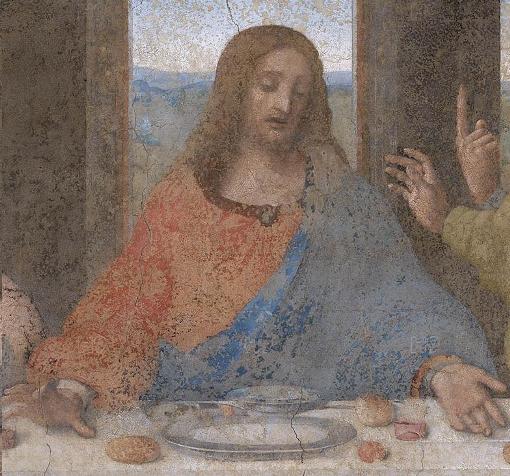
Jesus has just announced that one of those sitting at the table will betray him. The twelve apostles react with various degrees of shock, denial, and anger.

Jesus is in the middle of the painting. Precisely in the middle. In fact, a small hole in his right temple was used by Leonardo to help define the vanishing point of the whole perspective of the painting. Around him, on his right and left sides, the apostles are grouped in four groups of three, and each of the three figures in each group reacts its own way.

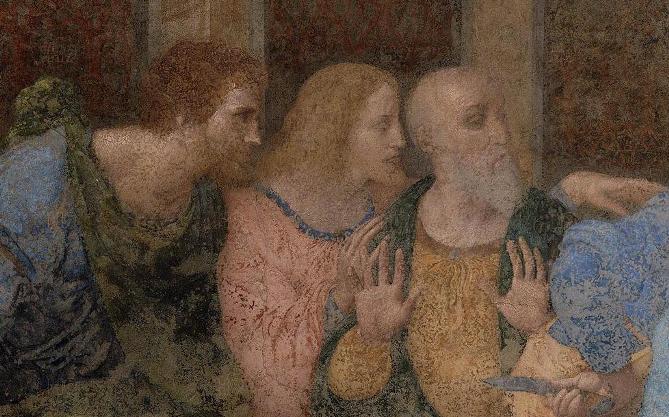
Bartholomew, James the Younger and Andrew
On the left side,  Bartholomew, James the Younger and Andrew appear stunned by Jesus’ declaration. They look at him with stupefaction. Andrew raises his hands before him in a gesture of horror and incredulity — yet an apostle can hardly be incredulous, can he ?


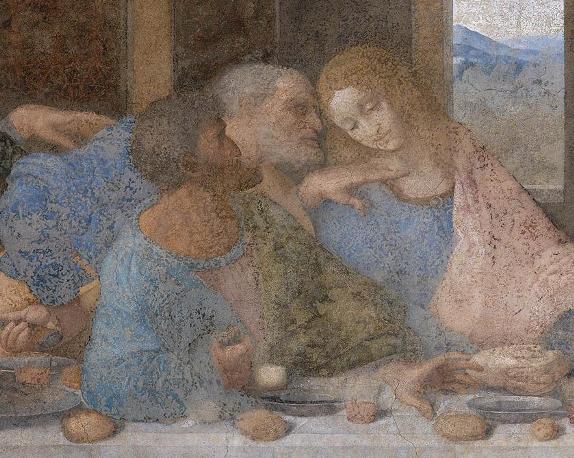
Peter, Judas and John

In the second group, a knife in hand, Peter is ready to punish the traitor. He leans towards John, the boyish, almost feminine apostle seated beside Jesus: "Ask the Master, John! Who is it?" He pushes Judas forward, who holds a purse with thirty pieces of silver inside.

Jesus

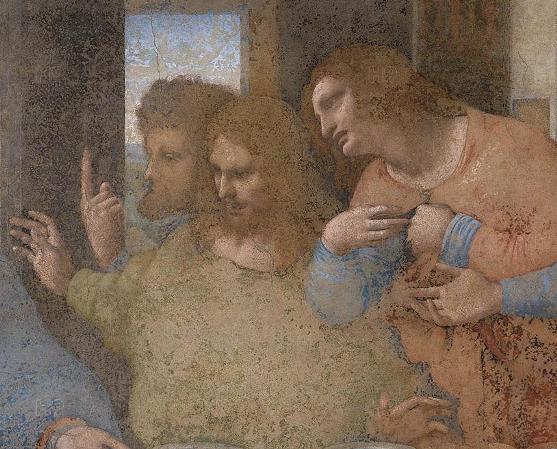
Thomas, James the Elder and Philip

On Jesus left-hand side, Thomas, James the Elder and Philip are assuring Jesus of their obedience. James the Elder expresses his indignation, and we can almost hear Philip protesting his loyalty: "You know me, Master, you know I did not do that".

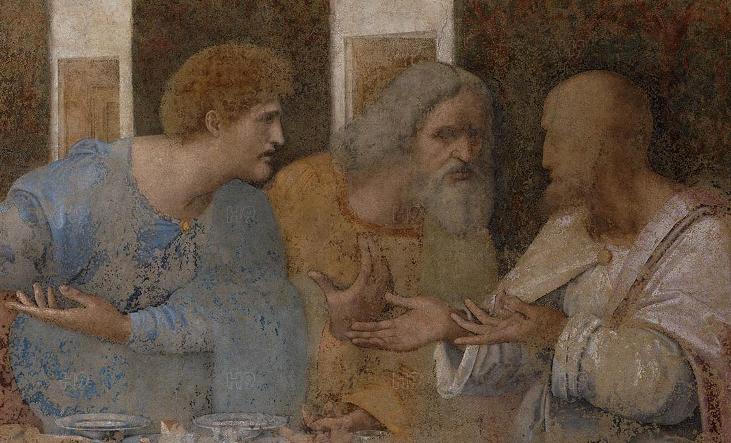
Matthew, Jude Thaddeus and Simon

The last group on the right is made up of Matthew, Jude Thaddeus and Simon. They are involved in an animated discussion, and don't look at Jesus. "One of us? How is it possible?" Matthews asks Simon, while Jude Thaddeus seems to be about to clap his hands in a "didn't I tell you?"

-:-:-:-:-:-

13
    [BbN #13]

Note: You cannot fully appreciate such a masterpiece in less than 15 minutes. There's so little time, you must hurry, you can hardly have a look at every character. It is frustrating. If you ever go to Santa Maria delle Grazie and see The Last Supper by Leonardo, here is my advice then: book for it twice, half an hour apart. I will do that, the next time I go to Milan.

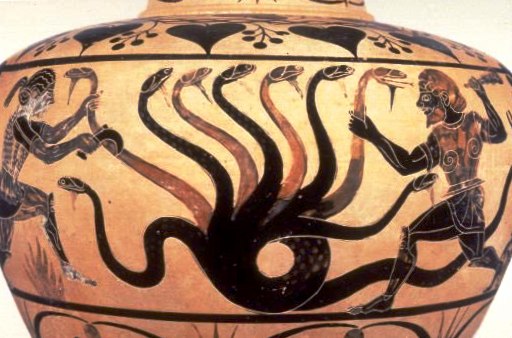
The Twelve Labours of Hercules

Herakles enters Olympus
Amasis – Heracles entering Olympus
Attic black-figure olpe — ca. 550-530 BC

I have been an affiliate of (Friends of Le Louvre) for years. It is a patron of the arts foundations, which aims at increasing art collections in the in Paris. Also, it gives free access to the Museum, permanent collection and temporary exhibitions as well.

I probably visited the Museum more than a hundred times, I have not yet explored the whole of it though. In particular, I visited the department of Greek, Etruscan and Roman Antiquities on rare occasions only.

Because I read an article about Attic pottery lately, I decided to follow two in that department of Le Louvre: Hercules trail and Greek pottery trail. More than 2500 years after they were made,   are still fascinating. I especially valued so-called black-figure paintings on Attic vases.

A couple of vases displayed Hercules (Herakles in Greek), one of which is displayed above. After I followed both trails, I enjoyed myself seeking on the Internet twelve Greek ceramic that illustrate the twelve labours of Hercules.

Here they are (click on the pictures for bigger view and more details).

The Nemean Lion
The Nemean Lion
The Lernean Hydra
The Lernean Hydra
The Cerynean Hind
The Cerynean Hind
The Erymanthian Boar
The Augean Stables
The Augean Stables
The Stymphalian Birds
The Cretan Bull
The Cretan Bull
The Mares of Diomedes
The Belt of Hippolyte
The Cattle of Geryon
The Apples of the Hesperides
Apples of the Hesperides
Cerberus
Cerberus
Blogging by Numbers #12
    [BbN #12]

N°5

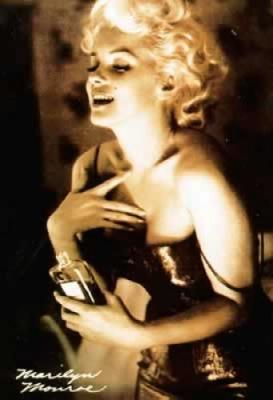
Marilyn Monroe
"What do I wear to bed? Why, Chanel N°5, of course"  (Marilyn Monroe)

Since my entry entitled Blogging by Numbers, I have written blogs under the constraint stated as 'Write blogs on topics one can associate with successive ascending numbers' — and still am I now. It was not the first time I assigned myself a constraint as a challenge, and a help to my inspiration as well: I did the same two years ago with a constraint of writing about the 5 senses and Paris. It ended up in blogs about Sight, Hearing, Touch, Taste, and Smell.

When you talk about the five senses, it is but logical to name sight and hearing first, because they are the most important senses in humans. Taste, and essentially smell, on the contrary, will be named last, because they are of much lesser use in humans than many animals.

It is the same when it comes to arts. Arts are usually based on one sense only, and arts based on a sense that acts from a distance — sight or hearing — are seen as noble arts. Painters, sculptors, composers, musicians, are undisputed artists. On the opposite, few people will spontaneously consider that chefs, wine experts and perfumers are artists as well. There is a hierarchy among senses: senses that need closeness are trivial. Touch, taste, and smell, especially.

Every art needs education and practice. It is the case especially with arts that rely upon underused senses. It is probably not only coincidental then that France, a country where even body smell has traditionally been considered a normal feature of men and women, is especially famous for its cuisine, cheeses, wines, and perfumes.

Everybody knows Leonardo, Picasso, Rodin, Mozart, and so many other artists relying on sight or hearing. Few people, on the opposite, have heard of , who invented the Eau de Cologne and served as a model for the character of César Birotteau in the novel by , or who created Chanel n°5, probably the most famous perfume ever.

quote I want to give women an artificial perfume. Yes, I really do mean artificial, like a dress, something that has been made. I am a fashion craft worker. I don’t want any rose or lily of the valley, I want a perfume that is a composition.
Coco Chanel

When Mademoiselle commissioned Ernest Beaux to make several perfumes for her choosing, she was already a famous fashion designer who had imposed her conception of elegance, with modern women feeling free because they wore simple and comfortable clothing.

At the time though, fashion and perfumes were distinct areas, and the idea of creating a perfume that would be an image of the brand was new. Beaux produced two series of samples numbered 1 to 5 and 20 to 24. Chanel chose the bottle labelled as N°5 and decided to keep the name, probably for superstitious reasons.

      [BbN #5]
The new perfume was introduced on May 5, 1921, on the 5th day of the 5th month of the year. In the light of what its destiny has been for more than 80 years, Coco Chanel was undoubtedly right in thinking that 5 was her lucky number.

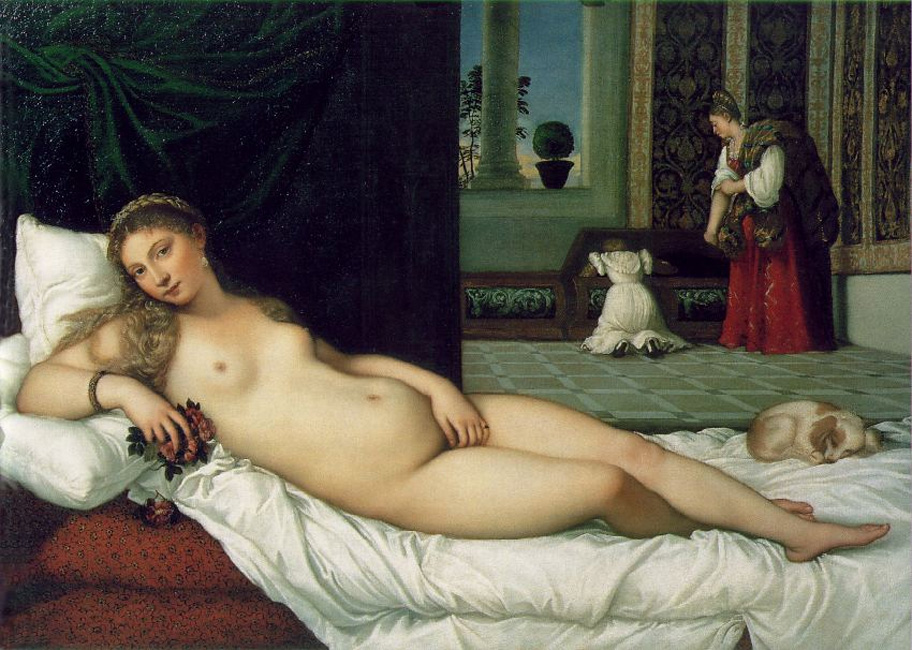
Venus of Urbino

Venus of Urbino by Titian
Venus of Urbino by Titian (1538)
Oil on canvas, 119 x 165 cm — Galleria degli Uffizi, Florence
I had known her for years, we had never meet though. About two years ago, I had hoped we would, at an exhibition dedicated to Tiziano Vecellio, aka Titian, held in the Palais du Luxembourg, the Museum of French Senate in Paris.

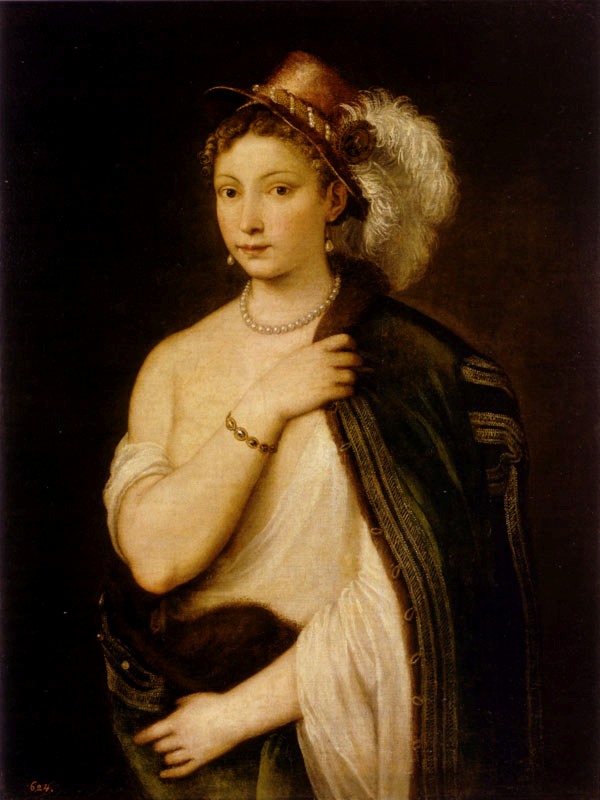
Titian — Portrait of a young woman
Portrait of a young woman (1536)
Oil on canvas, 96 x 75 cm
State Hermitage Museum, St. Petersburg
Yet, she stood me up. Well, as a matter of fact, she came, but she came on disguise, dressed as the young lady with an elegant feathered hat on the right side. I once wrote a blog about our quasi-meeting.

Because she was not allowed to travel to Paris, I had to go to Florence, the city where she has lived for about four centuries. I am just back from a five-day vacation trip there. As you can imagine, my eyes are still full of a lot of wonderful images: paintings, frescoes, statues, by Botticelli, Giotto, Lippi, Fra Angelico, Leonardo, Michelangelo, Donatello, and so forth, displayed in many places in the city. I am going to blog about them soon, yet on my first day in Florence the main thing was: I went to the Uffizi Gallery and I have met her at last!
Even the most perfect reproduction of a work of art is lacking in one element: its presence in time and space, its unique existence at the place where it happens to be." (Walter Benjamin)
In 'Little History of Photography' first, then in his famous essay The Work of Art in the Age of Mechanical Reproduction, Marxist philosopher Walter Benjamin used the word aura to describe the specificity of the work of art, which is unique, linked to a special place, and is part of history. According to him, and without going into details, mechanical reproduction of artworks by means of modern techniques such as photo and cinema frees them from place and ritual, and results in a loss of their aura. Although I don't agree with many developments of Benjamin's theories in terms of mass culture, I did feel Venus' aura in the Uffizi Gallery in a much deeper way than when I looked at her reproductions.

Thousands of pages have been written about this great painting. There have been endless commentaries and discussions about the meaning of Venus' open eyes that look directly at us, her left hand location, the bouquet in her right hand, the dog asleep at her feet, the two handmaidens in the background rummaging in what seems to be a wedding chest, the plant pot near a column on the window ledge, and many other details in the painting.

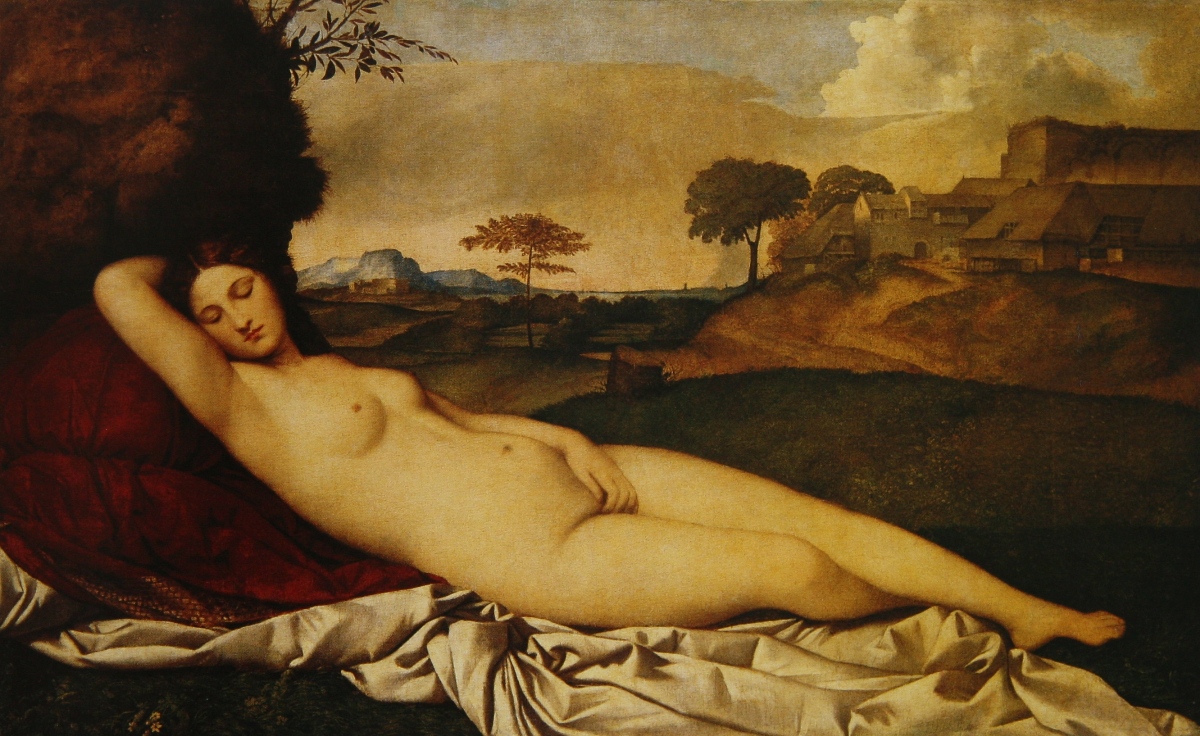
Sleeping Venus by Giorgione
Sleeping Venus by Giorgione & Titian (1510)
Oil on canvas, 108 x 175 cm — Gemäldegalerie, Dresden
I won't add to so many erudite works. To me, the Venus of Urbino is simply one among the most beautiful pieces of arts ever, as well as a big step towards modernity in painting. There is little doubt that Titian took the topic of the Venus of Urbino from a painting by Giorgione, the Sleeping Venus (also known as the Venus of Dresden), he himself finished after his friend and master died.
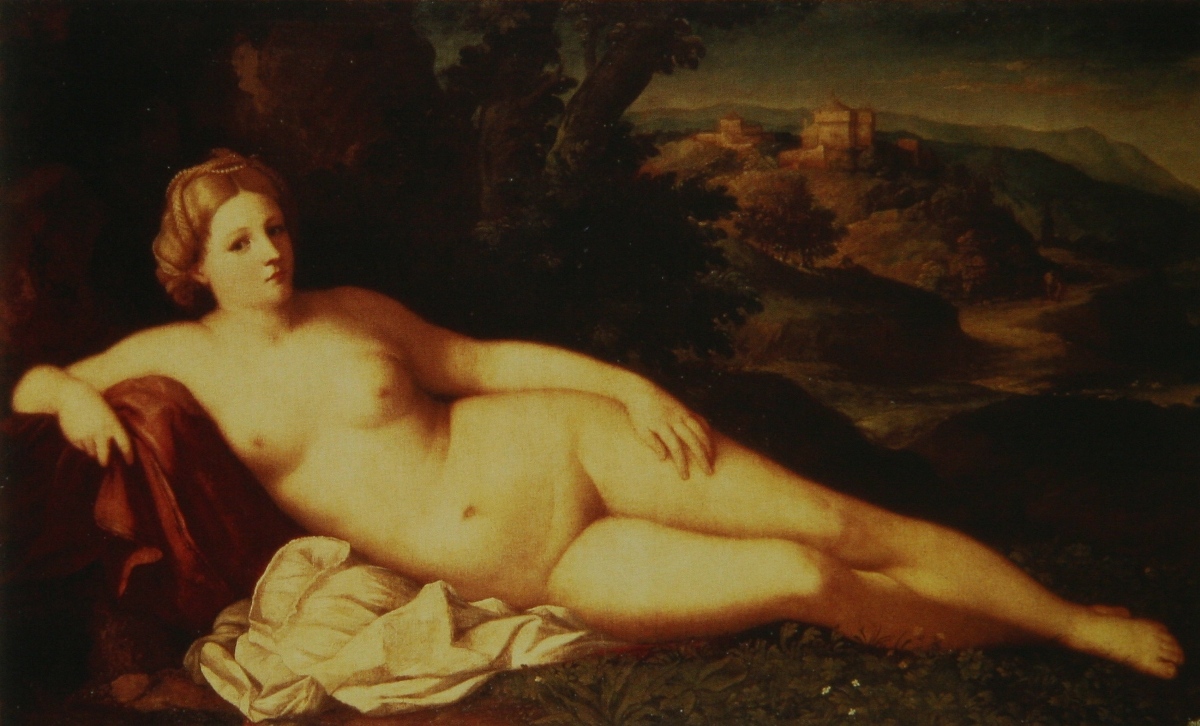
Venus by Palma Vecchio
Venus  by Palma Vecchio (ca 1520)
Oil on canvas, 113 x 186 cm — Gemäldegalerie, Dresden

Perhaps he knew also of the Venus by Palma Vecchio, where the nude woman, who lies in the country like in the canvas by Giorgione, gets the Venus of Urbino's wide open eyes.

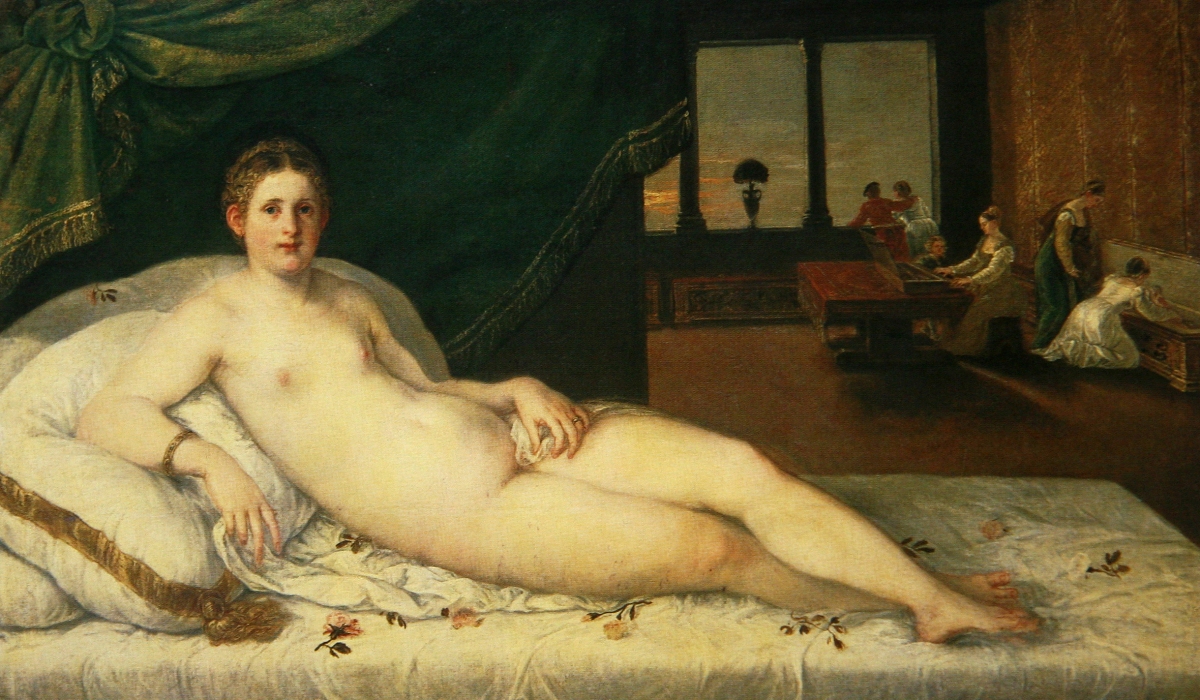
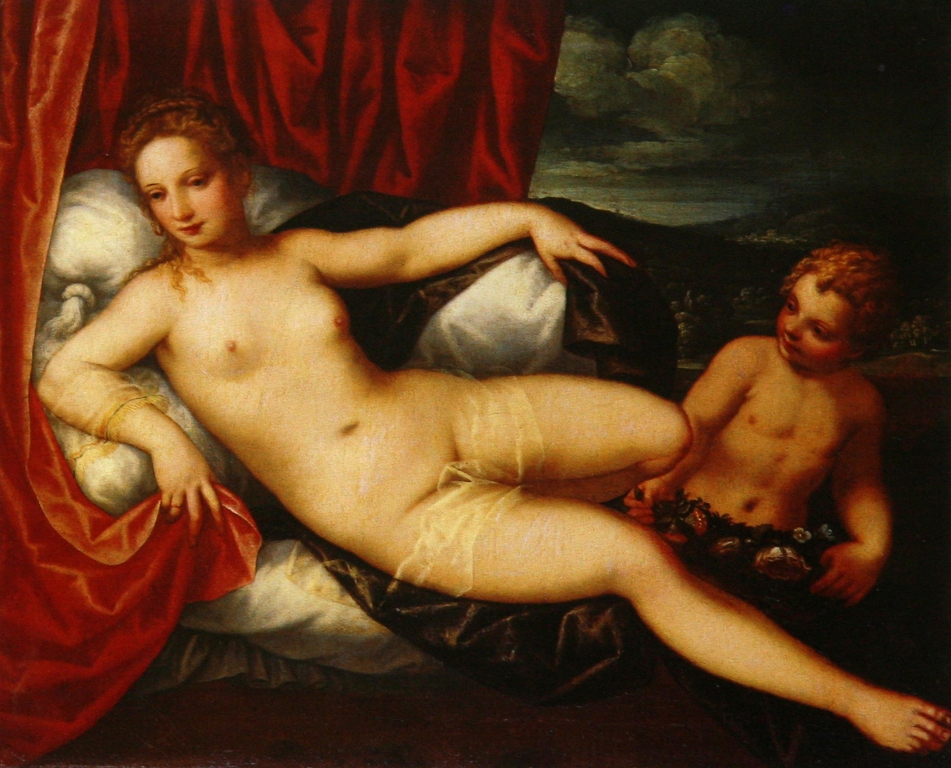
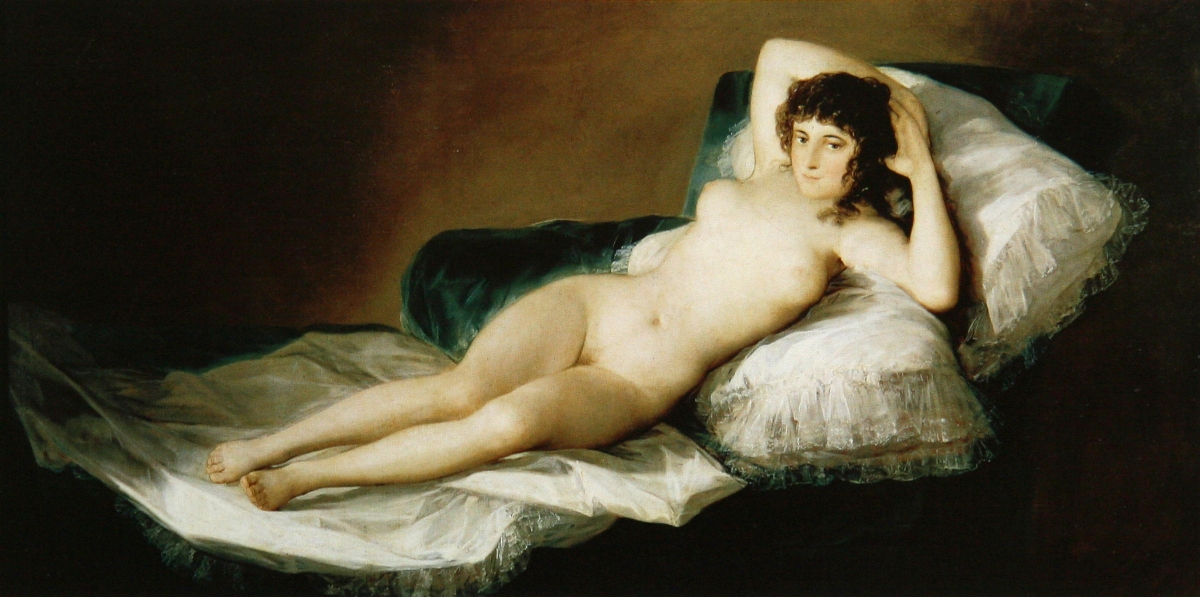
Titian's Venus of Urbino in turn inspired countless painters over the centuries in one of major topics of Western Art: the reclining female nude. It includes such huge painters as Francisco de Goya and, especially, Édouard Manet when he painted Olympia, more than three hundred years later.

Venus by Lambert Sustris
Venus by Lambert Sustris (1558)
Oil on canvas, 116 x 186 cm — Rijksmuseum, Amsterdam
Venus and Cupid by Johann Rottenhammer
Venus and Cupid by Johann Rottenhammer (ca 1610)
Oil on canvas — Gemäldegalerie, Dresden
La maja desnuda by Goya
La maja desnuda by Francisco Goya (1805)
Oil on canvas, 87 x 190 cm — Museo del Prado, Madrid
Olympia by Manet
Olympia by Edgard Manet (1863)
Oil on canvas, 130 x 190 cm — Musée d'Orsay, Paris

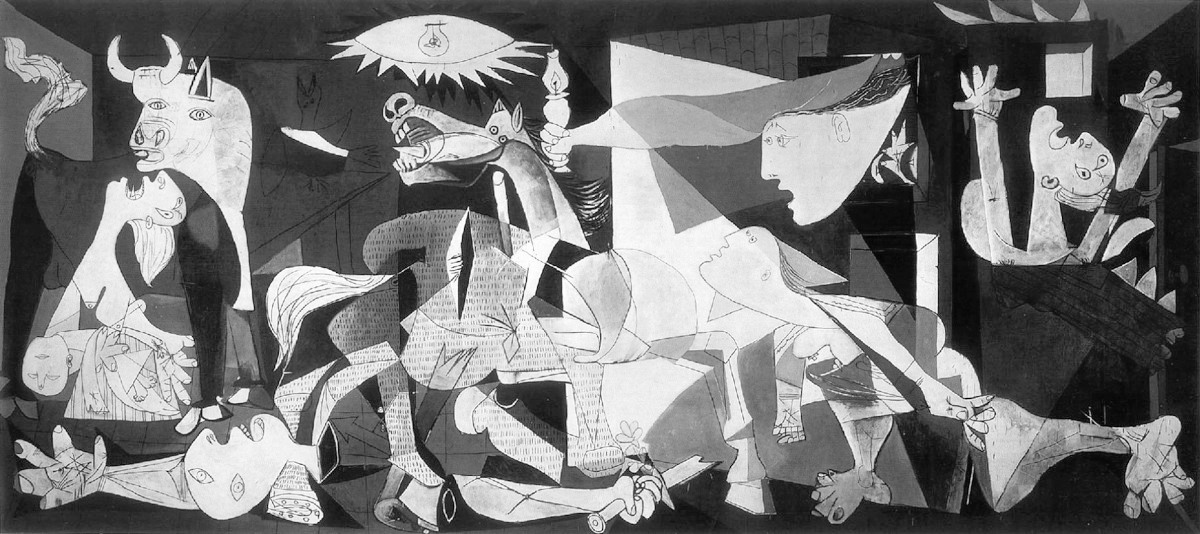
Guernica

Guernica by Pablo Picasso
Guernica by Pablo Picasso (1937) — Oil on canvas, 349 cm x 776 cm 
Museo Centro de Arte Reina Sofía, Madrid.
In the form of its execution and the scale of the destruction it wrought, no less than in the selection of its objective, the raid on Guernica is unparalleled in military history. Guernica was not a military objective [...] The object of the bombardment was seemingly the demoralization of the civil population. George Steer, The Times (27th April, 1937)

Seventy-two years ago, on April 26, 1937, a little Basque town called Guernica was bombed by planes from the Condor Legion, a unit composed of soldiers from the German air force (Luftwaffe), which was allied to the Nationalists headed by Francisco Franco during the Spanish Civil War. It was the first time in modern history — but not the last one — that an urban population was slaughtered on purpose by the means of a military attack.

Picasso paints Guernica by Dora Maar
Picasso paints Guernica
by Dora Maar (Paris, 1937)
Pablo Picasso had lived in Paris for several decades when Guernica was bombed, yet he began painting sketches for the canvas four days later only, as soon as he heard of it in the newspapers. The painting was finished in a few weeks, to be exhibited in June, 1937 in the Spanish pavilion at the Universal Exhibition in Paris. According to the tale, a German general then asked Picasso: "So, you are the one who made 'this'?" and Picasso answered: "No, you are".

Picasso put Guernica at the disposal of the struggle for the Spanish Republic. After it was defeated and Franco established his fascist power on the country, he insisted that it should return in Spain as soon as its government was restored (which happened in 1981 only). There is no allusion in the painting to a precise war action though. Picasso himself always insisted on the generality of Guernica's meaning, and described it as "the picture of all bombed cities".

Indeed, Guernica represents much more than an illustration of the destruction of the Basque town. It has become a symbol of the suffering of helpless civilians, in any war terror inflicted by a powerful army. As such, the painting could be called Coventry, Dresden or Hiroshima as well.

Related Posts Widget for Blogs by LinkWithin

Home

Atom
Feed
Timeless Music
The Magic Flute
by W. A. Mozart


Timeless Reading
Les Essais
by Michel de Montaigne