Showing posts with label women. Show all posts

N°5

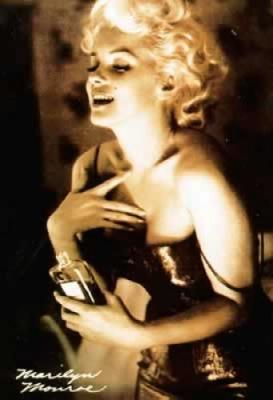
Marilyn Monroe
"What do I wear to bed? Why, Chanel N°5, of course"  (Marilyn Monroe)

Since my entry entitled Blogging by Numbers, I have written blogs under the constraint stated as 'Write blogs on topics one can associate with successive ascending numbers' — and still am I now. It was not the first time I assigned myself a constraint as a challenge, and a help to my inspiration as well: I did the same two years ago with a constraint of writing about the 5 senses and Paris. It ended up in blogs about Sight, Hearing, Touch, Taste, and Smell.

When you talk about the five senses, it is but logical to name sight and hearing first, because they are the most important senses in humans. Taste, and essentially smell, on the contrary, will be named last, because they are of much lesser use in humans than many animals.

It is the same when it comes to arts. Arts are usually based on one sense only, and arts based on a sense that acts from a distance — sight or hearing — are seen as noble arts. Painters, sculptors, composers, musicians, are undisputed artists. On the opposite, few people will spontaneously consider that chefs, wine experts and perfumers are artists as well. There is a hierarchy among senses: senses that need closeness are trivial. Touch, taste, and smell, especially.

Every art needs education and practice. It is the case especially with arts that rely upon underused senses. It is probably not only coincidental then that France, a country where even body smell has traditionally been considered a normal feature of men and women, is especially famous for its cuisine, cheeses, wines, and perfumes.

Everybody knows Leonardo, Picasso, Rodin, Mozart, and so many other artists relying on sight or hearing. Few people, on the opposite, have heard of , who invented the Eau de Cologne and served as a model for the character of César Birotteau in the novel by , or who created Chanel n°5, probably the most famous perfume ever.

quote I want to give women an artificial perfume. Yes, I really do mean artificial, like a dress, something that has been made. I am a fashion craft worker. I don’t want any rose or lily of the valley, I want a perfume that is a composition.
Coco Chanel

When Mademoiselle commissioned Ernest Beaux to make several perfumes for her choosing, she was already a famous fashion designer who had imposed her conception of elegance, with modern women feeling free because they wore simple and comfortable clothing.

At the time though, fashion and perfumes were distinct areas, and the idea of creating a perfume that would be an image of the brand was new. Beaux produced two series of samples numbered 1 to 5 and 20 to 24. Chanel chose the bottle labelled as N°5 and decided to keep the name, probably for superstitious reasons.

      [BbN #5]
The new perfume was introduced on May 5, 1921, on the 5th day of the 5th month of the year. In the light of what its destiny has been for more than 80 years, Coco Chanel was undoubtedly right in thinking that 5 was her lucky number.

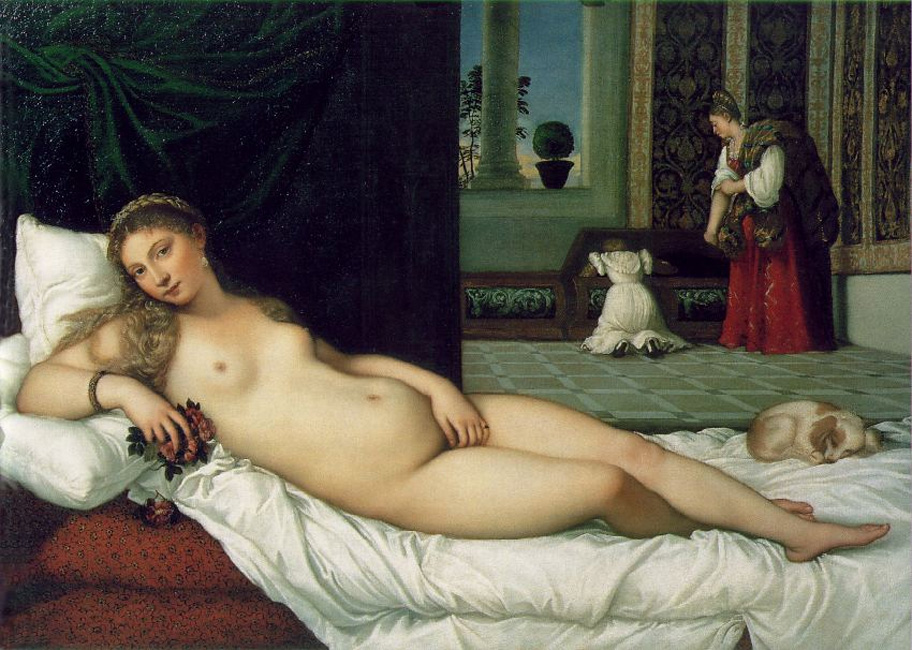
Venus of Urbino

Venus of Urbino by Titian
Venus of Urbino by Titian (1538)
Oil on canvas, 119 x 165 cm — Galleria degli Uffizi, Florence
I had known her for years, we had never meet though. About two years ago, I had hoped we would, at an exhibition dedicated to Tiziano Vecellio, aka Titian, held in the Palais du Luxembourg, the Museum of French Senate in Paris.

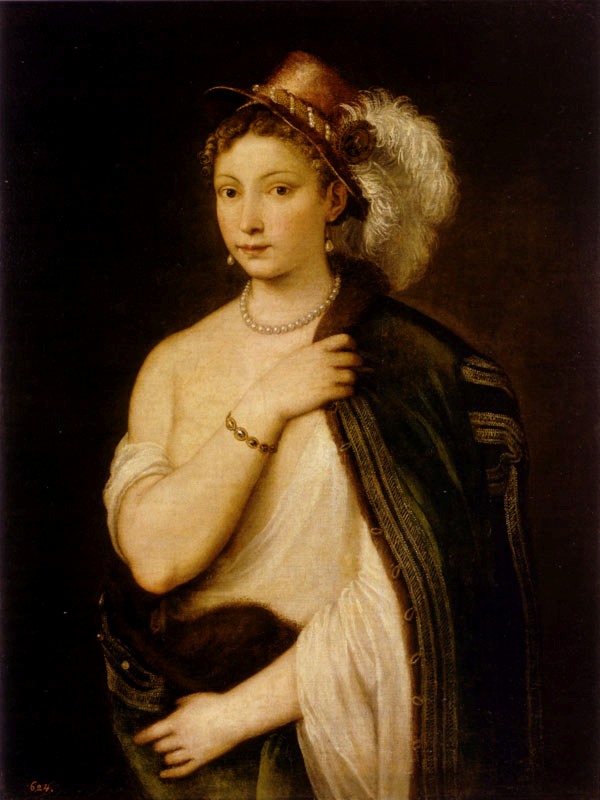
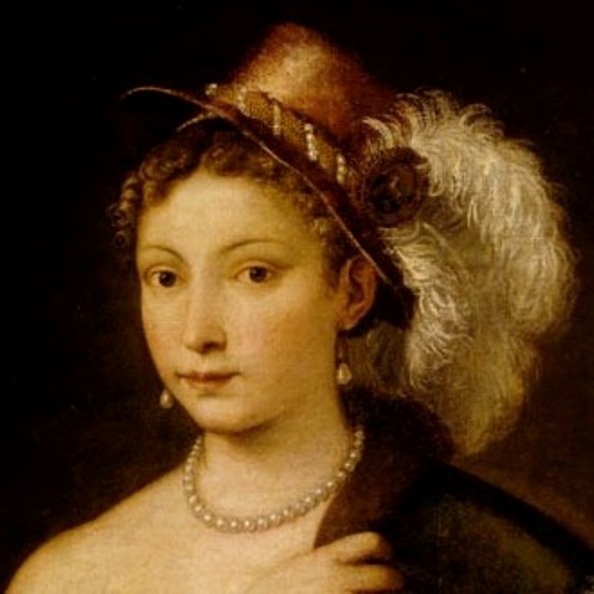
Titian — Portrait of a young woman
Portrait of a young woman (1536)
Oil on canvas, 96 x 75 cm
State Hermitage Museum, St. Petersburg
Yet, she stood me up. Well, as a matter of fact, she came, but she came on disguise, dressed as the young lady with an elegant feathered hat on the right side. I once wrote a blog about our quasi-meeting.

Because she was not allowed to travel to Paris, I had to go to Florence, the city where she has lived for about four centuries. I am just back from a five-day vacation trip there. As you can imagine, my eyes are still full of a lot of wonderful images: paintings, frescoes, statues, by Botticelli, Giotto, Lippi, Fra Angelico, Leonardo, Michelangelo, Donatello, and so forth, displayed in many places in the city. I am going to blog about them soon, yet on my first day in Florence the main thing was: I went to the Uffizi Gallery and I have met her at last!
Even the most perfect reproduction of a work of art is lacking in one element: its presence in time and space, its unique existence at the place where it happens to be." (Walter Benjamin)
In 'Little History of Photography' first, then in his famous essay The Work of Art in the Age of Mechanical Reproduction, Marxist philosopher Walter Benjamin used the word aura to describe the specificity of the work of art, which is unique, linked to a special place, and is part of history. According to him, and without going into details, mechanical reproduction of artworks by means of modern techniques such as photo and cinema frees them from place and ritual, and results in a loss of their aura. Although I don't agree with many developments of Benjamin's theories in terms of mass culture, I did feel Venus' aura in the Uffizi Gallery in a much deeper way than when I looked at her reproductions.

Thousands of pages have been written about this great painting. There have been endless commentaries and discussions about the meaning of Venus' open eyes that look directly at us, her left hand location, the bouquet in her right hand, the dog asleep at her feet, the two handmaidens in the background rummaging in what seems to be a wedding chest, the plant pot near a column on the window ledge, and many other details in the painting.

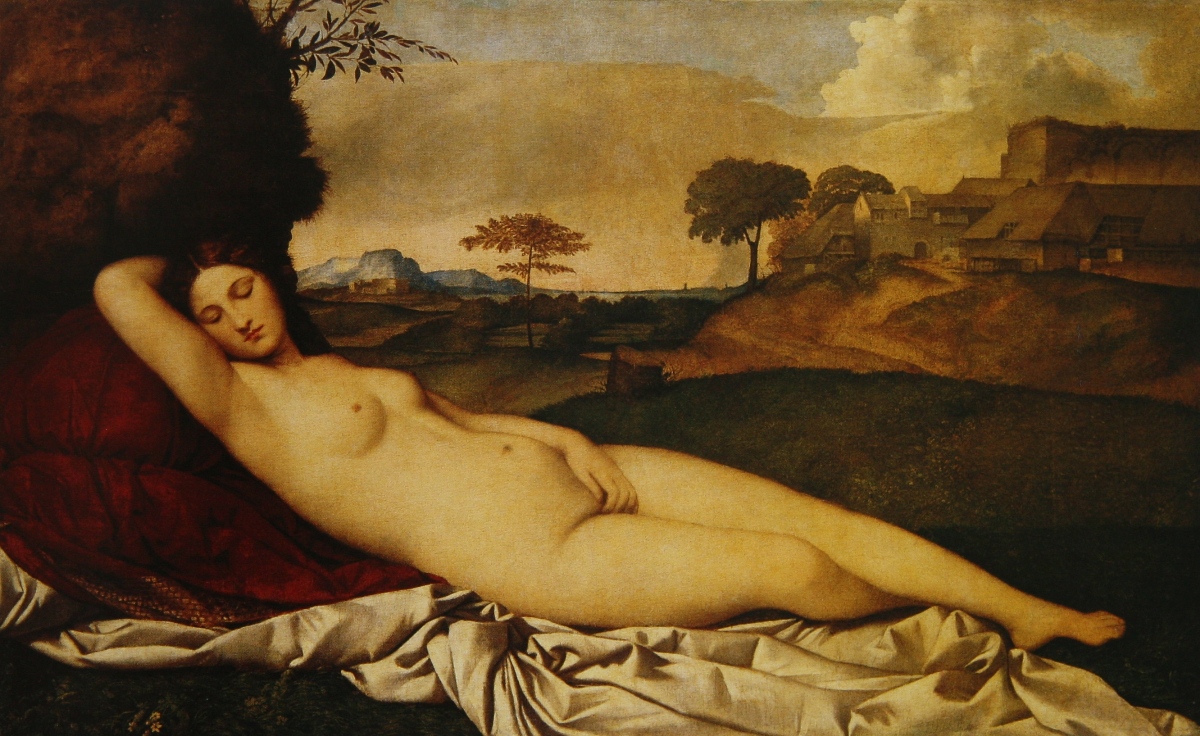
Sleeping Venus by Giorgione
Sleeping Venus by Giorgione & Titian (1510)
Oil on canvas, 108 x 175 cm — Gemäldegalerie, Dresden
I won't add to so many erudite works. To me, the Venus of Urbino is simply one among the most beautiful pieces of arts ever, as well as a big step towards modernity in painting. There is little doubt that Titian took the topic of the Venus of Urbino from a painting by Giorgione, the Sleeping Venus (also known as the Venus of Dresden), he himself finished after his friend and master died.
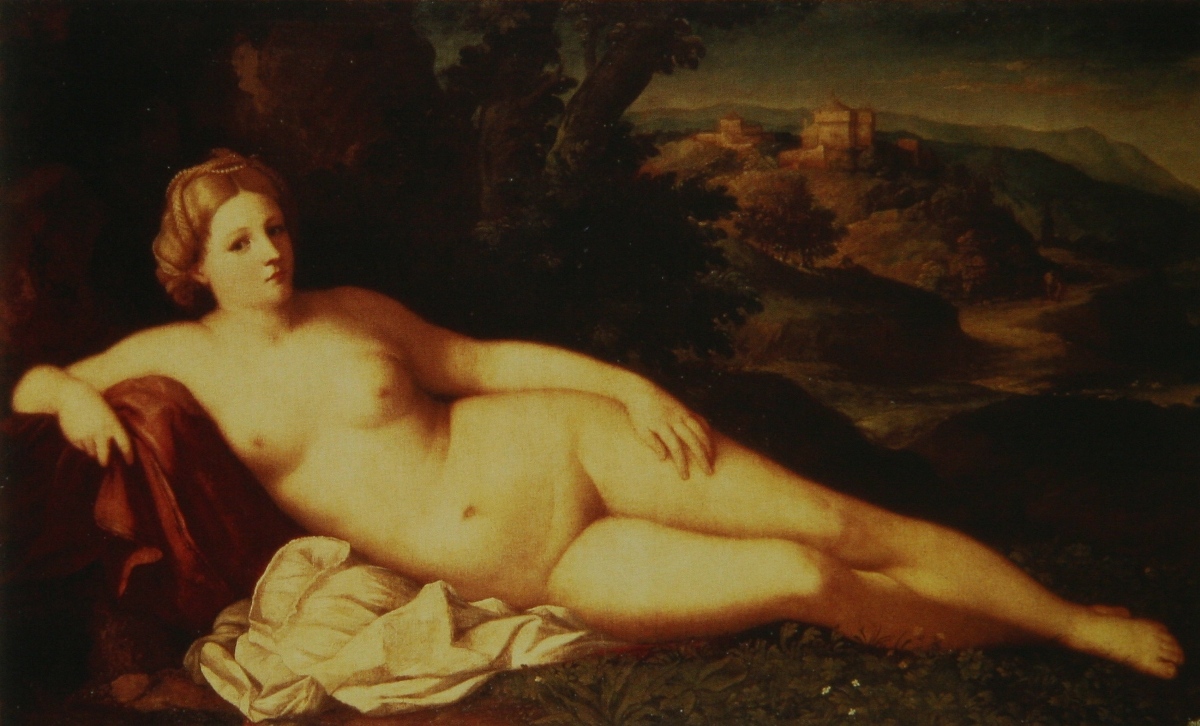
Venus by Palma Vecchio
Venus  by Palma Vecchio (ca 1520)
Oil on canvas, 113 x 186 cm — Gemäldegalerie, Dresden

Perhaps he knew also of the Venus by Palma Vecchio, where the nude woman, who lies in the country like in the canvas by Giorgione, gets the Venus of Urbino's wide open eyes.

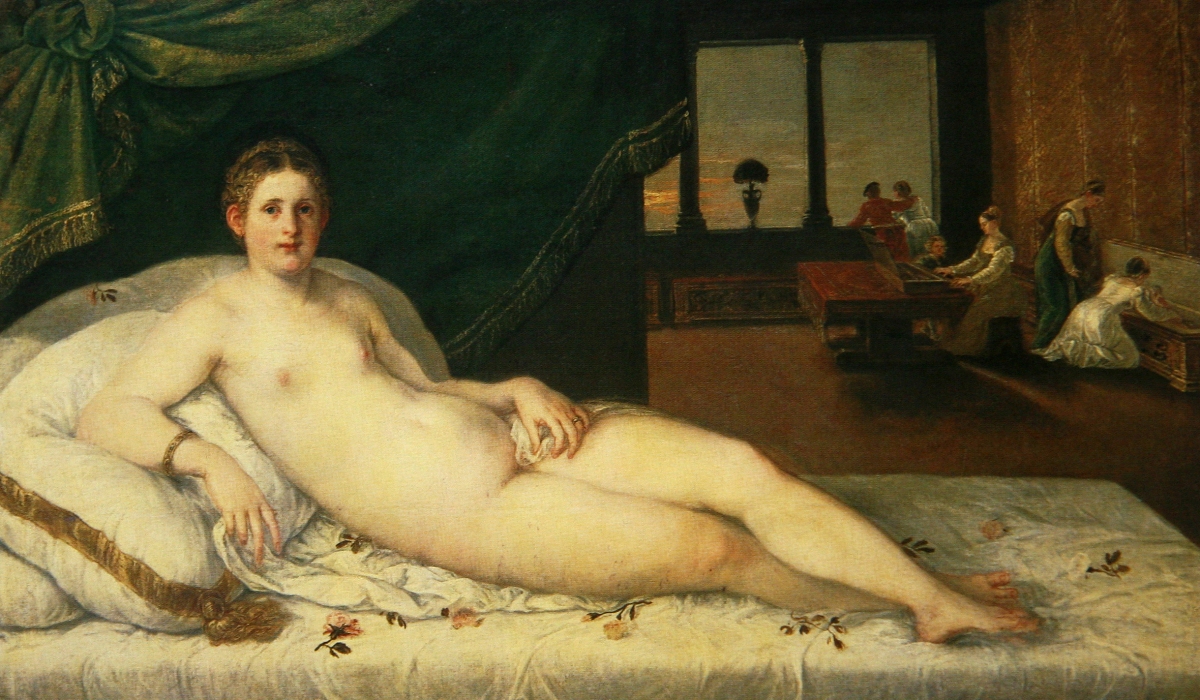
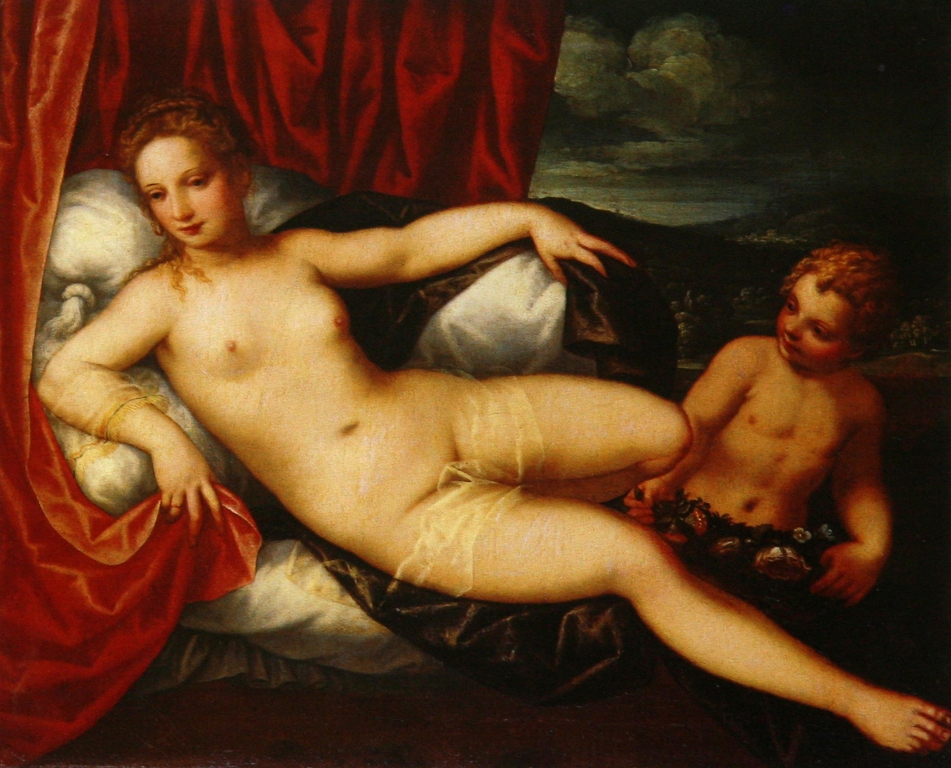
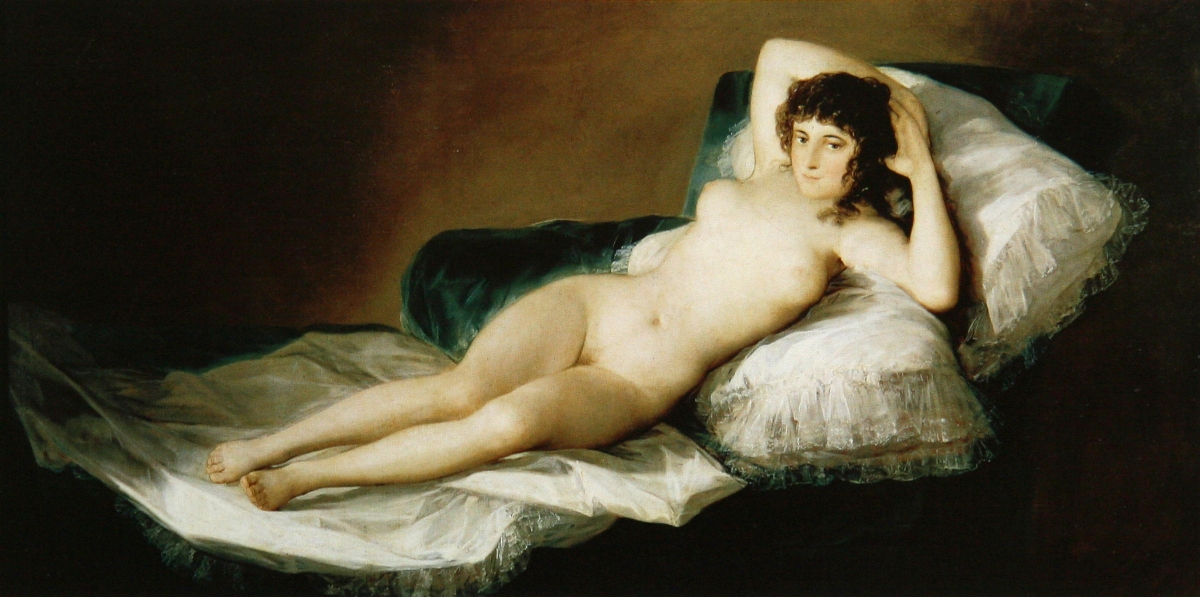
Titian's Venus of Urbino in turn inspired countless painters over the centuries in one of major topics of Western Art: the reclining female nude. It includes such huge painters as Francisco de Goya and, especially, Édouard Manet when he painted Olympia, more than three hundred years later.

Venus by Lambert Sustris
Venus by Lambert Sustris (1558)
Oil on canvas, 116 x 186 cm — Rijksmuseum, Amsterdam
Venus and Cupid by Johann Rottenhammer
Venus and Cupid by Johann Rottenhammer (ca 1610)
Oil on canvas — Gemäldegalerie, Dresden
La maja desnuda by Goya
La maja desnuda by Francisco Goya (1805)
Oil on canvas, 87 x 190 cm — Museo del Prado, Madrid
Olympia by Manet
Olympia by Edgard Manet (1863)
Oil on canvas, 130 x 190 cm — Musée d'Orsay, Paris

Ada Lovelace Day: Pantheon of Women

[I have not found the time to write a blog about Marie Skłodowska Curie, as I thought of doing within the context of Ada Lovelace Day. I will use a subterfuge then: on March 8, 2008, for the International Women's Day, I posted an entry on my defunct blog on Yahoo! 360° that dealt with nine French Women who would deserve to rest in the Panthéon in Paris. The entry disappeared with that blog. Here it is again in this one. Granted, most of the women celebrated were not involved in technology. Yet everyone of them, each in her field, can be considered 'female role models' undoubtedly.]
 
— : — : — : — : — : —

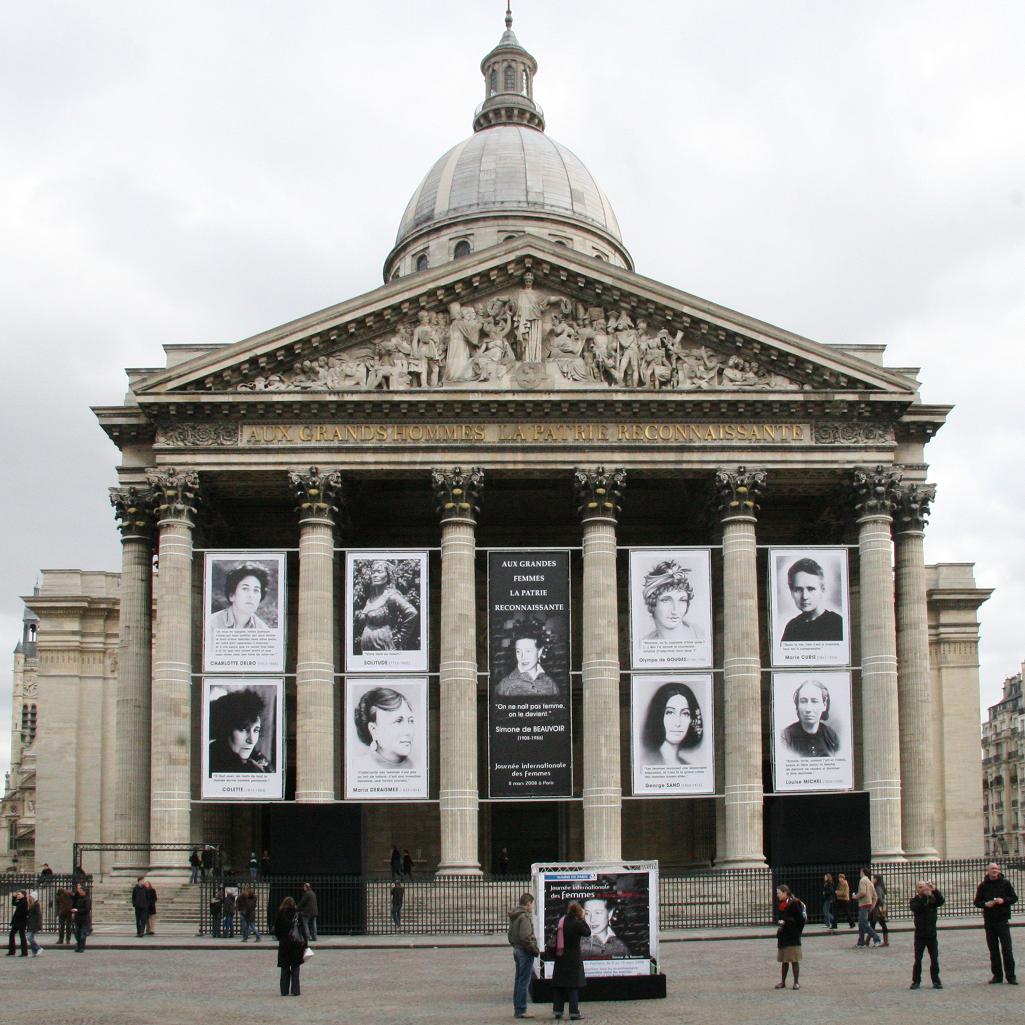
The Panthéon — Paris, 8 March 2008
I must say I am divided about the International Women's Day, celebrated every March 8th. I certainly agree women are still not considered equal to men in a lot of countries, for cultural and religious reasons. Even in western countries, there is no fair equality between genders in many fields, salaries especially.

On the other hand, I don't believe a yearly celebration can change the way men consider women, or make a religion evolves. I find it cheaply gives people clear conscience sometimes: one Women's Day a year, and 364 (365 even, this year) uncelebrated Men's Days!

Anyway... I went to the Panthéon this morning to see the portraits of nine French female figureheads displayed on its facade to celebrate Women's Day, and take pictures myself. Le Panthéon is a neoclassical monument on the top of the Montagne Sainte-Geneviève, in the 5th arrondissement of Paris. It was originally built as a church dedicated to St. Genevieve, the patron of the city. It is now the burial place for 'French National Heroes' (Pantheon in Greek means 'All the Gods'). The inscription in letters of gold above the entrance reads AUX GRANDS HOMMES LA PATRIE RECONNAISSANTE (To the great men [from] the grateful homeland).

The word Men here is supposed to mean Human beings, yet among the 73 honoured people buried here, there is only one woman, Marie Curie. Although it was definitely theoretical, I was interested to see which women the Parisian elites had considered deserving enough to be next to Mirabeau, Voltaire and Hugo. Here they are.

ImageSimone de Beauvoir (1908-1986 — philosopher and writer). An existentialist, she lived with Jean-Paul Sartre for several decades. She was among the most influential intellectuals in the second half of 20th century. Her book The second sex is regarded as a major feminist book.
ImageColette (1873-1954 — writer). Her literary talent was first exploited by her husband Willy, but she became emancipated... and scandalous for a time (music-hall shows and overt affairs with men and women). She published around 50 novels, one can divide into idyllic natural tales and dark struggles in relationships and love.
ImageMarie Curie (1867-1934 — Physicist) Born in Poland, Maria Skłodowska went to Paris aged 24 to study and became a naturalized French. At the Sorbonne, she met and married Pierre Curie. She won the Nobel Prize twice: in Physics in 1903 (discovery of radioactivity) and Chemistry in 1911 (discovery of Radium and Polonium).
ImageCharlotte Delbo (1913-1985 — resistance fighter). She was arrested by the Nazis in 1942 and sent to Auschwitz concentration camp. She was one of the 49 women who survived. She wrote several books about it, including a biography of every prisoner who was with her in the convoy to Auschwitz.
ImageMaria Deraismes (1828-1894 — politician and freemason). A figurehead of feminism, she was a republican (i.e. not royalist), antireligious politician. In 1893, she co-founded the first International Order of Mixed Freemasonry, advocating equality between women and men, Le Droit Humain.
ImageOlympe de Gouges (1748-1793 — politician). She is regarded as one of the first French feminists. In her Declaration of the Rights of Woman and the Female Citizen, she challenged the practice of male authority and the notion of male-female inequality. She was executed by guillotine during the Reign of Terror.
ImageLouise Michel (1830-1905 — politician). A revolutionary and an anarchist, she was active during the Paris Commune as an ambulance woman. After the Versaillais won, she was sentenced to deportation in New-Caledonia. She returned to Paris 7 years later and preached the revolution until her death, despite several stays in jail and exile in London.
ImageGeorge Sand (1804-1876 — writer) Born Aurore Dupin, she decided to take a male nick to be more easily published. She would dress as a man, smoke the pipe, ride like a man, yet she had tumultuous liaisons with Alfred de Musset and Frédéric Chopin. She was a feminist, asking for women's right to divorce and equality in civil rights.
ImageSolitude (1772-1802 — fighter against slavery). In 1794, the revolution freed this mulatto slave. When Napoléon Bonaparte restored slavery in 1802, Solitude rose up in arms although she was pregnant. She was wounded, captured and sentenced to death. Her hanging was delayed until the day after she gave birth. Slavery in France was abolished for good in 1848 only.

The Lady and the Unicorn

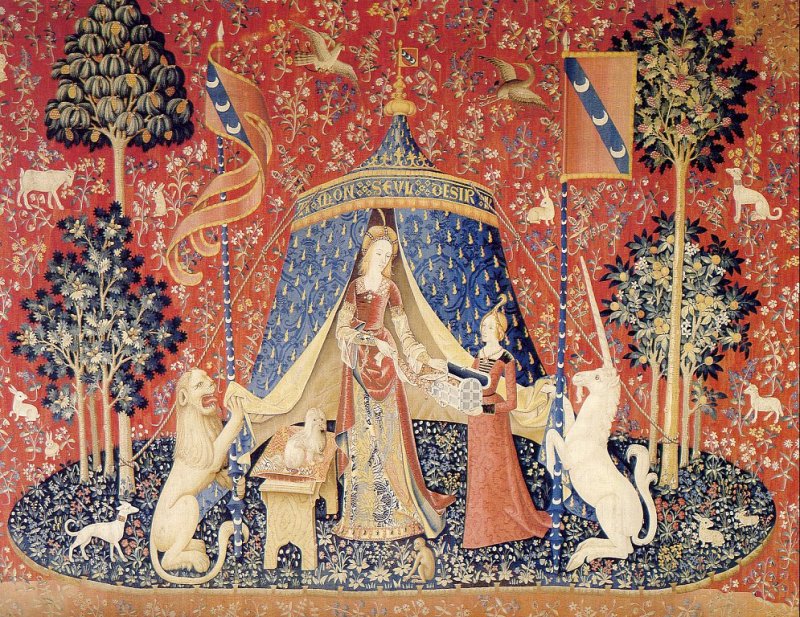
A mon seul désir
The Lady and the Unicorn — To my only desire.
Cluny Museum of Middle Ages, Paris.

The Hôtel de Cluny, in the Quartier Latin (the Latin Quarter) in Paris, was built in the 14th and 15th century. It is a beautiful structure that combines Gothic and Renaissance architecture. It is worth seeing as a building then, yet essentially it is the French Museum of the Middle-Ages. It houses many early Medieval sculptures, wonderful illuminated manuscript, and an important tapestry collection, that includes one of the greatest works of art of the whole Middle Ages, the famous series of tapestries named 'La dame à la licorne' — 'The Lady and the Unicorn'.

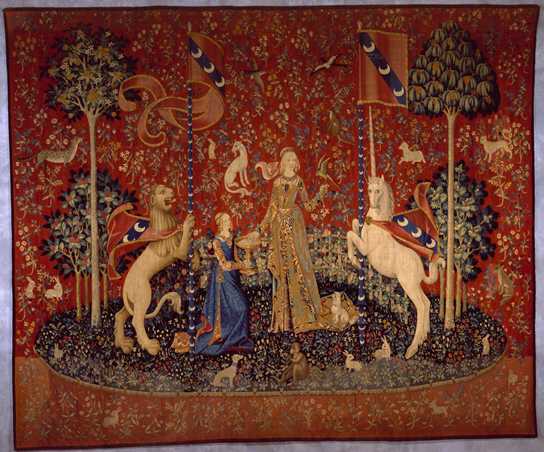
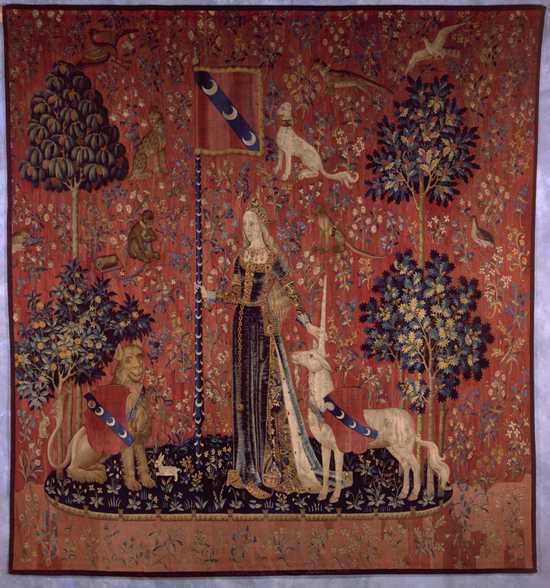
The Lady and the Unicorn — Taste
Taste (detail)
Click for the whole image

The Lady and the Unicorn
by John Renbourn

I went there again yesterday, for the tenth time maybe, because they have just opened new rooms to the public, dedicated to art and life in the Middle-Ages. Also, I wanted to see the red tapestries again, a few months after I went to the Cloisters in New-York and watched the green series of Unicorn tapestries they hold there [This series was the topic of the last blog I published on Yahoo. I might post an emended version of it here some day].

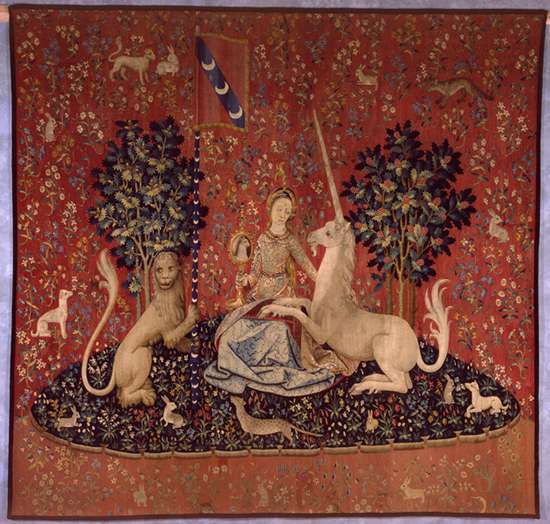
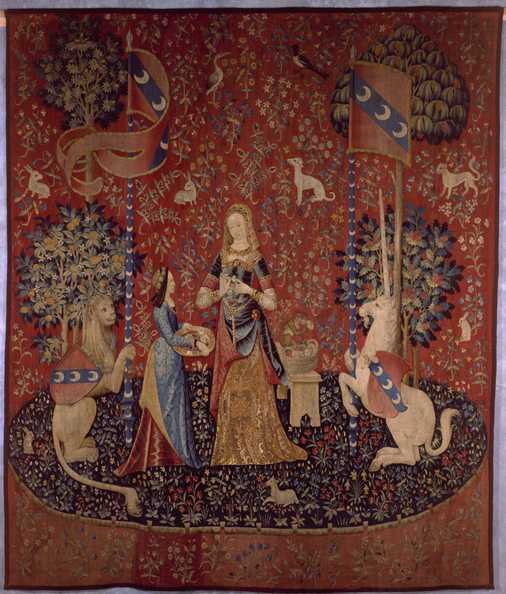
The Lady and the Unicorn — Sight
Sight (detail, click)

Both series are dated back to the 15th century. They are so-called 'Tapisseries mille fleurs' ('Thousand flowers tapestries'), named that way because they contain thousands of details, flowers and small animals especially.

While the Unicorn is the main character of the green tapestries held in New-York, that tell the story of the Hunt of the Unicorn, the Lady is the centre of the red tapestries displayed in Cluny Museum. My eyes this morning remain filled with visions of the beautiful, enigmatic Lady.

The Lady and the Unicorn — Touch
Touch (detail, click)
There are six tapestries in the series. Five hang side by side on a same larger curved wall in front of the only door. They are really huge, several meters wide and high. You see nothing but them when you enter the room. They depict the five senses: Taste, Sight, Touch, Smell, Hearing, in that order. Touch is situated in the middle, a very sensual picture where the Lady holds a standard in her right hand and the horn of the unicorn in her left one.

The Lady and the Unicorn — Smell
Smell (detail, click)
After you have looked at the five senses for a while, you turn round to the exit door, but then you have a view of the sixth tapestry, that has been hanging alone on the straight wall behind you from the beginning. In this tapestry, the Lady places her necklace into a case held out by her servant.  The Lion and the Unicorn are here, and many little animals. She will leave then soon though, and enter the tent behind her of which the door is wide open for her. 'A mon seul désir' ('To my only Desire'), an inscription on the tent says.

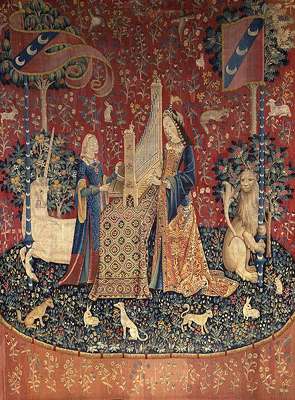
The Lady and the Unicorn — Hearing
Hearing (detail, click)

Nobody knows for sure what this tapestry means. I have the feeling that the Lady has experienced many things in her life already, using her five senses, and she has reached the end of this path now.

The wise, beautiful Lady, might have decided to renounce pleasures of the world. Or she knows she will pass soon perhaps. Whatever the reason, she now leaves her jewels forever, as a symbol of her physical life, before she enters the tent, as a symbol of her inner spirituality, a convent, or the Other World.

Riddle: A Hint of a Hitch

The Obelisk at the Place de la Concorde, Paris
The Place de la Concorde in Paris

Our paths crossed on that day. You were ravishing, smooth blonde hair and preppy look. The light strip of a pearl necklace, above your peach-coloured cashmere sweater, was slightly iridescent in the first beams of this sunny morning of spring. I had the shadow of a doubt: weren't you notorious, Rebecca... something?

Under the pelisse on the back seat (mornings were still a little chilly), caught in a glimpse through the rear window of your tiny Parisian car, I could make out your mother's Grace Kelly purse, near the birds-patterned Carré Hermès you had left there, skilfully undone. Everything in your appearance indicated this special sense of sophistication passed down through several generations of strong economic power. I felt spellbound.

ImageThere was a frenzy of traffic on the Place de la Concorde. Young and innocent, you did not yield to me — I was just the wrong man at the wrong place. I confess I had the ghost of a frown, barely the mark of minor annoyance. A beautiful manicured hand with a fine golden ring and a topaz let go of the blond wood steering wheel. You gave me the finger.

People who still believe in elegance and refinement never drove a car.

Titian

Titian — Portrait of a young woman
Portrait of a young woman (1536)
Oil on canvas, 96 x 75 cm
State Hermitage Museum, St. Petersburg

It is funny when you recognize somebody you 'know' in a painting.
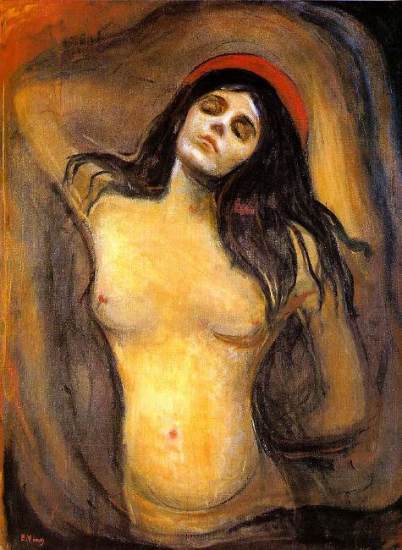
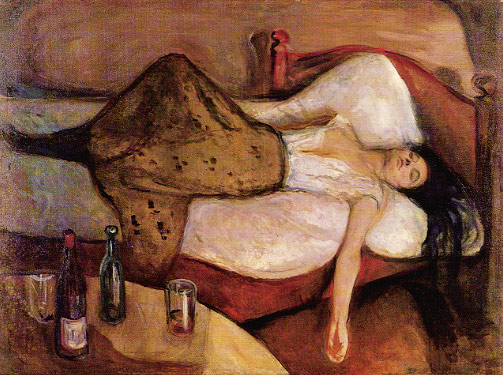
how it happened to me in Oslo two years ago: I was amazed to recognize Edvard Munch's painting in the young woman portrayed in .

I had the same experience at an exhibition called Titien, le pouvoir en face (Titian, power straight in the face) held last year in Paris at the Palais du Luxembourg, the museum of the French Senate. The portraits exhibited were essentially those of powerful men of the time, of which Titian was the official portraitist, such as several Doges of Venice, Dukes of Urbino, Kings of Spain Carlos V and Felipe II, King of France François I, and so forth.

A few portraits of women were also displayed though, among which I particularly loved the canvas displayed above. This young lady with an elegant feathered hat, who wears her coat on one shoulder in a very casual way, is showed before a dark background. Yet the whole picture is lightened by her brilliant skin and white shirt.

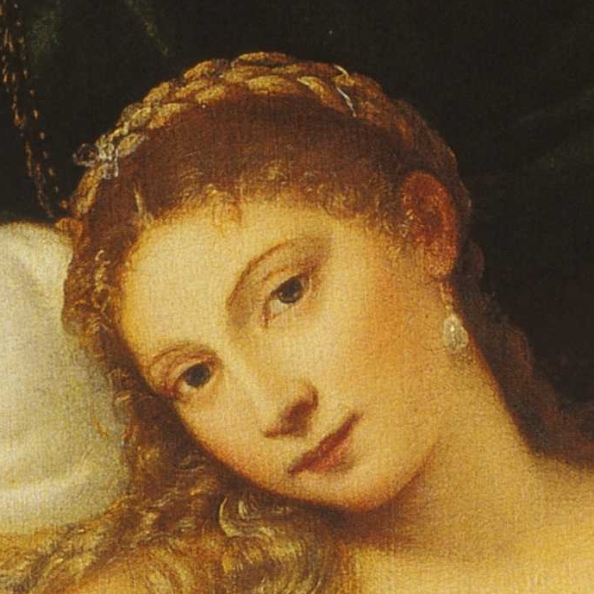
Titian — The Venus of Urbino
The Venus of Urbino (1538). Oil on canvas, 119 x 165 cm
Galleria degli Uffizi, Florence

Watching at the portrait of this young woman, I progressively had a weird feeling, that I knew her in person. I realized it was almost the case indeed, a few minutes only after I left the exhibition: the woman portrayed here was also the sitter of the Venus of Urbino, one of the most famous paintings by Titian.

I'll probably write here some day about how Titian took the topic of the Venus of Urbino from a painting by Giorgione, the (also called the Venus of Dresde), that Titian finished after his master died in 1510, and how his painting in turn inspired Édouard Manet when he painted , more than three hundred years later.

ImageImageIn fact, I had just hoped to see this wonderful painting in the exhibition, but it was not there. Probably it does not leave the Galleria degli Uffizi in Florence more than the Mona Lisa ever leaves the Musée du Louvre in Paris...

Well, at least I saw the face of Venus on that day, if not her whole naked body.

Cindy Sherman

Centerfolds — Untitled #83, 1981

For more than 30 years, Cindy Sherman has been taking photographs of which she is her own model, yet these are never self-portraits.

She has portrayed herself in hundreds storytelling pictures, using different poses, expressions, make-up, clothes, hairpieces, prostheses even sometimes.

I finally found time last week to go and see Cindy Sherman — Retrospective 1975-2005 in the Musée du Jeu de paume in Paris, just before the exhibition moved to Berlin. Funny, grating, often brutal, the figures in this gallery explore cultural and social stereotypes and their representation in the media, from magazine centrefolds to advertisements, films and classical painting.

Cindy Sherman — Untitled Film Stills #3, 1977
Untitled Film Stills #3, 1977
Sherman’s reputation was established in the late 1970s on the basis of her Untitled Film Stills, a series of 70 black-and-white photographs in which she depicted herself dressed in the guises of cliched heroines of B-movie and publicity shots from the 1950s.

In photograph after photograph, Cindy Sherman is always present, and yet never really there — her adaptation of a range of personae highlighting the masquerade of identity. I loved this series, as well as the next one, entitled Centerfolds/Horizontals.

Centerfolds — Untitled #93, 1981
Centerfolds
Untitled #93, 1981

Centerfolds is a series of photographic double spreads initially commissioned by the magazine Artforum in 1981 — and rejected for publication at the end, by the way — where Cindy Sherman wanted to refer to the centre spreads of “men's magazines”, showing herself as a young, vulnerable woman seen from above.

The pictures suggest their subject as scared or dumbfounded, more as the victim of a sexual attack than the usual compliant, indeed nymphomaniac girl, stereotype of porno fantasy.

As I moved forward in the exhibition and in time through the 1980s and 1990s, the metamorphoses became darker with every series (Fairy Tales, Civil War, Sex Pictures, Broken Dolls...) and even macabre.

Two rooms exhibited repulsive imagery where she took herself out of the picture, using instead body parts, mutilated dolls, rotting foods and such. Yuck! although the photographs were technically irreproachable for sure...

Clowns — Untitled, 2004
I liked more the recent series Clowns exhibited in the last room. In these pictures, Cindy Sherman used digital photography and computers to multiply herself and integrate coloured backgrounds.

These are disturbing or threatening photographs where insane clowns seem to be closer to the clown depicted in Stephen King's novel "It" than usual sweet simpletons.

In my opinion, Cindy Sherman is undoubtedly one of the main photographers of the end of 20th century. Only, I prefer a lot photographs she took in her first years, before she touched on horror and repulsion, on the decay and dismembering of the body.

Related Posts Widget for Blogs by LinkWithin

Home

Atom
Feed
Timeless Music
The Magic Flute
by W. A. Mozart


Timeless Reading
Les Essais
by Michel de Montaigne