Showing posts with label philosophy. Show all posts

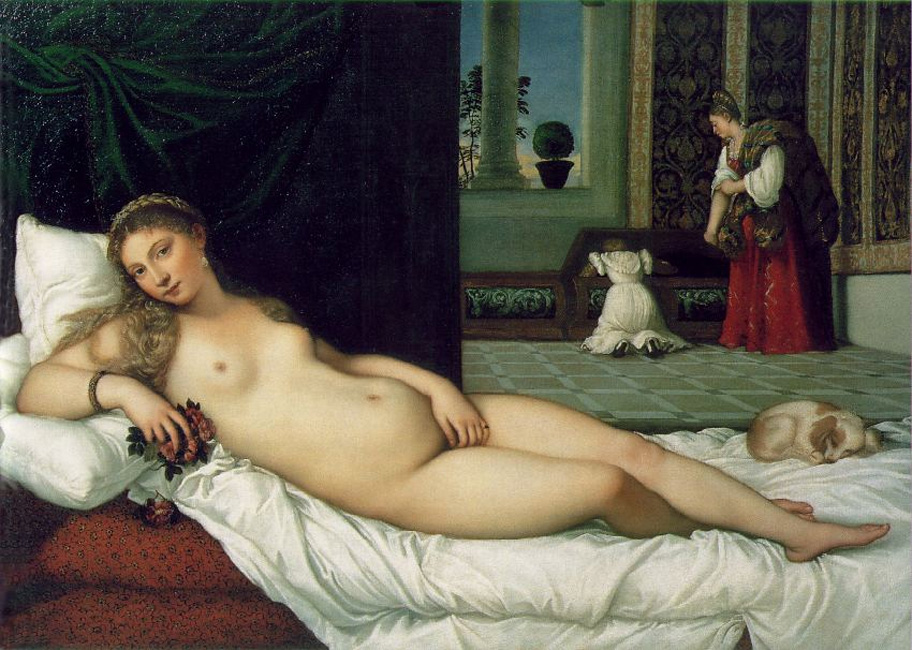
Venus of Urbino

Venus of Urbino by Titian
Venus of Urbino by Titian (1538)
Oil on canvas, 119 x 165 cm — Galleria degli Uffizi, Florence
I had known her for years, we had never meet though. About two years ago, I had hoped we would, at an exhibition dedicated to Tiziano Vecellio, aka Titian, held in the Palais du Luxembourg, the Museum of French Senate in Paris.

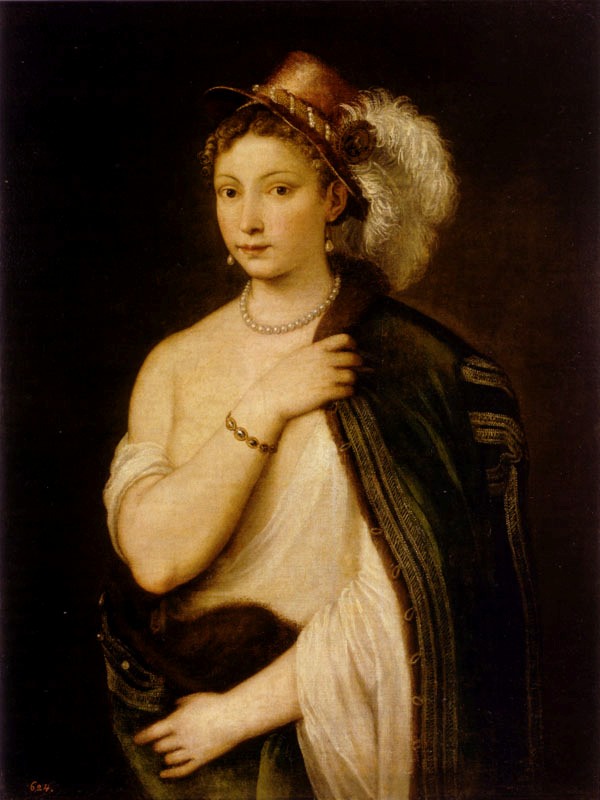
Titian — Portrait of a young woman
Portrait of a young woman (1536)
Oil on canvas, 96 x 75 cm
State Hermitage Museum, St. Petersburg
Yet, she stood me up. Well, as a matter of fact, she came, but she came on disguise, dressed as the young lady with an elegant feathered hat on the right side. I once wrote a blog about our quasi-meeting.

Because she was not allowed to travel to Paris, I had to go to Florence, the city where she has lived for about four centuries. I am just back from a five-day vacation trip there. As you can imagine, my eyes are still full of a lot of wonderful images: paintings, frescoes, statues, by Botticelli, Giotto, Lippi, Fra Angelico, Leonardo, Michelangelo, Donatello, and so forth, displayed in many places in the city. I am going to blog about them soon, yet on my first day in Florence the main thing was: I went to the Uffizi Gallery and I have met her at last!
Even the most perfect reproduction of a work of art is lacking in one element: its presence in time and space, its unique existence at the place where it happens to be." (Walter Benjamin)
In 'Little History of Photography' first, then in his famous essay The Work of Art in the Age of Mechanical Reproduction, Marxist philosopher Walter Benjamin used the word aura to describe the specificity of the work of art, which is unique, linked to a special place, and is part of history. According to him, and without going into details, mechanical reproduction of artworks by means of modern techniques such as photo and cinema frees them from place and ritual, and results in a loss of their aura. Although I don't agree with many developments of Benjamin's theories in terms of mass culture, I did feel Venus' aura in the Uffizi Gallery in a much deeper way than when I looked at her reproductions.

Thousands of pages have been written about this great painting. There have been endless commentaries and discussions about the meaning of Venus' open eyes that look directly at us, her left hand location, the bouquet in her right hand, the dog asleep at her feet, the two handmaidens in the background rummaging in what seems to be a wedding chest, the plant pot near a column on the window ledge, and many other details in the painting.
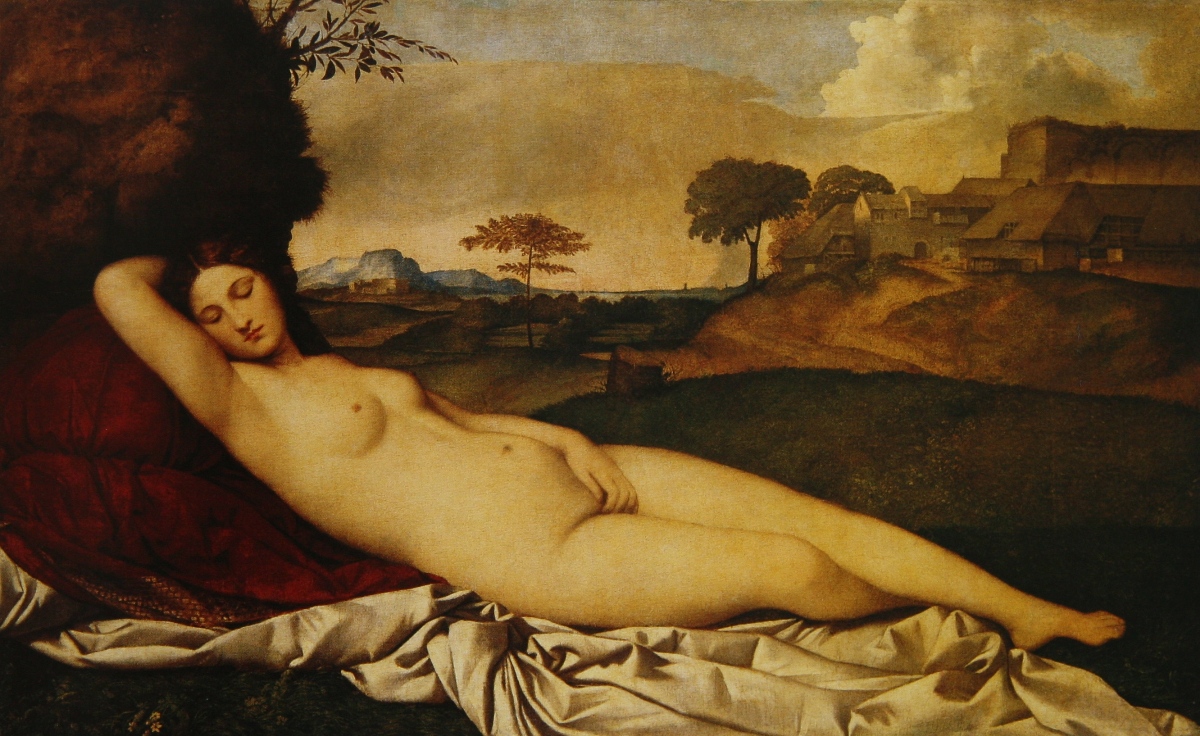
Sleeping Venus by Giorgione
Sleeping Venus by Giorgione & Titian (1510)
Oil on canvas, 108 x 175 cm — Gemäldegalerie, Dresden
I won't add to so many erudite works. To me, the Venus of Urbino is simply one among the most beautiful pieces of arts ever, as well as a big step towards modernity in painting. There is little doubt that Titian took the topic of the Venus of Urbino from a painting by Giorgione, the Sleeping Venus (also known as the Venus of Dresden), he himself finished after his friend and master died.
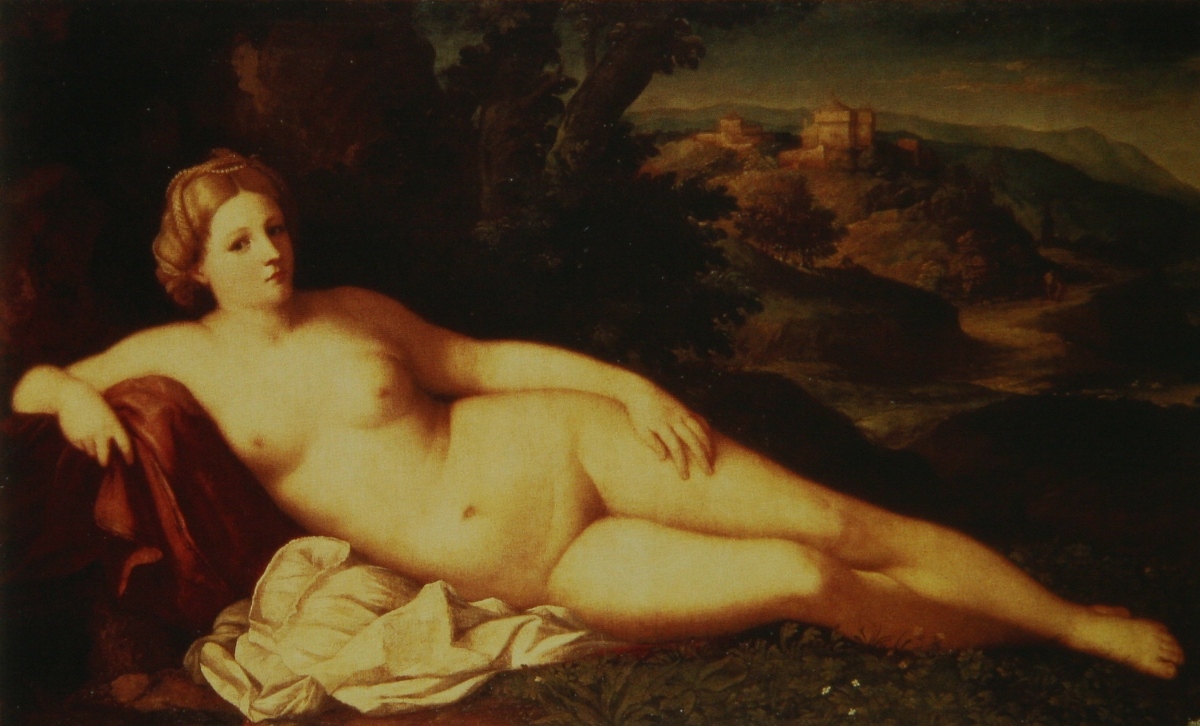
Venus by Palma Vecchio
Venus  by Palma Vecchio (ca 1520)
Oil on canvas, 113 x 186 cm — Gemäldegalerie, Dresden

Perhaps he knew also of the Venus by Palma Vecchio, where the nude woman, who lies in the country like in the canvas by Giorgione, gets the Venus of Urbino's wide open eyes.

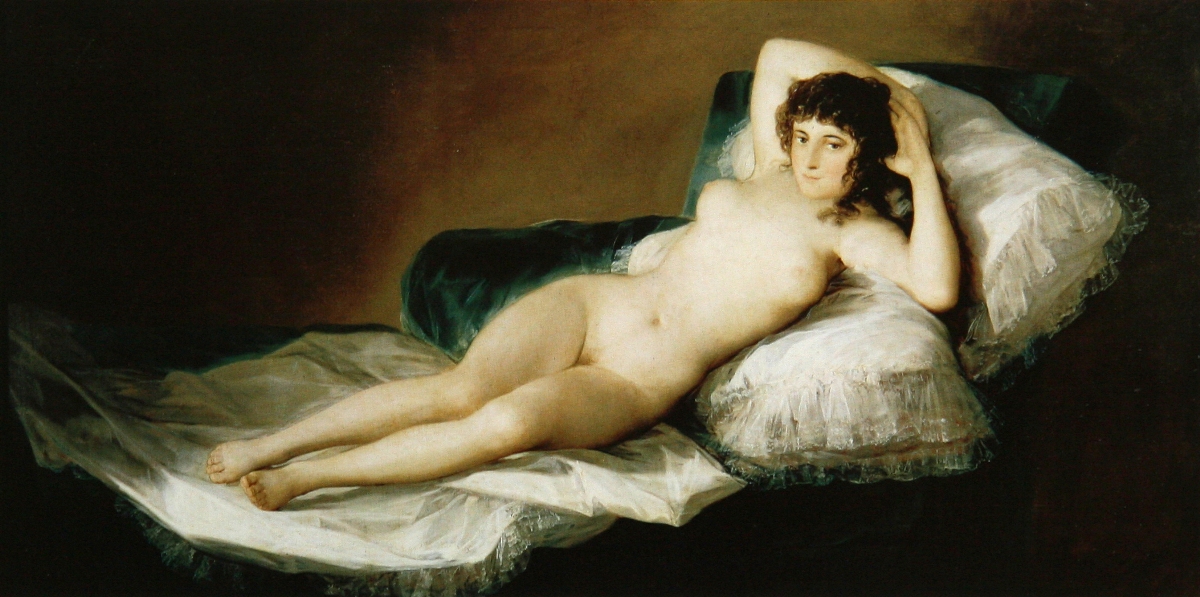
Titian's Venus of Urbino in turn inspired countless painters over the centuries in one of major topics of Western Art: the reclining female nude. It includes such huge painters as Francisco de Goya and, especially, Édouard Manet when he painted Olympia, more than three hundred years later.
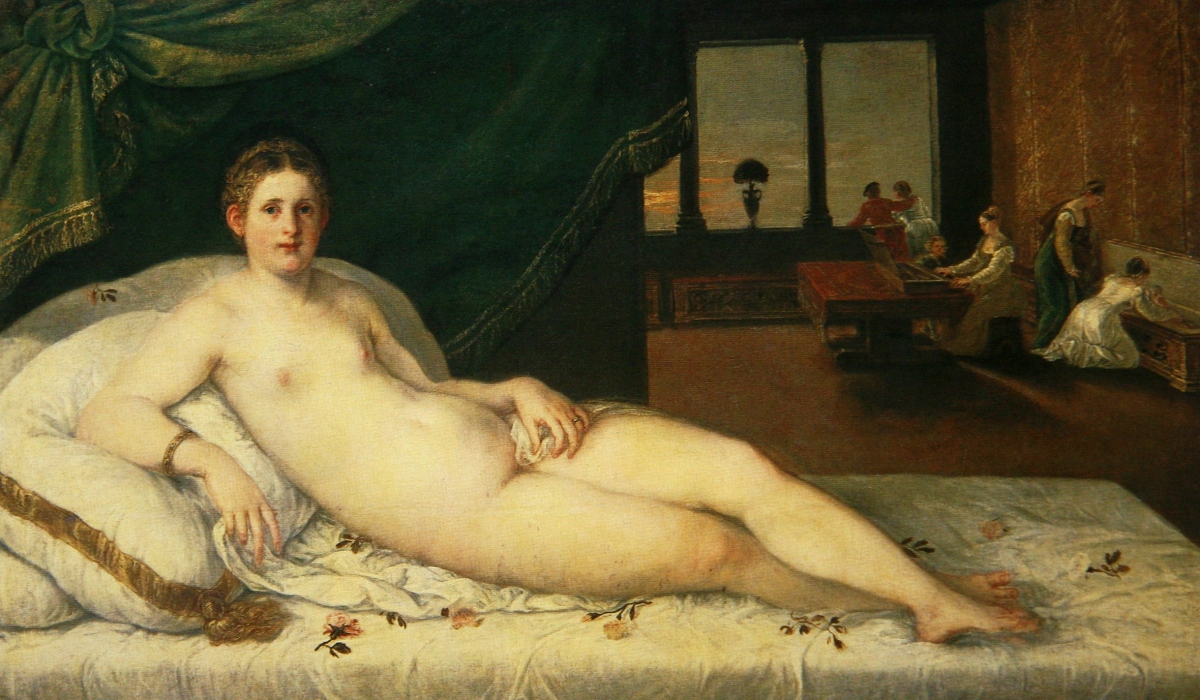
Venus by Lambert Sustris
Venus by Lambert Sustris (1558)
Oil on canvas, 116 x 186 cm — Rijksmuseum, Amsterdam
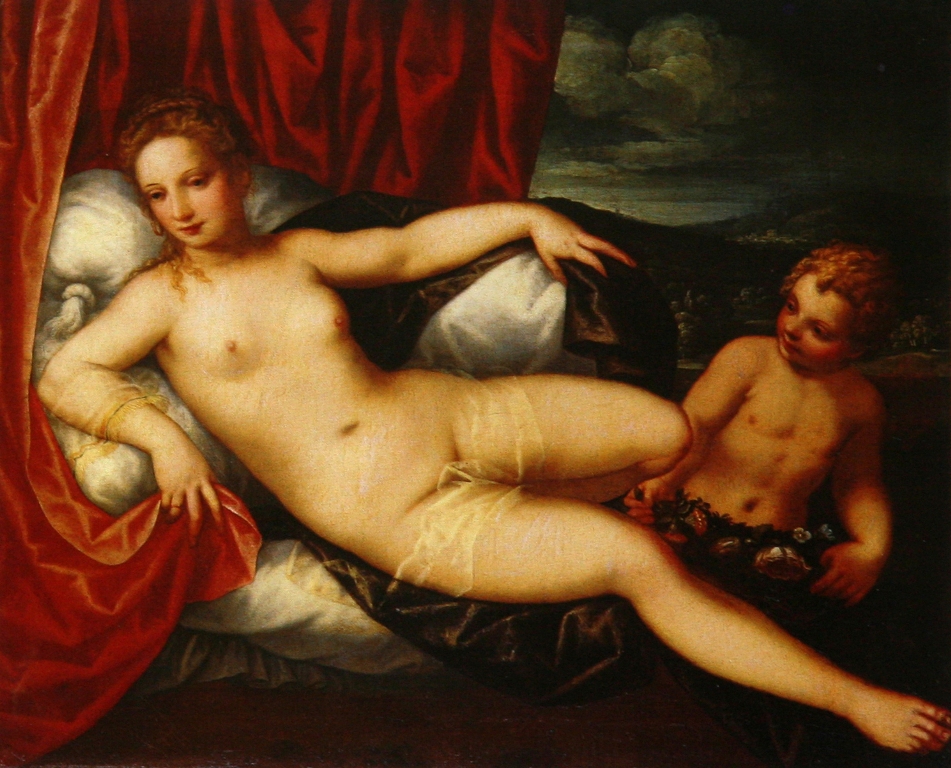
Venus and Cupid by Johann Rottenhammer
Venus and Cupid by Johann Rottenhammer (ca 1610)
Oil on canvas — Gemäldegalerie, Dresden
La maja desnuda by Goya
La maja desnuda by Francisco Goya (1805)
Oil on canvas, 87 x 190 cm — Museo del Prado, Madrid
Olympia by Manet
Olympia by Edgard Manet (1863)
Oil on canvas, 130 x 190 cm — Musée d'Orsay, Paris

Tao Tale

Yin & Yang Once upon a time in northern China, a small farmer lived close to steppes of which hordes of nomads had taken control. One day, he went back from the fair with a wonderful filly, for which he had squandered all his savings.
A few days later though, the young horse galloped away and disappeared beyond the dangerous border. The news quickly went around the village, and his neighbours each came in turn to sympathize with the peasant. Only he shrugged and said imperturbably:

— Clouds hide the sun, yet they bring rain. From a misfortune sometimes a benefit arises. We shall see.

Three months later, the mare came back with a superb wild stallion besides her. She was pregnant. Neighbours came and congratulated the lucky owner:

You were right in being optimistic, they said. You lost a horse first, but now you have three!
— Clouds sometimes bring rain, and devastating storms sometimes, the farmer said. Misfortune hides in the folds of happiness. Let us wait.

The farmer's only son broke the fiery stallion in, and loved to ride him. Several weeks later, he felt seriously and almost broke his neck. He came out of the accident with one broken leg. When the neighbours came and sang their complain again, the country philosopher answered:

— Calamity or blessing, who could know? Changes have no end in this impermanent world.

A few days later, general mobilization was enacted in the district to repel a Mongolian invasion. Every able-bodied young man had to go and fight. Few returned to their home. Thanks to his crutches, farmer's only son escaped the slaughter.

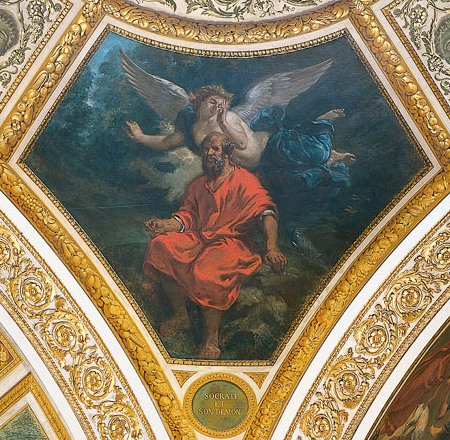
Socrates' Daemon

The favour of the gods has given me a marvelous gift, which has never left me since my childhood. It is a voice which, when it makes itself heard, deters me from what I am about to do and never urges me on.
(Socrates)

Socrates and his Daemon by Eugène Delacroix
Ceilings of the Library, French National Assembly, Paris.

Socrates used the word Daemon to name that voice in his inside that would to talk to him when he was about to do something wrong. Daemon (also Daimon or dæmon) is Latinised spelling of the Greek δαίμων. The word has been used to distinguish the daemons of Greek mythology, good or malevolent supernatural beings, from the Judeo-Christian demons, malignant spirits able to possess humans. Daemon in Ancient Greece had no devilish meaning. It referred to any upper power, including friendly spirits.

Socrates spoke familiarly of his daemon, joked about it and followed blindly its advice. He considered it to be a gift from the gods allowing poetry, mysticism, love, and philosophy itself. “The one who knows what is the right thing will do the right thing”, he would say, because he thought a good view of things makes people acts for the good — which means they behave wrongly when they are mistaken only. It is therefore of greatest importance for everyone to deepen their knowledge, he thought.

Socrates wanted to define clearly what is fair and what is not. Unlike the Sophists, he thought that the ability to distinguish the good from the evil lies inside the reason of the individual, not in rules of the society. “You cannot be happy when you act against your convictions” he believed, and who wants to be unhappy? If you know how to be happy, you will do everything you can to be happy. Therefore, the one who knows what is fair will also do what is fair.

Using a modern terminology, Socrates' daemon would be called intuition sometimes. However, the Greek word was clearly used to name an entity akin to what we would now call a guardian angel, and Socrates certainly attributed personality and voice to his daemon.

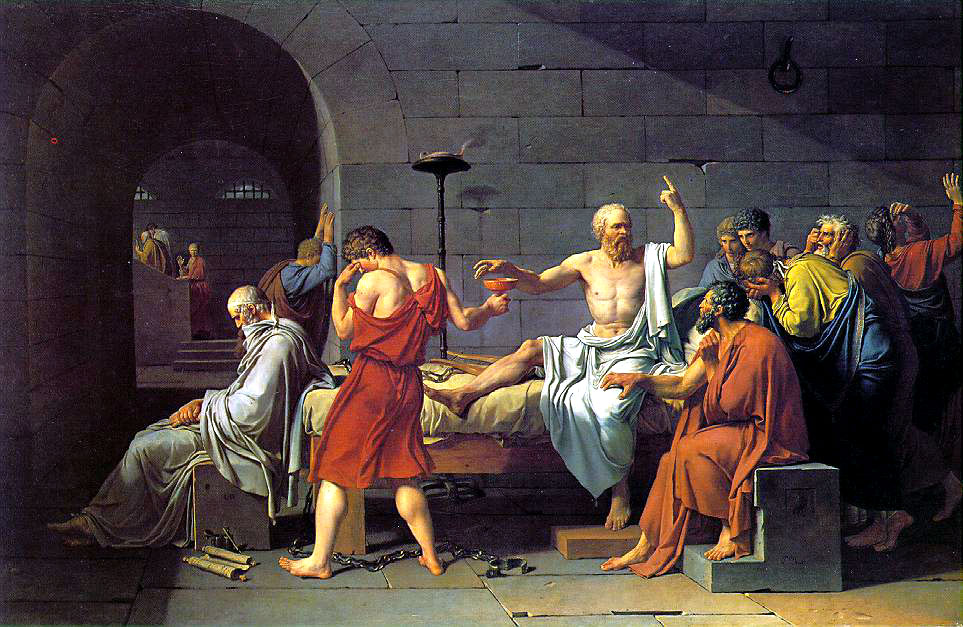
Jacques-Louis David — The Death of Socrates (1787)
In classical psychology, it was frequently translated as moral conscience. It's not perfectly accurate though — although the daemon was giving negative advice only: he would only tell Socrates what he should not do, not what he should do — because many things his daemon prevented Socrates to do were not evil things per se: doing politics, for instance, and especially steering clear of his own death sentence.

In psychoanalysis, one could parallel Socrates' Daemon to Superego. In fact, Carl Jung himself used the term daimon to describe a unique, independent spirit — neither good, nor evil — living in everyone.

Related Posts Widget for Blogs by LinkWithin

Home

Atom
Feed
Timeless Music
The Magic Flute
by W. A. Mozart


Timeless Reading
Les Essais
by Michel de Montaigne