Showing posts with label health and medicine. Show all posts

Ethnicity

Dying Gaul
Leonardo da Vinci – Vitruvian Man (ca. 1492)
Ink on paper. 34,4 × 25,5 cm
Gallerie dell'Accademia, Venice.
I don't usually blog about my occupation and readings as a nephrologist. Yet I'll make an exception with the present blog, that deals with a topic I have discussed for years with colleagues from the USA: the concept of 'human races'.

I read an article today in the medical review Kidney International that expresses a feeling shared by many European doctors: discomfort at seeing the word 'race' used with such a light heart in the international medical literature in English.

The average people will not use the term 'race' in Europe as they commonly do in the USA. In the mind of everyone, for obvious historical reasons, the notion of 'human races' is closely linked to racism, slavery, and the Shoah.

In medical literature though, particularly in articles from the United States, the word is still of current use.

Kidney International

I was very pleased then to read an editorial by Eberhard Ritz from Heidelberg and Sarala Naicker from Johannesburg, entitled "Race: A call to change nomenclature", in which the authors provide strong argumentation for making a systematic change in all scientific communications from 'race' to 'ethnicity'. 
             [Kidney Int 2009; 76: 807-808. doi:10.1038/ki.2009.356]

Here are some lines of their article:

In scientific meetings and literature, the term ‘race’ is still widely used to characterize the genetic background of specific cohorts. This term has become completely anachronistic with modern genetic insights and should therefore be abandoned.
[...]
It makes no sense to categorize individuals according to skin colour — the density of the skin melanocortin receptor, likely selected to provide protection against skin damage induced by ultraviolet light, bears little relation to the diversity of the genetic codes of respective individuals. Dark skin is seen in populations as diverse as African populations and Australian Aboriginals, the latter of whom have a quite different genetic background.

The use of terms that refer to distinguishing traits such as skin colour, body shape, and hair texture leads the scientific community to magnify differences and ignore similarities between groups of people. Also, these traits are no more accurate in making distinctions between human groups than any other genetically inherited characteristics. We are an extremely homogenous species genetically; all humans today are 99.9% genetically identical. 
[...]
The concept of ethnicity is related to the Greek concept of ethnos, which refers to the people of a nation or tribe, and ethnikos, which stands for national. Hence, ethnicity refers to the ethnic quality or affiliation of a group, which is normally characterized in terms of culture.
[...]
The International Society of Nephrology is a global professional society of nephrologists and renal research scientists with a multicultural and multiethnic constituency. Its goals include the development of nephrology and prevention of chronic kidney disease through education, training, research, and public awareness in both the developing and the developed world. In view of the above facts, the executive council of our society finds it is appropriate to use the term
‘ethnicity’ rather than ‘race’ in our scientific communications.

Some will think this is nothing but political correctness. I disagree. Words matter. Besides, it certainly is not merely coincidental that the article was written by citizens of Germany and South Africa, two countries where History has shown that 'race' is not an innocent word.

A Story of Three Friends

Forensics for Dummies
by B.T. Kidney and G. Grissom

I used to have an old friend, who was a reputable doctor. Nobody would have asked him about their symptoms or small complaints though, because with him, you would never know where such questions could lead you.

You should not think he was a dangerous doctor or a charlatan though. He was not at risk to be struck off the medical register, although his career was punctuated with a lot of death: my friend was an expert in forensics. He was even a leading expert in his field, among the best in the world.

A specialist in difficult diagnoses, death in suspicious circumstances, questionable suicides and unequivocal murders, he would find the diagnosis that explained the inexplicable. He was able to turn the irrational into the rational, and bring mysterious death back to normality.

Microscope
You will not be surprised then that he was often asked for a diagnosis about victims from all over the globe. He was always between two planes, always in a hurry. A globe-trotting doctor, although he did not have the look. Several years older than me, he was a very unobtrusive person, with a quiet elegance and temperate language. He looked like a man of law, a solicitor, a judge, rather than a doctor.

For that matter, his area of specialisation required frequent contacts with men of law because his offices would often come to settlement of complex inheritance issues, sometimes in a way quite unexpected by the heirs of the dear departed, when coveted legacies turned into sentences of life imprisonment.

Shoes

I had another very dear friend, who was quite different. About ten years younger than me, she was a very beautiful woman and a talented nude dancer at a famous Parisian cabaret.

I had followed her career and supported her for long. We were very hopeful she would become the first dancer soon.

My two friends met for the first time at a reception I gave on the occasion of my birthday. Between them, it was love at first sight. A few months later, my old friend divorced his wife, and mother of three grown-up children, and married her.

Yet aging persons are possessive sometimes. He made her interrupt her career. The young bride suffered a great deal, I can tell you. Her husband thanked her with long travels abroad rather than tokens of his affection. Soon, she only thought of keeping boredom at bay, and succeeded in this purpose in the most pleasant and Parisian way... I can surely tell you too.

Murder is always a mistake — one should never do anything one cannot talk about after dinner.
Oscar Wilde

My friend died shortly after their third anniversary. Nobody found the cause of his death, despite two autopsies: the first one performed at the request of his children, the other one by letters rogatory demanded by his insurance company, obviously reluctant to pay his young widow a premium that amounted to three million euros.

"No one will ever know why my poor husband died", she used to moan. "He was the only one who could find it out, but he cannot do it any more. He was the only one who knew how to kill your fellow man so that nobody can prove it." She would burst into tears then, and I comforted her in her grief the best I could.

Commelina
She wanted to publish his fascinating last book, that was almost finished when he passed on. When he was away from home, we both used to read the manuscript during our long evenings alone together. She deemed it her duty towards the deceased to publish the book — a last way to show him how grateful she was.

The book was truly of utmost scientific importance: in particular, it revealed the formula of a new toxic substance, unknown to the most eminent of specialists, that anyone could easily extract from the stamens of a common wild flower, thanks to a clever and innovative process.

Fireplace
If the book was to be published, no doubt that the plant poison would be called by my friend's name, giving him post-mortem fame, and immortality,  sort of.

Anyway, at the end, my old friend's widow bowed to my reasons. Hardly silencing her scruples, with a lot of tears in her eyes, she burned the manuscript in the bonfire we lit in our home's hearth, the very day we received the check from the insurance company.

[BbN #3]
-:-:-:-:-:- 

I first published this short story a couple of years ago in a previous blog, now deleted. My friend Vanessa was kind enough at the time to read it and point out several English errors. Thank you again, Vanessa.

Being the First, at any Price

Le Maillot Jaune [The Yellow Jersey]
Le Maillot Jaune

It is in the very nature of sport that competitors do as much as they can to win. For an athlete though, searching for the first place should not apply to the results of the competition only, but dignity, human excellence, and fair-play as well.

In other words, 'being the first at any price' is not defensible. There's a gap between being the first, thanks to your efforts, perseverance and biological aptitudes, and winning because you cheated.

Many people think that 'the end justifies the means' though. According to this logic, being the first is not the main goal in itself. It is a way to get honours, please a government, make money, and have many other people around make money also.

When I was a child, the punctuated July. I would spent hours watching it on TV. I undoubtedly learned a lot of French geography by writing down every stage, with distances, intermediate towns, passes to get over, etc. I would read every day in the local newspaper about the day's winner and the jersey holders: the white, spotted, green, and of course, Le Maillot Jaune.

Tom Simpson dies — Mont Ventoux, July 13, 1967
Tom Simpson
Mont Ventoux, July 13, 1967
And then... on July 13, 1967, died climbing Mont Ventoux. Millions people saw it . I did. "Heat exhaustion" they say. That's right, blame the heat... Even the child I was at the time understood it could not be related to heat only. We heard later that Simpson's autopsy found amphetamines and alcohol in his blood. Police also discovered amphetamine tablets in the pocket of his jersey and in a team support car.

As year passed, we heard of steroids, androgens, the 'pot belge', erythropoietin, and so on. We learned that, besides training, willpower, capacity for overcoming pain, that are still necessary in a crazy competition that aims at putting back the limits of human resistance to pain and effort, doping substances were and are still essential.

Richard Virenque, Marco Pantani, Jan Ullrich, Bjarne Riis, Floyd Landis… and . Dozens of cheats and liars who had sworn for years they were 'clean', until they were convicted of doping, and then cried and apologized. Many cyclists have not been caught yet, or have miraculously been put in the clear, scientifically guilty but not guilty on juridical grounds… What a farce.

Anyway. A lot of people still love the Tour de France… people outside France especially. Among the people who watch Le Tour on the French roads every year in July, there are a lot of fans from all over the world, bikers or not, who come to France especially to see it. Good for them.

Yet, as for me and millions of French people, I don't follow the Tour de France any more. I watch the News of the Tour sometimes though. Not because I want to hear about who won the stage or who leads the race. Only, I am a little interested in hearing which cheats will be unmasked this time.
[BbN: #1]

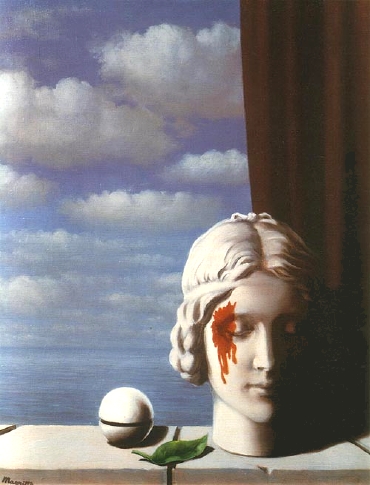
Memory Lapse

René Magritte — La Mémoire
La mémoire (Memory)
René Magritte, 1948
Oil on canvas, 59 x 49 cm

As I was taking an old lady to the exit door, the next patient in the waiting room rose from his chair and sneaked behind my back into the consultation room. No secretary in sight. I went back in, closed the door, and started wondering... I know I have seen this man before, but when? why? and what is his name?
'Please have a seat. How can I help you?' He put his coat on a chair, sat down on the other one, folded his arms, and said with determined voice:
'Doc, we have a problem: I am not doing better at all!'

I have a problem indeed, I thought: I don't have a clue about what on earth is his problem. I can't even put a name on his face!

'Oh, really?' I said, hopeful he would give some piece of information.
'Yes, Doc. I took the drug as you prescribed, yet it's still about the same!'
'Don't you feel any better?'
'No, not at all! It goes on just the same! I have waited for a couple of weeks as you told me, but it didn't stop. Then, here I am again!'

He was talking with such an assured tone that I could not tell him I didn't remember a thing of his story. If only I could remember his name, I'd have a quick look at his record...
'Did you bring your previous prescription?'
— (Rummaging through his pockets) 'Aw, I forgot it at home I am afraid. It's easy though: these are white pills, in a blue box. Well, it doesn't mind anyway, you wrote it down in my record'.
(This guy is going to kill me) 'Of course, you're right. Tell me, when did you come and see me the last time?'
'Hmm, wait, well, it was a Friday, or maybe a Tuesday. Or was it a Wednesday? Well, in any case, it was four weeks ago! Five perhaps. Well, not more than six weeks ago, definitely".

As he was thinking about it, I tried to find his name in my agenda. Fortunately, I have only one consultation a week in this hospital, on Mondays. Not that week... Not that week either...YAY! Here it is, lost among more familiar names. He came three months ago, the day I had such a dreadful headache! Phew. Relieved at last, I took out his record and read it quickly. With a smile of contentment on my lips (that surprised him obviously), I said:
'So, you are not doing better? Well I never!'

Willem Kolff, The Dutch Tinkerer

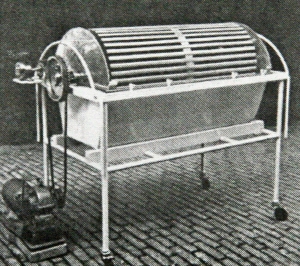
The 1944 version of the Kolff's rotating drum artificial kidney
The 1944 version of the Kolff'
rotating drum artificial kidney
Willem (Pim) Kolff died a few weeks ago. You probably did not hear about it: he was not a pop singer, a famous actor or a professional football player, he was only a scientist whose work has been credited for saving millions of lives.
Granted, he was almost 98 year-old — it comes with no surprise when such an elderly person dies — and he was not unrecognised: Dr Kolff received many international awards, including the Lasker Award for Clinical Medical research, when he was... 91, probably because he was never given the Nobel Prize, which is a shame. Yet his death went almost unknown, especially by most of the people with end-stage renal failure who live thanks to his great first invention: the dialysis machine.
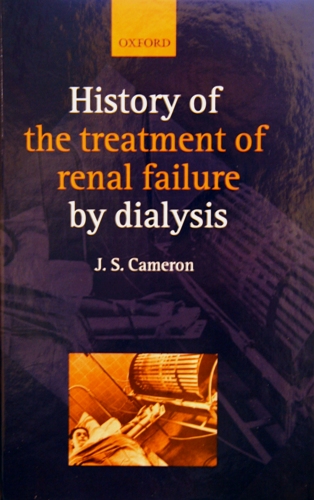
J. Stewart Cameron - History of the treatment of renal failure by dialysis
As a young doctor in Groningen in the Netherlands in the end-1930s, Willem Kolff witnessed the miserable, painful death of a 22-year-old man from kidney failure. He had to tell his mother that his only son was going to die, and there was nothing he could do. "If I only could find a way to remove toxic waste products from the poor guy's blood, I would save him", he thought. He then devoted himself to research on creating such a machine.
When Pim Kolff was a child, he was tinkering about all the time, so much so that his father arranged for him to have lessons with a carpenter on Saturdays afternoons. As an adult, he remained a handyman. He conducted his first experiments with sausage skins filled with blood and urea, that he put into a bath of salt water. Urea passed through the membrane from the blood to the salt water: the concept of using dialysis for building an artificial kidney was born.
It was only in 1941 though, when the Netherlands were under German occupation, that he succeeded in developing a prototype machine. Kolff had left Groningen in 1940, on the day a Dutch Nazi replaced his former Jewish professor as head of his department, and worked in a small hospital in Kampen, on the Zuiderzee (now called the Ijsselmeer).
Willem J. Kolff
Willem Kolff
Materials were in short supply at the time, and almost everything was requisitioned by the Germans. Kolff build his prototype with metal pieces from a downed fighter plane, a wooden drum, the cooling system from an old Ford, and 40 meters of sausage casings (later, he would also use orange juice cans and a washing machine).
The cellophane casings were wrapped around the drum and set into a salt solution. The patient's blood was drawn from a wrist artery and fed into the casings. The drum was rotated, removing impurities, and the Ford motor pumped back the blood into the patient.
In 1945, after 15 deaths and many modifications and improvements, the dialysis machine saved a patient for the first time. Ironically, it was a woman in a coma due to renal failure who had been imprisoned as a Nazi collaborator. After eleven hours of treatment, she awoke from coma, and lived seven more years. Hundreds of thousands of people now undergo dialysis several times a week.
Before he invented the kidney dialysis machine, Willem Kolff created the first blood blank in Europe, during the German bombings on The Hague in May 1940.

"If a man can grow a heart,
he can build it" 
Willem J. Kolff (1911-2009)
After he emigrated to the USA in the 1950s, he improved his dialysis machine, that was used worldwide for almost twenty years. He developed heart-lung machines used to oxygenate blood during cardiac surgery. In the 1970s, he was the leader of a team that developed the artificial heart. He was also involved in the development of artificial eyes, ears and limbs.

Mindless Eating

[The discussion born from the comments about the recent blog 'Eating together' made me think of several old blogs of mine about food, that disappeared when I deleted my other blog on Yahoo! 360. This post was published in May 2007]
-:-:-:-:-:-:-:-:-
Pop-Corn
I was in a bookstore in Chicago several months ago, looking for medical books, when I happened to glance through a little book called Mindless Eating, by Brian Wansink, a professor at Cornell University, NY. The experiments depicted in the book were clever, and often funny.


I remembered of it yesterday when I came upon an article by David Leonhardt in the International Herald Tribune (The Herald is an international newspaper in English, based in Paris, that combines the resources of its own correspondents throughout the world with those of The New York Times). Leonhardt began his article by telling about an experiment I especially remembered because the idea of eating lots of stale popcorn almost made me sick when I was in this bookstore in Chicago.

Image Mr. Wansink gave away five-day-old popcorn — “stale enough to squeak when it was eaten,” he wrote — to moviegoers one day at a theatre in the Chicago suburbs. The crux of the experiment lay in the size of the buckets that held the popcorn. Some people got merely big buckets, while others received truly enormous ones. Both sizes held more popcorn than a typical person could finish.

 
Yet when the Wansink research team weighed the buckets after the movie, there was a huge difference in the amounts the two groups ate. Those with the bigger buckets inhaled 53 percent more on average, suggesting that a lot of stale popcorn is somehow more appealing than a little stale popcorn.
 
Over the years, Mr. Wansink has done similar experiments with everything from different-size dinner plates to bottomless bowls of tomato soup that are secretly connected to a tube underneath a restaurant table. His overarching conclusion is that our decisions about eating often have little to do with how hungry we are. Instead, we rely on cues like the size of a popcorn bucket — or the way we organize our refrigerator — to tell us how much to eat. These cues can add 200 calories a day to our diet, but the only way we’ll notice we are overeating is that our pants will eventually get too tight.
 
The scariest part is that most of us think we are immune to these hidden persuaders. When the moviegoers were told about the popcorn experiment afterward, most of them scoffed at the idea that their bucket size had any effect on them.

Eating Together

Eating together
The starter I've prepared for dinner: a few cherry tomatoes and a big sliced one, feta cheese, some lettuce, a bit of chicken cut in dices, olive oil, vinegar, pepper, salt, that's it. Bon appétit!

'French women don't get fat', a US best-seller book stated. It's almost true: despite their food is usually considered rich, the French have the average lowest corpulence in Europe, relatively low rates of diabetes and coronary diseases, and are among the people with the longest longevity. Many reasons have been given as an explanation for this French paradox, that include habits of eating small portions of several foods rather than one huge portion, using olive oil, eating a lot of dairy produce and vegetables, drinking red wine, and walking rather than driving for short distances.

According to a recent study by the INSEE, the French Institute of Statistics and Economic Studies, there may be also another cultural reason: the ritualization of meals, a distinctive features of French people, most of whom still take their meals together at a given time. Such a synchronisation of meals, at around 13h for lunch and 20h for dinner, 'distinguishes France from most other countries in Europe and the United States, where traditional meal — conceived like a moment shared by all members of a family gathering together on this occasion — almost disappeared at the end of the 1970's', the study says.

Dinner, especially,'is still a mandatory stage in daily timetable of the French, one of last refuges of family socialization'. Indeed, it is often the only common activity for married people who go their separate professional life in the daytime, and the moment when parents and children have a time to talk together. Meals are not only considered a moment when you fill up your stomach as fast as possible, but a dedicated period of the day when you talk and share with your family.

I love the idea that gathering together and sharing meals is beneficial to relations between members of a family, and to health as well.

Oops, by the way... I got to go: it's 8:00 pm now, dinner time here!

Noir Désir

Gagnants/Perdants by <em><u>Noir Désir</em>
Gagnants/Perdants by Noir Désir

Noir Désir became famous in 2001 with their song 'Le vent nous portera'. Yet the band was disrupted after singer Bertrand Cantat was jailed for the manslaughter of his girlfriend, actress Marie Trintignant after a violent row in a Lithuanian hotel in July 2003. He was sentenced to eight years imprisonment, but left jail last year after he had served half the sentence.

"Noir Désir died the same day as Marie", Cantat once said. Yet the band does not appear to be that dead, since they released on the Internet last Thursday, that everyone can download for free.

Le vent nous portera (Noir Désir)

For several months, I did not listen to 'Le vent nous portera' because I could not help thinking this voice belonged to a man who once beat his wife to death. I still have mixed feelings about it: the song exists anyway, and it is a great song.

Giorgio de Chirico — The Red Tower
Giorgio de Chirico
The Red Tower (1913)
The Barnes Foundation

When I was in Philadelphia lately, I visited , a fascinating place where hundreds (!) of chef-d'oeuvres are displayed. It owns a lot of Impressionist paintings especially. Also, many canvases by various painters who were not impressionists are exhibited, among which several pieces by .

I like many paintings by Chirico, in particular those he painted during his 'metaphysical' period. Yet the artist later joined the futurist movement 'Valori Plastici', then its 'Novecento' following, who both supported Mussolini's fascism. I sure dislike what were the ideas and behaviour of the individual. I still love many of his paintings anyway.

Another example: French writer , also a doctor in medicine. His first novel, 'Journey to the End of the Night' (Voyage au bout de la nuit) is among my favourite books ever. 'Death on the Instalment Plan' (Mort à crédit) is another great novel by him. His medical thesis about , who discovered the cause of puerperal fever and introduced hand washing in medicine, is at the same time a marvel of smartness and independence of mind, and splendid literature.

Yet Céline was a racist and anti-Semite, who shared many opinions with the Nazis. He wrote shameful pamphlets about the Jews before and during WWII. After the war, he was convicted a collaborator and imprisoned. I despise the man, I deeply admire several novels he wrote.

So... I still look at paintings by Chirico. I still read Céline. I still listen to music by Wagner. I may still listen to the songs by Bertrand Cantat also then. It does not mean I would shake the hand of the man, if it ever happened that I met him.

Stendhal Syndrome

Tomb of Galileo Galilei — Basilica Santa Croce, Florence
The tomb of Galileo Galilei
by Giovanni Battista Foggini
Basilica Santa Croce, Florence.
Henri-Marie Beyle, better known by his pen name, Stendhal, is the author of several famous novels, among which Le Rouge et le Noir (The Red and the Black) and La Chartreuse de Parme (The Charterhouse of Parma). He was also a lover of arts. In 1817,  aged 33, he had a long trip in Italy. He related afterwards, in his book "Rome, Naples et Florence", that he was quickly overwhelmed by the rich legacy of art and history of the country.

The day he visited the Basilica of Santa Croce in Florence, a monument that houses the tombs of Machiavelli, Michelangelo, and Galileo, and with famous frescoes by Giotto on the ceilings, he was overcome with emotion:

I was in a sort of ecstasy, from the idea of being in Florence, close to the great men whose tombs I had seen. Absorbed in the contemplation of sublime beauty, [...] I reached the point where one encounters celestial sensations. [...] I had palpitations of the heart [...] Life was drained from me. I walked with the fear of falling.

Stendhal wrote then the first description of what is now called Stendhal Syndrome, a psychosomatic phenomenon that may include dizziness, increased heart rate and palpitations, chest pain, sometimes loss of self-conscience, confusion or even hallucinations. Some people will get depressed, others will go from exaltation and feeling of omnipotence to panic attacks and fear of death.

About ten cases of the Stendhal syndrome are reported every year in Italy, among people who have gazed at works such as the David by Michelangelo or The Birth of Venus by Botticelli. It is not a specific 'Italian art disease' though: it can occur whenever people who have been eagerly expecting an emotion for a long time finally feel it, in the deepest way. It can happen in front of a special place, when you gaze at a painting or a landscape, or even when you look at the face of the beloved one, the day you have succeeded at last to have a date with her/him...  Look out then!

Loss

I had the following talk once, with a friend who does not work in the medical field:

— As a kidney physician, you are in charge of a lot patients on dialysis, and see many people with terrible diseases. It must be tough. I admire doctors, I could never be one of them. I could not endure the death of a patient, it would depress me so much!
 
— It may take a toll, yes. With experience however, we physicians learn not to feel too guilty when a patient of ours die. If we did our best in conscience, we try to think we did the best.
 
— But this cannot be true every time... I know I would keep on believing that I could have done better.
 
— Oh yes, it happens. Sometimes I feel guilty because I was not able to do more. Sometimes, I think I should have managed the situation otherwise. It happens. Most often though, I know it was not possible to prevent the evolution. At least I helped for a while hopefully...

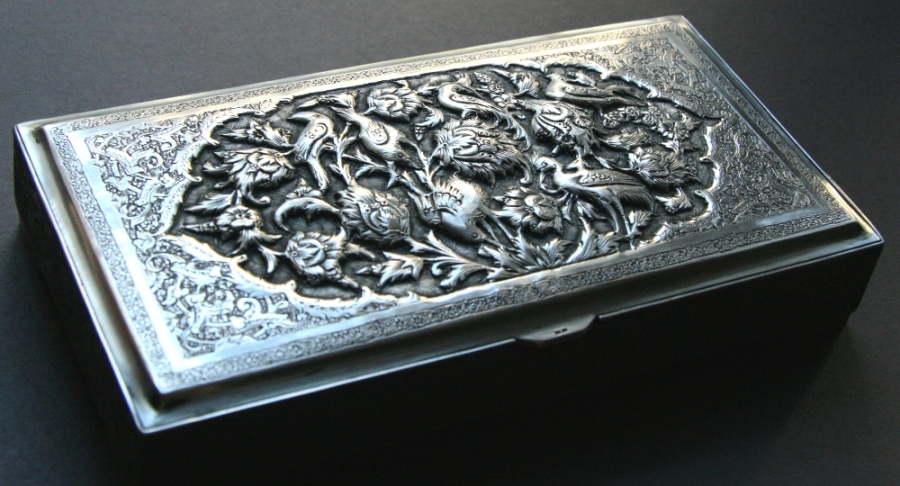
I was given this beautiful silver case as a New Year present by an Iranian 85 year-old man who had been my patient for several years before he died lately.

He had left his country in 1979 because of the Islamic Revolution. Once a political opponent, and now a person with a chronic renal disease who depended on dialysis for his survival , he painfully knew he would never see his homeland again. He was always cheerful and friendly to everyone though.

In fact, the old gentleman did not give me the box as such. He gave me chocolates... put inside the silver box. He was an upright and nice person I had become much attached to. I think of him often.

Homeless

Homeless

I took this picture several months ago, in a street close to my apartment. Lost in a sweet inebriated state, these homeless persons were friendly, and agreed gladly to be photographed.

When I took the photo, I found it funny that in Paris, even homeless winos would drink wine in stemmed glasses.

I took the photo, put the file into my computer... and did not show it to anyone. I felt ill at ease because I realized afterwards that it was not funny. According to a counting published lately, there are approximately 86,000 homeless people in France, a country with about 65 million inhabitants, of which at least 15,000 are in Paris. One can guess there are even more in reality though. Many hide because of bad weather, fear, or shame.

According to another study, 112 homeless people died in France from February to October, 2005. Their mean age was 49, while life expectancy of men and women in the country is 77 and 84 years, respectively. The youngest one was 31 year-old, half people were under 50. Twenty-one died a violent death: 8 murders, 7 blazes, 6 falls.

As a doctor myself, and although I rarely receive homeless people as patients, I know these persons often suffer chronic diseases. Their main illnesses are related to undernourishment (lack of vitamin C and calcium essentially): infections, anaemia, bleeding, neurological and cardiovascular disorders, bone fractures. They can be treated for free thanks to universal health coverage, but most of them are outside any network of socialization, and they don't know. Then, chronic diseases such as diabetes and high blood pressure are not diagnosed or treated. Furthermore, homeless people often have heavy consumption of tobacco and alcohol, that induce cardiovascular diseases, cirrhosis and cancers.

No, after all, this pic is not that funny.

Guns in the USA (follow-up)

Why don't we do away with the court system and go back to the Old West? You have a gun and I have a gun, and we'll settle it in the streets if that's they're thinking. We think we're such an improved society... The rest of the world is laughing at us.

— Chicago Mayor Richard Daley.

The Mayor of Chicago responded here to a recent statement by the of the United States of America that the Firearms Control Regulations Act of 1975 is unconstitutional, and handguns may not be banned by the District of Columbia. The Supreme Court enacted that the District's ban on handgun possession in the home violates the of the U.S. Constitution's Bill of Rights.

The Second Amendment states: A well regulated Militia, being necessary to the security of a free State, the right of the people to keep and bear Arms, shall not be infringed. As you can imagine, it's a very old stuff: it was enacted in 1791, shortly after the war of independence against the British. More than two centuries have passed, but it has not been modified.

A few months ago, about several articles published in the , where they showed that guns are a main Public Health issue in the United States, with tens thousands casualties a year. Unfortunately, it seems things will not change before a long time in that country.

In fact, Mayor Daley, most of the people in the civilized world are not laughing at the U.S.A. They are astounded rather, and sometimes scared.

Laughter as a Doctor

Clown Doctor
If hospital administrators could spend ten minutes viewing their hospitals through the eyes of a hospital clown, there would be a clown in every corner of their hospitals (Shobhana Schwebke)

In various cultures, clowns have been associated with healers, medicine men, shamans, and other figures related to health care. Some decades ago, in a few places, members of the hospital staff started dressing up as clowns, as Dr Patch Adams (now famous because of the movie with the same name, starring Robin Williams) or psychotherapist and famous novelist Howard Buten.

Professional clowns began working in hospitals in 1986 under two programs called the Robo Project in Winnipeg, Canada, and the Big Apple Circus Clown Care Unit in New York City, USA. The latter program was a model for the Theodora Foundation in Switzerland and for Le Rire Médecin (Laughter as a doctor), an association created in 1991 in France by Caroline Simonds, alias Dr Giraffe. In France, over 40,000 children, their parents and hospital staff enjoy a fun-filled visit from Le Rire Médecin's very special clowns every year.

Dr GiraffeCaroline Simonds
alias 'Dr Giraffe'
Other organizations have followed this model that are now present all over the world, such as Doctor Clown / Docteur Clown (Canada), Die Clown Doktoren (Germany), the Association Docteur Clown (Lyons, France), Clowndoctors (Scotland), the Humour Foundation (Australia), Doutores da Alegria (Brazil), etc. etc. Seems there are even hospital clowns in China now!

These clowns are not doctors and nurses dressed up as clowns any more, but companies of professional clowns trained to adapt their craft to a healthcare environment and who agreed to abide by the hospital clowns' code of ethics. Red noseThey usually wear little make-up (sometimes a red nose only), communicate verbally, and always work in pairs. They are caricatures of the staff members, 'almighty doctors' especially. They are dressed like doctors but misappropriate medical equipment... although they are specialists of nose transplant.
Groucho Marx said: A clown is like an aspirin, only he works twice as fast. He was right: hospital clowns don't administer anything except humor, but still they are great healers. A clown gives staff, patients and relatives, permission to play and to have fun. Everyone is happy to see a clown, as everybody is delighted to hear a child or a baby laughing. It is easy to hug a clown, it is easy to talk to a clown. Even if not talking to him, no one walks by without smiling, even in a hospital. The clown personifies the vulnerability and sweetness of life. He is a living Teddy Bear.

Happy non-smoking Year!

Stoeker/Bergami — Untitled

About 3 million people die every year in the world because they smoke. In France, tobacco kills about 60,000 people each year, of which about 10 percent are non-smokers who died from passive smoking.

Sixteen years ago, French Minister of Health Claude Évin enacted a law forbidding people to smoke in the metro and trains, and requiring no-smoking areas in restaurants and cafés.

It was commonly ignored by owners of restaurants and cafés though, essentially because separating smoking from non-smoking areas was difficult in small premises.

Starting in February 2007, and after several European countries, another French law barred smoking in public places such as government offices, schools, hospitals, and the like. Simultaneously, Dominique de Villepin, the French Prime Minister at the time, decided the State would take charge of one-third of the costs of anti-smoking treatments, such as patches. “That would represent the first month of treatment” he said. And probably  it will save a lot of money in the future, since it will lower costs related to tobacco-induced cancers and cardiovascular diseases. 

No Smoking! However, so-called areas of social interaction — cafés, restaurants and nightclubs — had received a reprieve until January 2, 2008. Here we are. It will be interesting to see if the French obey the regulation as well as the Italians did when they banned smoking themselves, three years ago.

Although there has been quite a lot of lobbying in the media lately against the (sic) “liberticidal law”, I think we should be optimistic. The first part of the ban was easily accepted by the French in 2007. Despite they are usually depicted as intrinsically reluctant to comply with the rules, polls regularly showed that most French people supported the ban by an average 80 percent (about 60 percent among smokers). Hopefully, it will be the same in next weeks and months, and we can have a dinner in any restaurant without the smell of tobacco... at last.

So... Happy non-smoking New Year, everyone!

$icko

Sicko A Study of Sexuality and Health among Older Adults in the United States was the title of an interesting article published two weeks ago in the New England Journal of Medicine.

You probably heard of this study, that was reported at great length in the media all over the world. The paper concluded that many older adults are sexually active. Okay. Nothing that surprising or brand new here, yet interesting to know.

Only, there was another great article published in the very same issue of the New England Journal of Medicine that received much less attention from the media. Its title was Healing Our Sicko Health Care System, by Jacob S. Hacker, Ph.D. The article dealt with the last movie by Michael Moore bearing this name in a level-headed way, not at all hagiographic of a movie of which the limitations were underscored. Quoting its first paragraphs:

ImageThere is a scene in Sicko — Michael Moore's controversial new film about U.S. health care — that captures both the power and the limits of Moore's cinematic polemic.

A mother is speaking about her 18-month-old daughter, Mychelle, who became ill one evening with vomiting, diarrhoea, and a high fever. At the nearest emergency room, Mychelle is treated by a physician who suspects, rightly, that she has a life-threatening bacterial infection. But rather than give her antibiotics, the doctor calls her insurer, whose physician-gatekeeper tells him that Mychelle is not covered at the hospital and must be taken to another facility. The doctor repeatedly says that Mychelle needs care, and he is repeatedly told that she must be transferred first. Finally, nearly 3 hours after arriving at the hospital, wracked by seizures, Mychelle is taken to the approved facility. She dies 15 minutes later.

As Mychelle's mother, Dawnelle Keys, recounts this awful sequence of events, a swing hangs empty in the background. Even if we had not witnessed multiple tragedies already — a woman seriously injured in a car crash whose insurer denies payment because she doesn't obtain "prior authorization" to visit the emergency room, an elderly couple who move into their daughter's storage room because they cannot afford their medicine, an uninsured man forced to choose which of his two fingers to have reattached after an accident — we'd know how the story ends.

And yet, when the moment comes, and Dawnelle Keys's voice cracks as she describes losing her daughter, the effect is still devastating. We can't but wonder how our rich, powerful country can let so many citizens face such unnecessary pain and loss. How could a government "of, by, and for the people" fail so miserably to protect the people from such vast and preventable tragedies?

ImageIndeed. I have heard so many stories of the same kind from chat friends living in the United States. Each time, I feel sorry... and angry too, probably because I am a doc myself, and I live in Europe. It seems surreal to see such failure in the richest and more powerful country in the world, while the right to be treated has been a fundamental right in European countries for decades.

A few years ago, USA was ranked 37th in the World Health Organization's ranking of the world's health systems, and at the same time, about $5 billion a month are spent in Iraq? There must be an error somewhere.

Pregnant women should not take ACE Inhibitors

Normal ultrasound - 18 weeks pregnancy

For the first time today, I felt it necessary to post something related to my work rather than my hobbies. The issue is worth to be told about indeed, for the information of the ten thousand people who read the present blog every day, ha-ha.

In a group of 209 babies born to women taking Angiotensin-Converting Enzyme inhibitor drugs (ACE inhibitors) in the early stages of pregnancy, a recent study reported that 18 or 7.1% of the infants were born with serious birth defects.

ACE inhibitors are a class of drugs used to treat high blood pressure. They work mainly by relaxing blood vessels and they are often prescribed to people with diabetes. ACE inhibitors include benazepril, captopril, enalapril, fosinopril, lisinopril, moexipril, quinapril, ramipril and trandolapril (these are international names, brand names mostly differ among countries).

Use of ACE inhibitors is contraindicated during the second and third trimesters of pregnancy because of their association with increased risk of fetopathy and renal side effects in the newborn. In contrast, they are not contraindicated in the first trimester of pregnancy — albeit animal reproduction studies have shown an adverse effect on the fetus — because there are no adequate and well-controlled studies in humans and potential benefits may warrant use of the drug in pregnant women despite potential risks, as indicated in drug information sheets (in Europe and USA at least).

The recent study determined that infants exposed to ACE inhibitors in first trimester were about 4 times more likely to suffer cardiovascular problems and 5 times more likely to have central nervous system malformations when compared to infants exposed to other medications or no antihypertensive drugs at all. One-third of the birth defects involved the heart, one-quarter the limbs or the face, and one-tenth involved the brain or spinal cord. Some defects, such as the heart problems, might be curable with surgery or other treatment, but others resulted in retardation or permanent disability.

As highlighted in an accompanying editorial, this study demonstrated the risks of taking known and unknown drugs before and during pregnancy. Women who are considering getting pregnant should talk to their doctor before taking any medications, since "birth defects caused by teratogenic treatments are preventable" the editorial said. "A woman who learns she is pregnant while taking an ACE inhibitor should immediately be switched to another antihypertensive agent to minimize the risk of fetopathy [...]. Detailed fetal ultrasonography and echocardiography at about 18 weeks of gestation should be offered to women who have taken such drugs in the first trimester of pregnancy."

Indeed. And also, one cannot but wonder: "what did pharmaceutical companies selling ACE inhibitors already know but did not say?"

Related Posts Widget for Blogs by LinkWithin

Home

Atom
Feed
Timeless Music
The Magic Flute
by W. A. Mozart


Timeless Reading
Les Essais
by Michel de Montaigne