Showing posts with label poetry. Show all posts

2 Lovers —> 1 Couple

— 2A — At the beginning

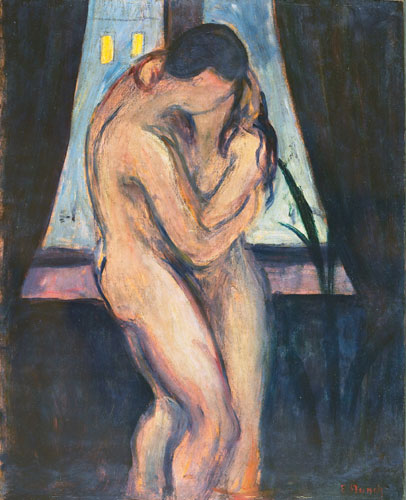
The Kiss by Edvard Munch
Kyss [The Kiss] by Edvard Munch (ca. 1895)
Oil on wood, 38.7 x 32.5 cm — Munch-museet, Oslo.

Önceleyin [At First] by Cemal Süreya

Önce bir ellerin vardı
Yalnızlığımla benim aramda
Sonra birden kapılar açılıverdi
Ardına kadar,
Sonra yüzün onun ardından
Gözlerın
Dudakların
Sonra her şey çıkıp geldi.
At first there were your hands
Between me and my loneliness
Then the doors opened
Suddenly all through,
Then your face,
Your eyes,
Your lips
Then everything came up.
Bir korkusuzluk aldı yürüdü çevremizde
Sen çıkardın utancını
Duvara astın
Ben masanın üstüne kodum kuralları
Her şey işte böyle oldu önce.
A fearlessness surrounded us
You took off your embarrassment
And hang it on the wall
I left the rules on the table
Everything happened this way at first.

-:-:-:-:-:-

— 2B — I Don't Want to Be a Couple

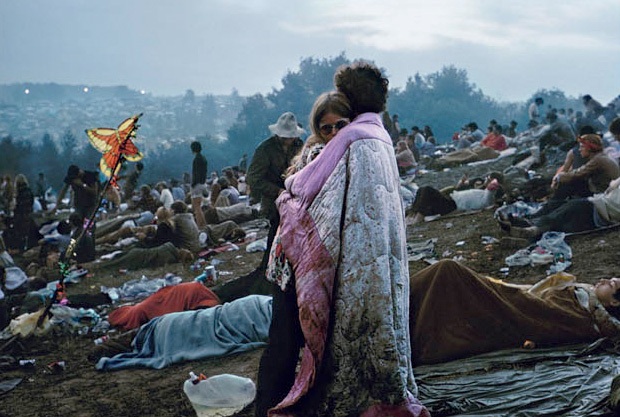
Woodstock by Burk Uzzle
Woodstock  by (1969)
[This photo has become famous as the cover of the first Woodstock album]

I don't want to be a couple.
Couples are stupid.
Couple kiss all the time.
Couple moan.
Couple fight.

I want to kiss you when I want.
I want to leave you when I want.
I want to come back when I want.
I want to be free.

I don't want to spoil everything.
I don't want to be a couple.

-:-:-:-:-:-

— 2C — Looking Together in the Same Direction

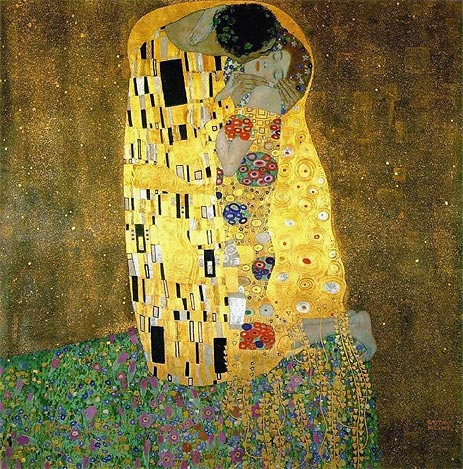
The Kuss by Gustav Klimt
Der Kuss [The Kiss] by Gustav Klimt (1907)
Oil and Gold Leaf on canva
s, 180 x 180 cm
Osterreichische Galerie, Vienna
Years pass.

S'aimer, ce n'est pas se regarder l'un l'autre, c'est regarder ensemble dans la même direction.
[Loving is not looking at each other, it's looking together in the same direction.]
 
in Terre des Hommes [Wind, Sand and Stars]

-:-:-:-:-:-

— 2D — Old Lovers


La chanson des vieux amants [Song of Old Lovers] by

[...] But finally, finally,
It took us a lot of talent
To be old without being adult.

Oh my love
My sweet, my tender, my marvellous love
From bright dawn until the end of day,
I still love you, you know,
I love you.

And more the time marches on
The more time torments us.
But isn't it the worst trap
For lovers to live in peace?

Two of Hearts
[BbN: #2]

Peru, the White Night, and Icarus

Pieter Brueghel the Elder — Lanscape with the Fall of Icarus
Pieter Brueghel the Elder — Landscape with the Fall of Icarus
[Landschap met de Val van Icarus], ca. 1558
Oil on canvas mounted on wood — 73.5 x 112 cm
Musées Royaux des Beaux-Arts de Belgique, Brussels

I am leaving Paris this Friday morning, en route to Peru where I'll spend ten days. Not another medical conference this time, but mere tourism, with my brother and father. We shall visit , , , ... I feel pretty excited and plan to take a lot of photos there.

There's only one (very little!) fly in the ointment: they don't have the White Night in Lima yet, that will occur on the next Saturday night in Paris and many cities. The White Night is a cultural night of discovery that has been organised every year since 2002 in a growing number of cities, in Europe first, then in the whole world.

Throughout the White Night, museums, libraries, monuments, places of worship, tourist sites, cinemas, parks and gardens, hospitals, swimming pools, universities, etc. will stay open. You can go and see an exhibition at 2 am or visit a library at 5 am if you feel like... you will sleep later, tomorrow is a Sunday.

I usually manage to be in Paris on the , as it is called in French. Three years ago though, I was in Brussels, and enjoyed it a lot in this welcoming city. I walked in the streets all night long, listened to music bands, ate mussels with french fries, and went to several museums. The Fall of Icarus by Pieter Brueghel the Elder was exhibited in the Museum of Ancient Art, part of the Royal Museums of Brussels.

I don't know why I've always had the feeling that the scene in this painting occurs in the New World, instead of the Aegean sea... on the Peruvian coasts, maybe, which makes I have now come full circle in the weird associations of idea that made up the present blog.

Poor Icarus... In the painting by Brueghel, his fatal fall is of minor interest.
The ploughman is bent over the ground...

... the shepherd is looking at the sky...
... and the fisherman is watching at the sea

They couldn't care less what happens to a dreamer, a reckless person who dared to challenge the sun.

 
Les plaintes d'un Icare [Ch. Baudelaire]

I thought of this melancholy painting today when I read again this poem by Charles Baudelaire.

Les Plaintes d'un Icare

Les amants des prostituées
Sont heureux, dispos et repus ;
Quant à moi, mes bras sont rompus
Pour avoir étreint des nuées.

C'est grâce aux astres nonpareils,
Qui tout au fond du ciel flamboient,
Que mes yeux consumés ne voient
Que des souvenirs de soleils.

En vain j'ai voulu de l'espace
Trouver la fin et le milieu ;
Sous je ne sais quel oeil de feu
Je sens mon aile qui se casse ;

Et brûlé par l'amour du beau,
Je n'aurai pas l'honneur sublime
De donner mon nom à l'abîme
Qui me servira de tombeau.

Charles Baudelaire
Lamentations of an Icarus

Lovers of prostitutes, in crowds,
Are sated and content and cheery,
But as for me, my arms are weary
Because I have embraced the clouds.

Thanks to the stars — O peerless ones!
That flame deep in the boundless sky,
My burned-out eyes can now descry
Only the memories of suns.

In vain I sought to trace and fit
Space in its mid and final stance
I know not under what hot glance
My wings are crumbling bit by bit.

The love of beauty sealed my doom,
Charred, I have not been granted this:
To give my name to the abyss
That is to serve me as a tomb.


Transl. Jacques LeClercq,1958

The Little Prince

There are few things about which I don't have any doubt, but here is one: by Antoine de Saint Exupéry is one of the greatest books ever.

I read Le Petit Prince — the original French title of the novella — for the first time when I was about eight, and I have read it again a lot of times since then... it is worth it, and also, this great book is a small book.

It is a children's story, yet it is also a philosophical tale, a poetical fable. The novella contains the best lessons of life, love and friendship you can read. Like Alice in Wonderland, it is a novel à tiroirs, with several levels of reading, in which everyone will find something different. Also, you will not find the same thing in it when you read it as a child, a teen or an adult, when you are young... or not that young any more.

— To me [the fox said], you are still nothing more than a little boy who is just like a hundred thousand other little boys. And I have no need of you. And you, on your part, have no need of me. To you, I am nothing more than a fox like a hundred thousand other foxes. But if you tame me, then we shall need each other. To me, you will be unique in all the world. To you, I shall be unique in all the world [...] And then look: you see the grain-fields down yonder? I do not eat bread. Wheat is of no use to me. The wheat fields have nothing to say to me. And that is sad. But you have hair that is the color of gold. Think how wonderful that will be when you have tamed me! The grain, which is also golden, will bring me back the thought of you. And I shall love to listen to the wind in the wheat.
[...]
So the little prince tamed the fox. And when the hour of his departure drew near...
— Ah said the fox, I shall cry.
— It is your own fault, said the little prince. I never wished you any sort of harm; but you wanted me to tame you.
— Yes, that is so, said the fox.
— But now you are going to cry! said the little prince.
— Yes, that is so, said the fox.
— Then it has done you no good at all!
— It has done me good, said the fox, because of the color of the wheat fields.
[...]
— Goodbye, said the fox. And now here is my secret, a very simple secret: It is only with the heart that one can see rightly; what is essential is invisible to the eye.
— What is essential is invisible to the eye, the little prince repeated, so that he would be sure to remember.
— It is the time you have wasted for your rose that makes your rose so important.
— It is the time I have wasted for my rose — said the little prince, so that he would be sure to remember.
— Men have forgotten this truth, said the fox. But you must not forget it. You become responsible, forever, for what you have tamed. You are responsible for your rose...
— I am responsible for my rose, the little prince repeated, so that he would be sure to remember.

If you haven't read the book yet, you have missed something... Yet you're also a lucky one, because it is a wonderful story to discover. You'll have no difficulty to find it in your native language, : Le Petit Prince is one of the most translated and published books ever.

Eclipse

There was a lunar eclipse last night, you could see in Europe and Africa essentially. From about 9:30 pm onwards, the moon progressively took an unusual coppery colour, when every first light and sunset in the world focused on its surface.

A lunar eclipse occurs when the moon enters the Earth's shadow. One would think it looks darker, more greyish than usual. Yet, on the contrary, it turns red, because the atmosphere of the Earth of the Sun, and changes its colour.

The partial eclipse reached its peak shortly before midnight. Then the moon progressively returned to its usual paleness. It was time for me to go to bed, and read poetry by Charles Baudelaire again.

-:-:-:-:-:-:-:-

Tristesses de la lune
(Charles Baudelaire)

Tristesses de la lune

Ce soir, la lune rêve avec plus de paresse ;
Ainsi qu'une beauté, sur de nombreux coussins,
Qui d'une main distraite et légère caresse
Avant de s'endormir le contour de ses seins,

Sur le dos satiné des molles avalanches,
Mourante, elle se livre aux longues pâmoisons,
Et promène ses yeux sur les visions blanches
Qui montent dans l'azur comme des floraisons.

Quand parfois sur ce globe, en sa langueur oisive,
Elle laisse filer une larme furtive,
Un poète pieux, ennemi du sommeil,

Dans le creux de sa main prend cette larme pâle,
Aux reflets irisés comme un fragment d'opale,
Et la met dans son coeur loin des yeux du soleil.

Charles Baudelaire

Sorrow of the Moon

More drowsy dreams the moon tonight. She rests
Like a proud beauty on heaped cushions pressing,
With light and absent-minded touch caressing,
Before she sleeps, the contour of her breasts.

On satin-shimmering, downy avalanches
She dies from swoon to swoon in languid change,
And lets her eyes on snowy visions range
That in the azure rise like flowering branches.

When sometimes to this earth her languor calm
Lets streak a stealthy tear, a pious poet,
The enemy of sleep, in his cupped palm,

Takes this pale tear, of liquid opal spun
With rainbow lights, deep in his heart to stow it
Far from the staring eyeballs of the Sun.

Transl. Roy Campbell, Poems of Baudelaire
(New York: Pantheon Books, 1952)

Sometimes One Must Jump In

Saint-Alexis-des-Monts, Québec — July 2005

Sometimes one must jump in

When you do that

You might wind up over your head

Or perhaps

You will float downstream

Worrying if there are rocks below

But when one stands

On riverside for too long

Then one is thinking too much

Vowels

From the black A[lpha] of original darkness to the light of white E, and finally the violet O[mega], the last colour in the spectrum. Letters in this poem by Arthur Rimbaud are considered graphic or sound objects that have inherent meaning and ability to awaken a lot of other ones.

About two years ago, I went to an exhibition in Le Grand Palais in Paris. Italia Nova was dedicated to Italian paintings and sculptures in the first half of the twentieth century. I was amazed then to see that several Italian Futurists of the 1920's would use letters and numbers as objects in the same modern way Rimbaud had first used half a century earlier and pop-artists such as Andy Warhol would do later as well.

-:-:-:-:-

Voyelles

A noir, E blanc, I rouge, U vert, O bleu : voyelles,
Je dirai quelque jour vos naissances latentes :
A, noir corset velu des mouches éclatantes
Qui bombinent autour des puanteurs cruelles,

Golfes d'ombre ; E, candeurs des vapeurs et des tentes,
Lances des glaciers fiers, rois blancs, frissons d'ombelles ;
I, pourpres, sang craché, rire des lèvres belles
Dans la colère ou les ivresses pénitentes ;

U, cycles, vibrements divins des mers virides,
Paix des pâtis semés d'animaux, paix des rides
Que l'alchimie imprime aux grands fronts studieux ;

O, suprême Clairon plein des strideurs étranges,
Silences traversés des Mondes et des Anges ;
- O l'Oméga, rayon violet de Ses Yeux !

Arthur Rimbaud

Vowels

A black, E white, I red, U green, O blue: vowels,
I shall tell, one day, of your mysterious origins:
A, black velvety jacket of brilliant flies
which buzz around cruel smells,

E, whiteness of vapours and of tents,
lances of proud glaciers, white kings, shivers of cow-parsley;
I, purples, spat blood, smile of beautiful lips
in anger or in the raptures of penitence;

U, waves, divine shudderings of viridian seas,
the peace of pastures dotted with animals, the peace of the furrows
which alchemy prints on broad studious foreheads;

O, sublime Trumpet full of strange piercing sounds,
silences crossed by Worlds and by Angels:
O the Omega! the violet ray of His Eyes!

Arthur Rimbaud

Leonard Cohen in Lyon

Leonard Cohen
I went to Lyon yesterday. When you come from Paris, it is a short and easy trip: about 500 km, two hours by . I planned it meticulously several months ago though, when I heard Leonard Cohen would make a stage there on July 9, on his first tour in 15 years.

Obviously, L. Cohen is not any more the young writer of Beautiful Losers I blogged about lately. He is not any more either the folk singer who created Suzanne and Famous Blue Raincoat. He is a 73 year-old man with a history.

Although he was born in a Canadian Jewish family, and says he has always remained a Jewish, he has embraced Buddhist philosophy for decades. He spent several years in the nineties on Mount Baldy, a Buddhist retreat in California, then went back to the world, had most of his money stolen by his manager, recorded two more albums (Ten new songs in 2001, Dear Heather in 2004), and in 2008, at last, decided to tour again, starting with his homeland Canada, then Europe.

Roman Theatre in Fourvière
The Roman Theatre in Fourvière (Lyon)

Lyon was his first stage in France, before Nice on July 22 and Paris in November. The show was a unique evening performance in , a summer festival held every year from June to August in the marvelous site of the Roman theatre.

A very special place for a very special singer, the Roman Theatre was built more than two millenaries ago, during the reign of Augustus in 15 BC, as the centre of the Roman city of Lugdunum. It is just the best place you can dream of to be at a show. Just have a look at the picture above, I took yesterday in the afternoon, when they were making the stage ready : the site is gorgeous and its maximum audience is about 3,500 only, which means you're close to the stage wherever you sit.

Leonard Cohen

At 21:30, the show began. Leonard Cohen arrived on the stage half-running, a puny-looking white-haired man with a trilby hat. He said "bonsoir", and for the first time in my life I saw a crowd cheering an artist with a five-minute standing ovation *before* the concert.

He then said the first lines of a poem every French-speaking person in the audience recognized at once:

Danse moi à ta beauté
Avec un violon en flammes,
Danse moi dans la panique
Jusqu'au repos de mon âme...


Dance me to the End of Love

... it was a French translation of Dance me to the end of love, his musicians then began playing while he switched to English and started singing. He would later introduce most of his songs the same way during the first set, with a few lines translated into French. He talked in French also sometimes, so that everybody in France remembers (how could we forget it?) he is also a Québécois, born and raised in Montréal.

Leonard Cohen World Tour

The Future, There ain't no Cure for Love, Bird on a Wire, Everybody Knows... and so on, Leonard Cohen sang 23 songs, including 5 encores, with his deep and steady voice.

The whole of the show was very professional, thanks to the musical direction by Roscoe Beck (who plays the bass in the band also), but the professionalism of the performance did not lessen the emotion the lyrics gave vent to, of which the meaning so often goes beyond the words.

The three vocalists sang beautifully — Charley and Hattie Webb, the Webb sisters, and Sharon Robinson, that Cohen repeatedly referred to as his collaborator — she is the co-writer of several songs. Every musician was good, and was individually named by Cohen several times during the show after their solos: besides Roscoe Beck on bass, there was Rafael Gayol on drums; Neil Larsen on keyboards; Bob Metzger on guitar; Dino Soldo on, well, maybe ten different instruments, from saxophone and other woodwinds to synthesizer and blues harmonica; and last but not least, Javier Mas who played several stringed instruments, among which the Oud, in particular as a wonderful airy introduction to Who by Fire.

Cushion
Between songs, applause was so loud sometimes that Cohen had to repeat merci, merci, thank you, thank you so much, until he was "allowed" to sing the next song.

In order to make the stone-built terraces more comfortable to the public, organizers had kindly provided recyclable and reusable cushions before the show. After the first encores, people started throwing their cushions to the stage, like frisbees. Several landed on there, which surprised Leonard a lot at first, then made him laugh and take his hat, mimicking he would throw it back into the public. One of the Webb sister even took a camera and made pictures of the scene, and apparently kept one cushion as a souvenir also.

Leonard Cohen

The concert lasted about 3 hours, according to my watch, since it told it was 00:35 when Leonard and his band left the stage for the last time.

"On n'est pas pressés" he would say during the show indeed (we're not in a hurry). I suspect my watch is a liar though: I can swear the whole performance certainly did not last more than half of that time.
What shall you say tonight?

Salomé dansant by Gustave Moreau
Gustave Moreau, Salomé dansant (detail)


Que diras-tu ce soir...

Que diras-tu ce soir, pauvre âme solitaire,
Que diras-tu, mon coeur, coeur autrefois flétri,
À la très belle, à la très bonne, à la très chère,
Dont le regard divin t'a soudain refleuri ?

— Nous mettrons notre orgueil à chanter ses louanges :
Rien ne vaut la douceur de son autorité
Sa chair spirituelle a le parfum des Anges
Et son oeil nous revêt d'un habit de clarté.

Que ce soit dans la nuit et dans la solitude
Que ce soit dans la rue et dans la multitude
Son fantôme dans l'air danse comme un flambeau.

Parfois il parle et dit: « Je suis belle, et j'ordonne
Que pour l'amour de moi vous n'aimiez que le Beau ;
Je suis l'Ange gardien, la Muse et la Madone. »

Charles Baudelaire

What Shall You Say Tonight?

What shall you say tonight, poor soul so full of care,
What shall you say, my heart, heart hitherto so sad,
To the most kind, to the most dear, to the most fair,
Whose pure serene regard has made you proud and glad?

— We shall set all our pride to sing her holy praise!
What sweetness to be hers! To live beneath her sight!
Half spirit is her flesh, angelic all her ways;
Her glance alone invests us in a robe of light!

Whether in solitude and deep obscurity,
Whether by day among the moving crowd it be,
Her phantom like a torch in air will dance and run;

It speaks: "Beauty is mine; Authority is mine;
Love only, for my sake, the noble and the fine:
I am thine Angel, Muse, Madonna, all in one."

Charles Baudelaire
Transl. Edna St. Vincent Millay
Flowers of Evil (NY: Harper and Brothers, 1936)
- : - : - : - : - : -
 
English speakers who don't know French might not notice at first how great a translation is this English version of the poem by Charles Baudelaire. It is not a word-to-word translation, but genuine English poetry, much better in my opinion than other translations of this poem displayed on fleursdumal.org.

Edna St.Vincent Millay has succeeded here in adapting the atmosphere of Baudelaire's poetry. In particular, she has been able to transpose the musical quality of a French sonnet — a kind of poetry she liked much and reinvigorated in her own work — written here with the abab cdcd eef ggf rhyming scheme, and she has kept the Romanic 12 feet alexandrines.
 
Translating poetry is always a challenge. I believe Edna St.Vincent Millay here made it possible for English readers to experience the rythm and musicality of Baudelaire's poetry, something that happens rarely when you don't know French.

Beautiful Losers


Famous Blue Raincoat [Leonard Cohen]
Leonard Cohen
Beautiful Losers was written outside, on a table set among the rocks, weeds and daisies, behind my house on Hydra, an island in the Aegean Sea. I lived there many years ago. It was a blazing hot summer. I never covered my head. What you have in your hands is more of a sunstroke than a book.
Leonard Cohen
Leonard Cohen writes Beautiful Losers on Hydra island in the mid-1960s.

Beautiful Losers, the second novel by Leonard Cohen after The Favourite Game — and the last, up to now — was considered a scandalous book when it was published in 1966. A critic even described it as the most revolting book ever written in Canada, because it contained obscenities in several paragraphs.

Beautiful Losers The book's main character, a man who is never named, is a scholar doing research on the first Native American once canonized as a Christian Saint, Kateri Tekakwitha — The Lily of the Mohawks. It broods over his research the memory of his dead Native wife, Edith, and their dead male lover and all-knowing mentor, he calls by his initial only, F. History, sex, politics, religion, and poetry, merge into an intricate dance of power relationships in which nothing can be taken for granted, except the beauty of loss.

More than 40 years later, the novel is now a classic. It is certainly excessive in more than one place, yet it is a novel of another level than the simple provocation by a young author of the . Although Cohen was not a Beatnik himself, the novel placed him from the start with the best authors of the time, Allen Ginsberg, Jack Kerouac and Gregory Corso.

Songs of Love and HateAfter Beautiful Losers, Leonard Cohen stopped writing novels though, and pursued his famous career as a poet, songwriter and singer.

His third album, Songs of Love and Hate, in 1971, included in particular the awesome, yet frightening, Avalanche and Joan of Arc and, ranking high in my favourite songs, Famous Blue Raincoat. The love triangle Leonard Cohen is calling up in this song cannot but be reminiscent of Beautiful Losers.

Önceleyin

Der Kuss (The Kiss) — Gustav Klimt, 1907-1908
Oil and Gold Leaf on canvas, 180 cm x 180 cm
Österreichische Galerie Belvedere, Vienna, Austria

Önceleyin

Önce bir ellerin vardı yalnızlığımla benim aramda
Sonra birden kapılar açılıverdi ardına kadar
Sonra yüzün onun ardından gözlerin dudakların
Sonra her şey çıkıp geldi.

Bir korkusuzluk aldı yürüdü çevremizde
Sen çıkardın utancını duvara astın
Ben masanın üstüne kodum kuralları
Her şey işte böyle oldu önce.
Cemal Süreya

Tout au début

Tout au début, il y a eu tes mains entre ma solitude et moi
Puis les portes soudain se sont ouvertes en grand
Puis ton visage, puis tes yeux et puis tes lèvres
Et puis tout s'est accéléré

Nous n'avons plus eu peur de rien
Tu as retiré ta gêne pour l'accrocher au mur
J'ai abandonné tous mes principes sur la table
Ça s'est passé comme ça, tout au début
Cemal Süreya

At the beginning

At the beginning there were your hands between me and my loneliness
Then the doors were opened suddenly all through
Then your face, your eyes and your lips
Then everything came up

A fearlessness surrounded us
You took off your embarrassment and hang it on the wall
I left the rules on the table
Everything happened this way at first
Cemal Süreya

Patti Smith

There are such moments in life: you look at a person you like, or love, and you realize in your deepest self that you will probably never see him or her again.

(Patti Smith, May 06, 2008 — approximate quote).

The Fondation Cartier pour l'art contemporain is an airy glass and steel building in the 14th arrondissement of Paris. It was designed specially by Jean Nouvel, also the creator of the Institut du Monde Arabe and the Musée du Quai Branly. Fondation Cartier Building in ParisAs the name indicates, it is devoted to contemporary art. That's also the building where the great, yet disturbing, exhibition of David Lynch's works I wrote about previously took place in 2007.

The Fondation Cartier is now displaying an exhibition dedicated to the visual work of Patti Smith, named “Land 250”. Drawings, films, objects, and essentially photographs taken with a Land 250 polaroid camera. I went there past Tuesday, tooking advantage of evening opening hours.

I did not know that Patti Smith would be there in person on that evening. Few people knew obviously, since we weren't much more than 150 people there. I easily found a free space to be seated on a carpet, at 5 meters from her standing at the micro. It was not a show, nor a concert, but a lecture, a discussion with the public, questions and answers in both directions.

Patti Smith talked about her photos, about the poets she loves: William Blake, Arthur Rimbaud, Jean Genet, René Daumal. She sang a couple of songs, and read poems.

When someone in the public asked which photos she loved most, she did not answer, but said (quoting from memory): “I love some photos because they are technically, well... quite good” [laughing]. “There are also many photos that I love despite they are not that good technically, because they embody significant personal meaning: travels I made, people I met, objects that once belonged to people who mean something to me”.

“For example”, she added, “see this horse, on the poster of the exhibition. It's not a bad photo, it's not technically perfect though. Yet it means something to me. I took it in Africa, at the end of a horse ride. Just before we left the place. I was about to climb up into the truck, and suddenly felt a gaze on my back. I turned round, and it was him. The horse I had gone riding for several days. He did not move, he waited while I looked for my camera in my bag, looked at me when I focused and took this only Polaroid. Then, he went away. We both knew we'd never see the other one again.”

I could not help but think it was a shame this picture could not be used as the cover for her great album, Horses, 30 years ago.

The whole happening did not last more than 90 minutes, but it was pleasant and friendly, although the public was quite reverent and talked little (I am simply not sure most people were fluent enough in English to ask her questions).

After she left, I spent about one more hour wandering around the exhibition. Several photographs were good, but I did not felt the same as last year about David Lynch's exhibit, that it was a great artistic event. More than once, to tell the truth, I even wondered if these little photographs of beds, guitars and statues, or this stone "from the river where Virginia Woolf committed suicide" would be in an exhibition if they were not put in display by a famous rock singer named Patti Smith.

Related Posts Widget for Blogs by LinkWithin

Home

Atom
Feed
Timeless Music
The Magic Flute
by W. A. Mozart


Timeless Reading
Les Essais
by Michel de Montaigne