Showing posts with label children. Show all posts

Persepolis

Persepolis by Marianne Satrapi
Marjane Satrapi is an Iranian/French graphic novelist. She was born in 1969 in Rasht, in the North of Iran, and now lives and works in Paris. She became famous because of her critically acclaimed autobiographical graphic novels Persepolis, which describe her childhood and adolescence in Iran and Europe.

Persepolis graphic novels were adapted by herself and Vincent Parronaud into an essentially black-and-white animated film bearing the same name. The movie was called 'islamophobe' and 'anti-iranian' by the Iranian President Mahmoud Ahmadinejad, thus it is not allowed for broadcast in Iran. Yet it is not a political movie. It deals with life in the real world. It is a work of poetry for all of us to delight in.

Image
When the movie starts, Marjane is a child. She lives in Tehran, in a progressive family involved with the socialist movements. She attends the Lycée Français in Tehran, and witnesses the growing oppression of civil liberties and the everyday-life consequences of Iranian politics. Then comes the Iranian revolution, the fall of the Shah, and the regime of Ayatollah Khomeini. After days of elation, disillusion follows quickly. Political opponents are put in jail again, many are executed, and islamist rules are imposed. Then the Iran-Iraq war starts. At the age of 14, her parents send Marjane to Vienna, Austria, to flee the Iranian regime. She discovers Europe, boys, and loneliness. She comes back to Iran.

The movie relates with realism and humour Marjane's years of hardship, she shared with million young Iranians of the time: overnight obligation to wear a veil, search for forbidden pirated audio cassettes, secret parties with friends where you dance and drink alcohol despite police raids.

Persepolis was awarded the Special Jury Prize in Cannes Film Festival in May 2007. Last Year, it was given the Better First Movie Award in the Cesar Award, the National film award for France. It also competed in Hollywood for the Oscar, as a nominee for best animated film, but had no chance against Disney's blockbuster Ratatouille.


Persepolis Trailer


Persepolis is a simple story told by simple means. It consists essentially of a series of monochrome drawings, their bold black lines washed with nuances of gray. Its flat, stylized depiction of the world — the streets and buildings of Tehran and Vienna in particular — turns geography into poetry. Yet it is good to be reminded that animation is rooted not in any particular technique, but in the impulse to bring static images to life.

Happy Unbirthday!

Well, let's see...

(Checking my organizer) Today is October 23... nothing written here.

(Checking my address book) No, no one among my relatives. None of my friends either.

(Checking my memo board) Nope, no one actually. I knew I was not mistaken! Nobody I know has his birthday today!

Happy unbirthday, everyone! A very merry unbirthday to you! (yes, you)

The Little Prince

There are few things about which I don't have any doubt, but here is one: by Antoine de Saint Exupéry is one of the greatest books ever.

I read Le Petit Prince — the original French title of the novella — for the first time when I was about eight, and I have read it again a lot of times since then... it is worth it, and also, this great book is a small book.

It is a children's story, yet it is also a philosophical tale, a poetical fable. The novella contains the best lessons of life, love and friendship you can read. Like Alice in Wonderland, it is a novel à tiroirs, with several levels of reading, in which everyone will find something different. Also, you will not find the same thing in it when you read it as a child, a teen or an adult, when you are young... or not that young any more.

— To me [the fox said], you are still nothing more than a little boy who is just like a hundred thousand other little boys. And I have no need of you. And you, on your part, have no need of me. To you, I am nothing more than a fox like a hundred thousand other foxes. But if you tame me, then we shall need each other. To me, you will be unique in all the world. To you, I shall be unique in all the world [...] And then look: you see the grain-fields down yonder? I do not eat bread. Wheat is of no use to me. The wheat fields have nothing to say to me. And that is sad. But you have hair that is the color of gold. Think how wonderful that will be when you have tamed me! The grain, which is also golden, will bring me back the thought of you. And I shall love to listen to the wind in the wheat.
[...]
So the little prince tamed the fox. And when the hour of his departure drew near...
— Ah said the fox, I shall cry.
— It is your own fault, said the little prince. I never wished you any sort of harm; but you wanted me to tame you.
— Yes, that is so, said the fox.
— But now you are going to cry! said the little prince.
— Yes, that is so, said the fox.
— Then it has done you no good at all!
— It has done me good, said the fox, because of the color of the wheat fields.
[...]
— Goodbye, said the fox. And now here is my secret, a very simple secret: It is only with the heart that one can see rightly; what is essential is invisible to the eye.
— What is essential is invisible to the eye, the little prince repeated, so that he would be sure to remember.
— It is the time you have wasted for your rose that makes your rose so important.
— It is the time I have wasted for my rose — said the little prince, so that he would be sure to remember.
— Men have forgotten this truth, said the fox. But you must not forget it. You become responsible, forever, for what you have tamed. You are responsible for your rose...
— I am responsible for my rose, the little prince repeated, so that he would be sure to remember.

If you haven't read the book yet, you have missed something... Yet you're also a lucky one, because it is a wonderful story to discover. You'll have no difficulty to find it in your native language, : Le Petit Prince is one of the most translated and published books ever.

Sadako

Crane Origami
"I will write peace on your wings
and you will fly all over the world"
"Suppose Germany had developed two bombs before we had any bombs. And suppose Germany had dropped one bomb, say, on Rochester and the other on Buffalo, and then having run out of bombs it would have lost the war. Can anyone doubt that we would then have defined the dropping of atomic bombs on cities as a war crime, and that we would have sentenced the Germans who were guilty of this crime to death at Nuremberg and hanged them? "
Leo Szilard,
father of the US atomic bomb.

I was chatting the other day with a US friend about the trip I had in New-York a few months ago. As it happens often when you chat, our conversation turned, from , the movie by Woody Allen at the time, to the and atomic bombs. I was very surprised when he genuinely said that the atomic bombs dropped on Hiroshima and Nagasaki were "good things" because they actually "saved lives".

ImageAlthough I know it is the way the whole story is usually told and taught in the USA, I wondered how a smart and articulate guy could seriously think that killing more than 200,000 civilians "actually saved lives". The whole bloody fighting in the Pacific killed about 40,000 US soldiers 'only'... When the US President Harry S. Truman ordered to drop Little Boy on Hiroshima on August 6, 1945, then Fat Man over Nagasaki three days later, the point was certainly not about saving lives then, but saving lives of US soldiers, at the expense of much more lives of foreign civilians.

Little Boy and Fat Man had killed about 140,000 people in Hiroshima and 80,000 in Nagasaki by the end of 1945, of which about half within the first days after the bombings. Several ten thousands more people died from radiation-induced diseases in the following years. In both cities, the overwhelming majority of casualties were civilians. These are to date the only nuclear bombings in history. Yet, as the historian and Pulitzer prize winner Gary Wills wrote once: "Only the winners decide what were war crimes".

Sadako Sasaki lived in Hiroshima. She was two year-old when the first nuclear bomb was dropped on her city. Although she lived close to ground zero, she was not harmed. Nine years later, she was a healthy 11 year-old girl practicing running. After the end of a race, she fainted, was hospitalised and diagnosed radiation-induced leukaemia.

ImageThere's a legend in Japan, the country of origami. It says that if you can fold a thousand , the Gods will make your first wish become true. Sadako decided she would fold one thousand origami and wish to be cured. She folded 654 cranes before she died, in October, 1955. Yet, she was buried with one thousand paper cranes, because her classmates had finished her uncompleted vow.

After her death, her friends and schoolmates raised funds to build a memorial to her and all of the children who had died from the effects of the atomic bomb. In 1958, a statue of Sadako holding a golden crane was unveiled in the Hiroshima Peace Memorial. At its base a plaque reads: "This is our cry. This is our prayer. Peace in the world." Every year, on August 6, the statue is decorated with thousands of paper cranes sent by children from all over the world.

Laughter as a Doctor

Clown Doctor
If hospital administrators could spend ten minutes viewing their hospitals through the eyes of a hospital clown, there would be a clown in every corner of their hospitals (Shobhana Schwebke)

In various cultures, clowns have been associated with healers, medicine men, shamans, and other figures related to health care. Some decades ago, in a few places, members of the hospital staff started dressing up as clowns, as Dr Patch Adams (now famous because of the movie with the same name, starring Robin Williams) or psychotherapist and famous novelist Howard Buten.

Professional clowns began working in hospitals in 1986 under two programs called the Robo Project in Winnipeg, Canada, and the Big Apple Circus Clown Care Unit in New York City, USA. The latter program was a model for the Theodora Foundation in Switzerland and for Le Rire Médecin (Laughter as a doctor), an association created in 1991 in France by Caroline Simonds, alias Dr Giraffe. In France, over 40,000 children, their parents and hospital staff enjoy a fun-filled visit from Le Rire Médecin's very special clowns every year.

Dr GiraffeCaroline Simonds
alias 'Dr Giraffe'
Other organizations have followed this model that are now present all over the world, such as Doctor Clown / Docteur Clown (Canada), Die Clown Doktoren (Germany), the Association Docteur Clown (Lyons, France), Clowndoctors (Scotland), the Humour Foundation (Australia), Doutores da Alegria (Brazil), etc. etc. Seems there are even hospital clowns in China now!

These clowns are not doctors and nurses dressed up as clowns any more, but companies of professional clowns trained to adapt their craft to a healthcare environment and who agreed to abide by the hospital clowns' code of ethics. Red noseThey usually wear little make-up (sometimes a red nose only), communicate verbally, and always work in pairs. They are caricatures of the staff members, 'almighty doctors' especially. They are dressed like doctors but misappropriate medical equipment... although they are specialists of nose transplant.

Groucho Marx said: A clown is like an aspirin, only he works twice as fast. He was right: hospital clowns don't administer anything except humor, but still they are great healers. A clown gives staff, patients and relatives, permission to play and to have fun. Everyone is happy to see a clown, as everybody is delighted to hear a child or a baby laughing. It is easy to hug a clown, it is easy to talk to a clown. Even if not talking to him, no one walks by without smiling, even in a hospital. The clown personifies the vulnerability and sweetness of life. He is a living Teddy Bear.

That's it, for today!

shadoks

Probably few people outside France and French-speaking countries ever heard of Claude Piéplu, who died a few days ago. In France though, he was famous as the unusual high-pitched voice of the narrator in the much-loved TV cartoon Les Shadoks, droll birdlike creatures from another planet, that made Piéplu a real star here.

Started as a sort of Peanuts-like characters, these outer-space bird-like creatures were the heroes of a French TV cartoon that turned into a cult-like phenomenon. Characterized by ruthlessness, stupidity and living on a two-dimensional planet, the Shadoks would constantly try to escape their rivals the Gibis, sorts of intelligent guinea pigs wearing bowler hats, whose names had a lot to do with the initials of that country across the Channel.

Speaking a special language, the Shadoks could only use four syllables: ga, bu, zo, meuh (pronounced as: gah, büh, zoh, möh). Absurdity and fake logic permeated their world, with adages such as: “Why do simple when one can do complicated?” and “When one tries continuously, one ends up succeeding. Therefore, the more you fail, the more chances you have to be successful”.

These features have become a inherent part of French way of thinking and sometimes very special sense of humour.

Related Posts Widget for Blogs by LinkWithin

Home

Atom
Feed
Timeless Music
The Magic Flute
by W. A. Mozart


Timeless Reading
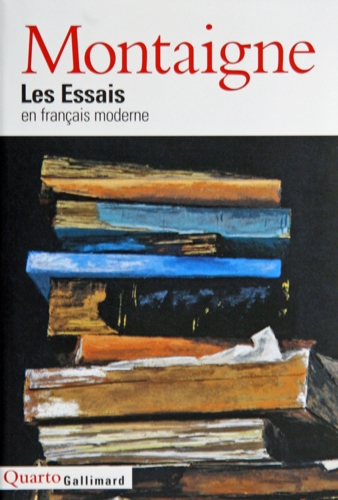
Les Essais
by Michel de Montaigne