Showing posts with label Spain. Show all posts

Guernica

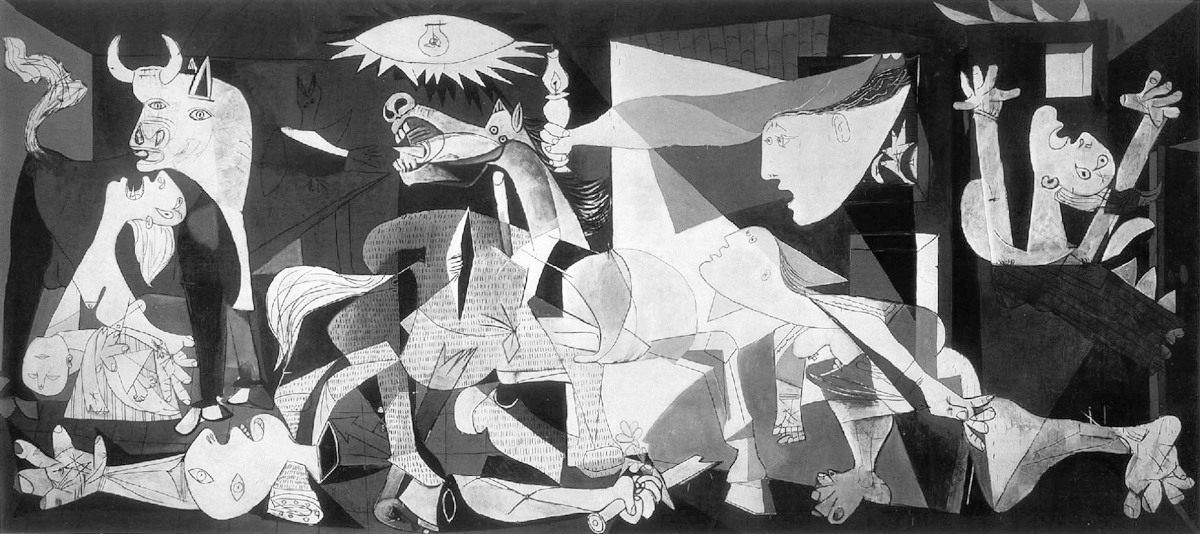
Guernica by Pablo Picasso
Guernica by Pablo Picasso (1937) — Oil on canvas, 349 cm x 776 cm 
Museo Centro de Arte Reina Sofía, Madrid.
In the form of its execution and the scale of the destruction it wrought, no less than in the selection of its objective, the raid on Guernica is unparalleled in military history. Guernica was not a military objective [...] The object of the bombardment was seemingly the demoralization of the civil population. George Steer, The Times (27th April, 1937)

Seventy-two years ago, on April 26, 1937, a little Basque town called Guernica was bombed by planes from the Condor Legion, a unit composed of soldiers from the German air force (Luftwaffe), which was allied to the Nationalists headed by Francisco Franco during the Spanish Civil War. It was the first time in modern history — but not the last one — that an urban population was slaughtered on purpose by the means of a military attack.

Picasso paints Guernica by Dora Maar
Picasso paints Guernica
by Dora Maar (Paris, 1937)
Pablo Picasso had lived in Paris for several decades when Guernica was bombed, yet he began painting sketches for the canvas four days later only, as soon as he heard of it in the newspapers. The painting was finished in a few weeks, to be exhibited in June, 1937 in the Spanish pavilion at the Universal Exhibition in Paris. According to the tale, a German general then asked Picasso: "So, you are the one who made 'this'?" and Picasso answered: "No, you are".

Picasso put Guernica at the disposal of the struggle for the Spanish Republic. After it was defeated and Franco established his fascist power on the country, he insisted that it should return in Spain as soon as its government was restored (which happened in 1981 only). There is no allusion in the painting to a precise war action though. Picasso himself always insisted on the generality of Guernica's meaning, and described it as "the picture of all bombed cities".

Indeed, Guernica represents much more than an illustration of the destruction of the Basque town. It has become a symbol of the suffering of helpless civilians, in any war terror inflicted by a powerful army. As such, the painting could be called Coventry, Dresden or Hiroshima as well.

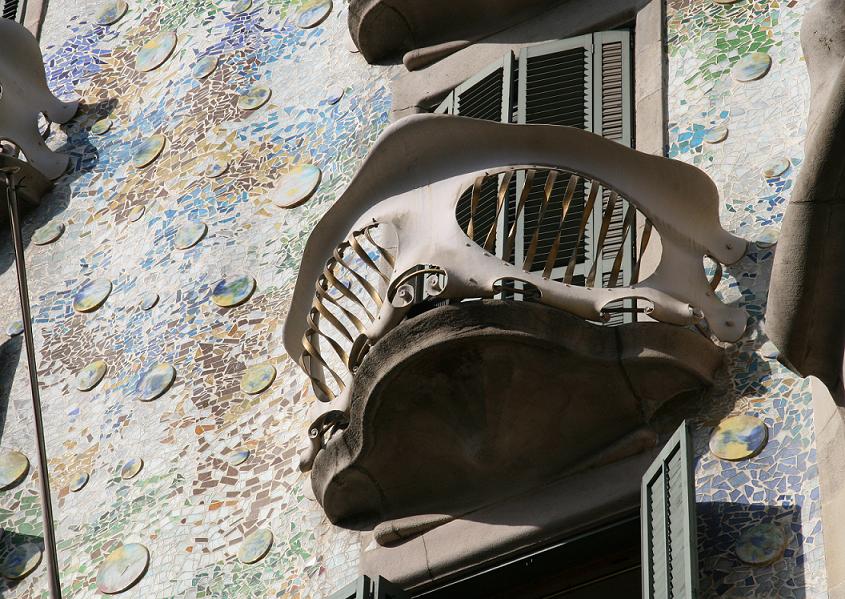
Barcelona — Casa Batlló

Batlló
Casa Batlló — Barcelona, June 2007

It is not surprising that when it was being built, people started to call it "Casa dels ossos" (House of Bones) : the entire facade of the Casa Batlló looks as if it is covered with bones, skulls, shoulder blades or hip bones, in the form of bone coloured balconies, as well as real visions of shinbones and fibulas on the lower part.

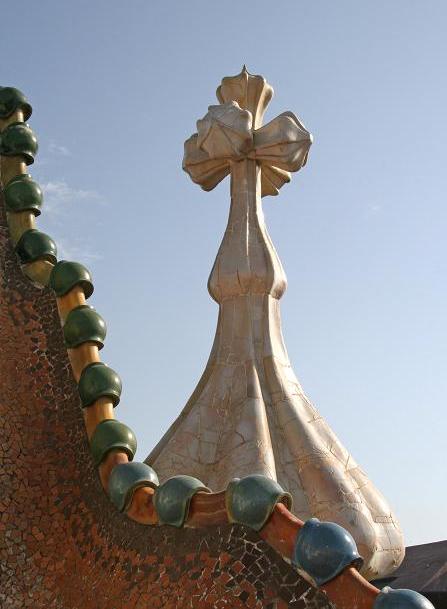
A little round turret on the top, crowned with a four-armed cross, looks like a huge sword thrust into a roof similar to a dragon's back.

Obviously, the tradition of Sant Jordi (Saint George, who killed the dragon), very popular in Catalonia, inspired Gaudí here, as it did in several occasions elsewhere also.

Yet you can see many things rather than a killed dragon and the bones of his victims in the outside of the Casa Batlló. You can see a representation of Venice carnival, with masks, confetti and arrays of colours. Or some kind of a vertical lake, with water reflections, water plants and underwater caves. And finally, all and none of these, but abstract shapes and forms designed for their own sake and in a coherent interaction. In any case, the facade has nothing to do with the natural properties of stone with which the house has been built, and this is typical feature of buildings by Gaudí.

Image
A balcony

His life's work, the Church of the Sagrada Familia — not finished yet, more than 120 years after the building started — is also an explosion of life where plants, animals, human beings and saints palpitate through the stone.

La Casa Batlló was called after the name of its owner, who commissioned Gaudí to tear down the old apartment building and reconstruct a new one. Not only Gaudí conceived the building as an architect, but as a project manager and a foreman. He gave directly orders to the workmen on the scaffolding, telling them exactly where to put each coloured piece.

When I arrived there last Sunday, it was 9:00 am exactly. They were just opening the gates. The night before had been sleepless for many Barcelonians, because of San Juan celebrations. There was still little people in the streets and no tourist had reached the place yet. I was alone. For about 10 minutes, the Casa Batlló was mine.

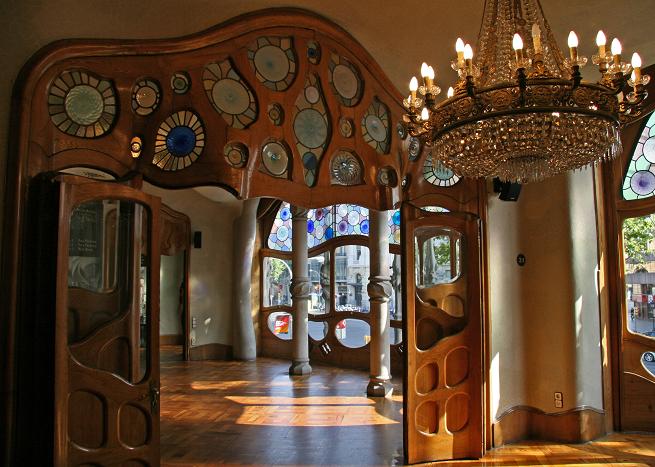
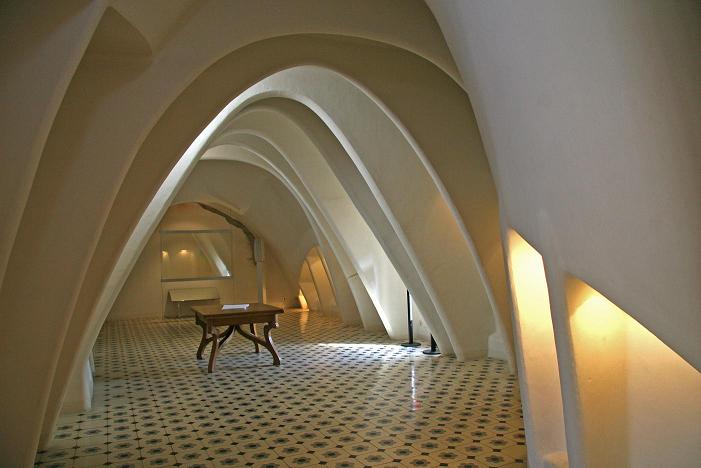
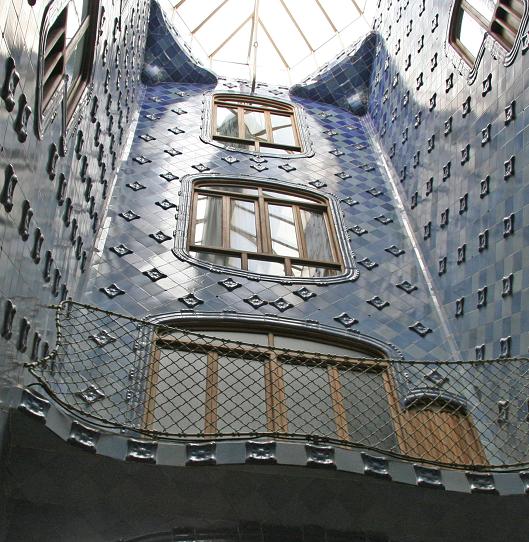
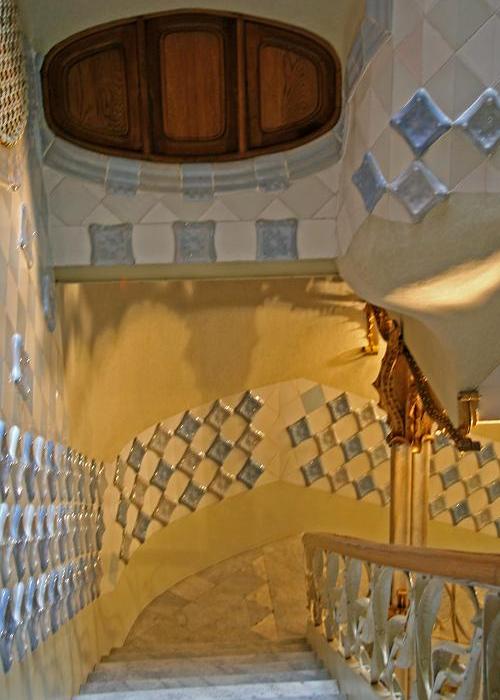
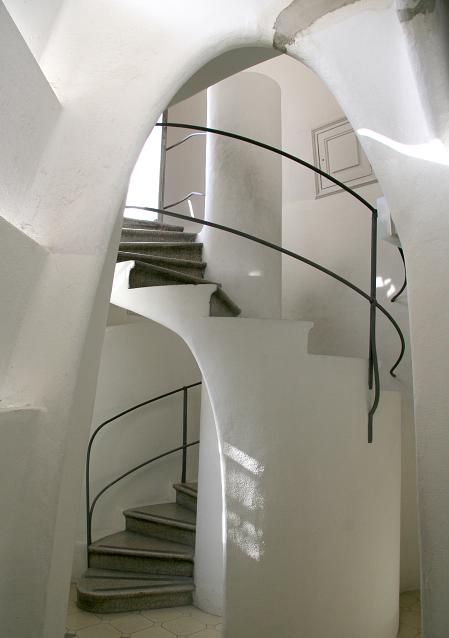
This house is more than a building, it is a myth of art.The windows provide natural light everywhere inside, even to the most interior rooms and stairs, and every nook, every detail contains a surprise. Here come a couple of pictures I took in there. You'll find much more, and better ones, on its dedicated website.

Image
Main room on the first floor
Image
Room on the last floor

Image
The light shaft

Image
Stairs
Image
Stairs to the roof
Image
Cross on the roof

Related Posts Widget for Blogs by LinkWithin

Home

Atom
Feed
Timeless Music
The Magic Flute
by W. A. Mozart


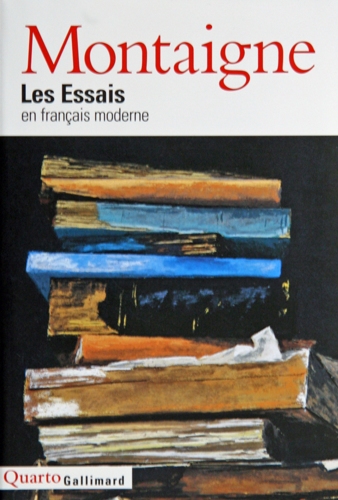
Timeless Reading
Les Essais
by Michel de Montaigne