Afghan Girl
Sunday, August 5, 2007 by Billy
 Afghan Girl — Steve McCurry, 1984 |
I spent several hours this morning walking in the 6th arrondissement (administrative district) of Paris, playing a treasure hunt game. There was no treasure actually, nor hurry or competition. It was only a game with the family, where we found our way according to hints taken from a dedicated book. It was fun.
We strolled around for about four hours in the Latin quarter, walking from street to street in an area usually crowded with people, but almost empty in this sunny morning of an August Sunday. I enjoyed a lot seeing in an unusual way places I think I know well, as if I were a tourist walking in a foreign city.
It was not in the riddle book for sure, but it was not a surprise either, since I read about it some days ago in a photo magazine: Steve McCurry exhibits at a Gallery rue de Seine at the moment. It was then planned we would have a look, if by chance our journey brought us in this street, and it did.
Steve McCurry is a photojournalist who became famous for his coverage of the Russian invasion of the Afghanistan in 1979. Disguised in native garb, he crossed the Pakistan border into rebel-controlled Afghanistan just before the invasion. When he emerged, he had rolls of films sewn into his clothes. His coverage of the conflict won the Robert Capa Gold Medal for Best Photographic Reporting from Abroad, an award dedicated to photographers exhibiting exceptional courage and enterprise.
You probably know the famous picture displayed above, the portrait of a young Afghan Girl with unforgettable piercing look, whose identity remained mysterious for years. Her photograph was exhibited there this morning, with several other great photos.



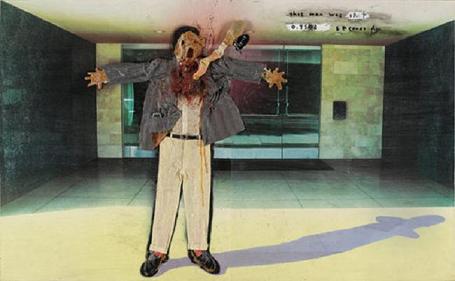
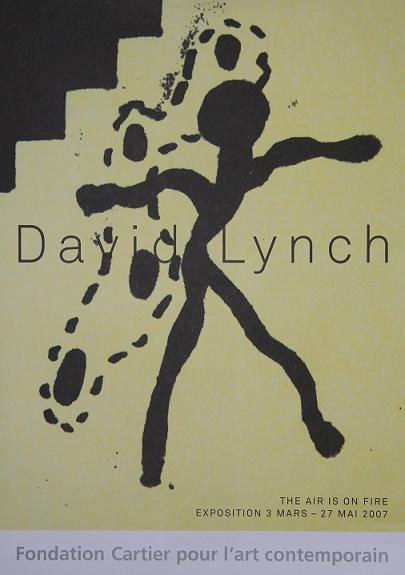 David Lynch is essentially known as a filmmaker (Elephant Man, Blue Velvet, Lost Highway, Mulholland Drive, Twin Peaks etc.) with unorthodox narrative and visual style. He is also a painter, a photographer, a video artist. The exhibition brought together the various forms of expression he has employed since 1960, installed in an environment he designed, complemented by a series of concerts and projections he created.
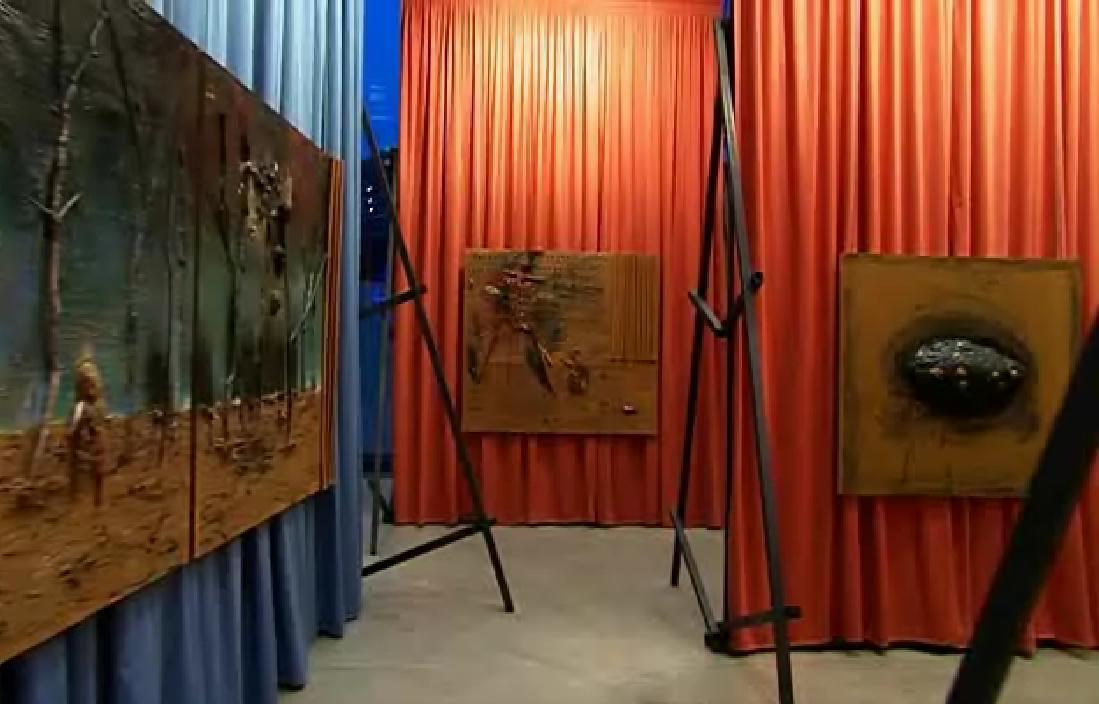 That said, I found the show as disturbing as Lynch's movies. It made me feel ill at ease on several occasions. Yet I was feeling all the time I was watching at a huge artistic event.
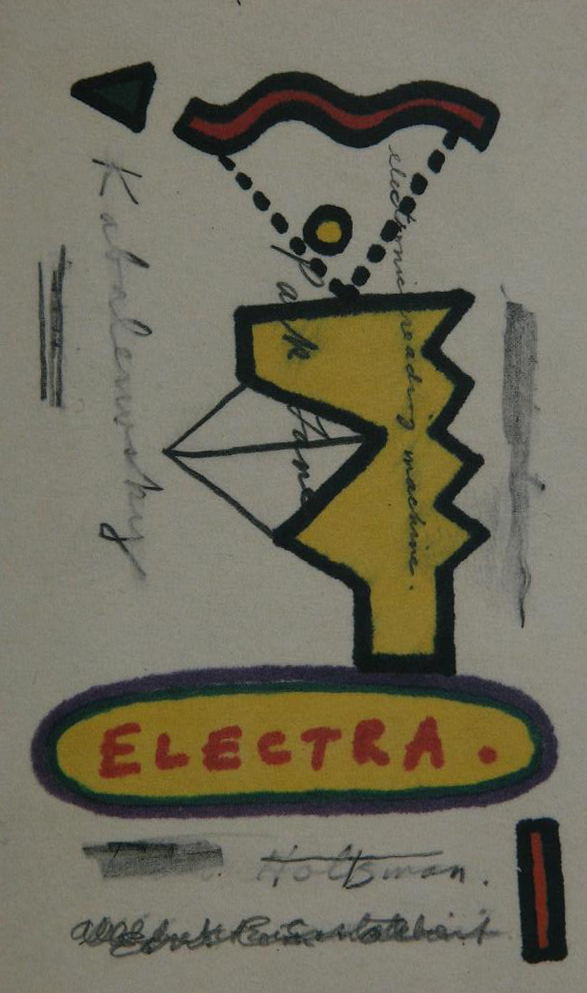 Several dozens of small pictorial pieces were presented in another room, without a title or a date. These were rough sketches and notes hastily put down on restaurant headed notepapers, paper handkerchiefs, matchboxes, visit cards, etc. These pieces are not decipherable in an objective way, yet they give away Lynch's obsessions and inside thoughts, as a journey deep into the inconscient of the artist.
 One hundred photographs or so were displayed, that looked like illustrations of his movies: femmes fatales, banal places with stifling atmosphere, and loneliness always. I loved several of them, probably I will write a specific blog about them some day.
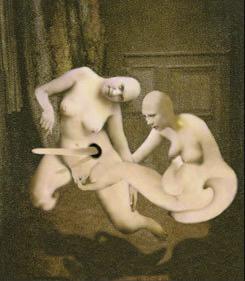 At the end of the exhibition, a series called Distorted Nudes was displayed: these are digital images Lynch made using old erotic photographs as initial material, that have obvious analogy with the work of the Surrealists. Here also, you could see Lynch's belief that reality is not univocal, that any "normality" probably hides a monstrous reality.