Afghan Girl

Afghan Girl — Steve McCurry, 1984

I spent several hours this morning walking in the 6th arrondissement (administrative district) of Paris, playing a treasure hunt game. There was no treasure actually, nor hurry or competition. It was only a game with the family, where we found our way according to hints taken from a dedicated book. It was fun.

We strolled around for about four hours in the Latin quarter, walking from street to street in an area usually crowded with people, but almost empty in this sunny morning of an August Sunday. I enjoyed a lot seeing in an unusual way places I think I know well, as if I were a tourist walking in a foreign city.

It was not in the riddle book for sure, but it was not a surprise either, since I read about it some days ago in a photo magazine: Steve McCurry exhibits at a Gallery rue de Seine at the moment. It was then planned we would have a look, if by chance our journey brought us in this street, and it did.

Steve McCurry is a photojournalist who became famous for his coverage of the Russian invasion of the Afghanistan in 1979. Disguised in native garb, he crossed the Pakistan border into rebel-controlled Afghanistan just before the invasion. When he emerged, he had rolls of films sewn into his clothes. His coverage of the conflict won the Robert Capa Gold Medal for Best Photographic Reporting from Abroad, an award dedicated to photographers exhibiting exceptional courage and enterprise.

You probably know the famous picture displayed above, the portrait of a young Afghan Girl with unforgettable piercing look, whose identity remained mysterious for years. Her photograph was exhibited there this morning, with several other great photos.

Barcelona — Casa Batlló

Batlló
Casa Batlló — Barcelona, June 2007

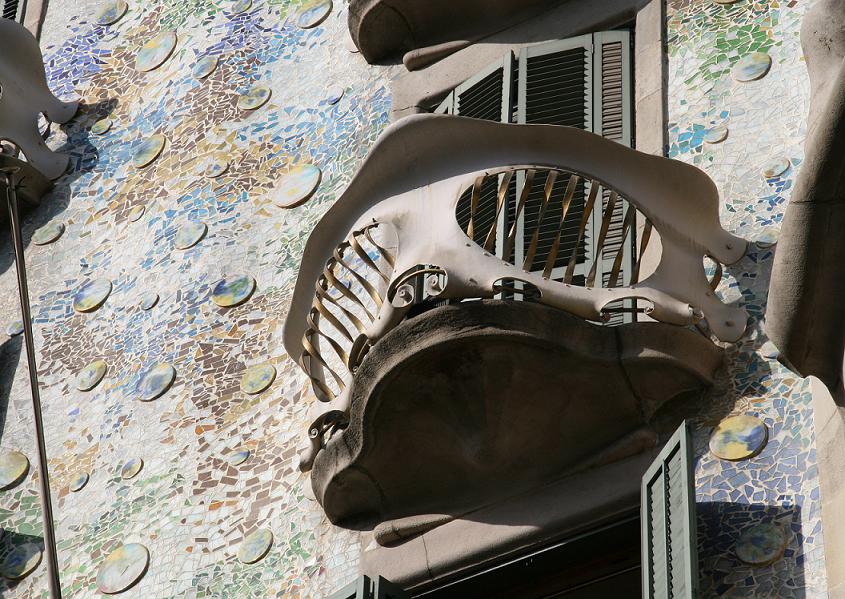
It is not surprising that when it was being built, people started to call it "Casa dels ossos" (House of Bones) : the entire facade of the Casa Batlló looks as if it is covered with bones, skulls, shoulder blades or hip bones, in the form of bone coloured balconies, as well as real visions of shinbones and fibulas on the lower part.

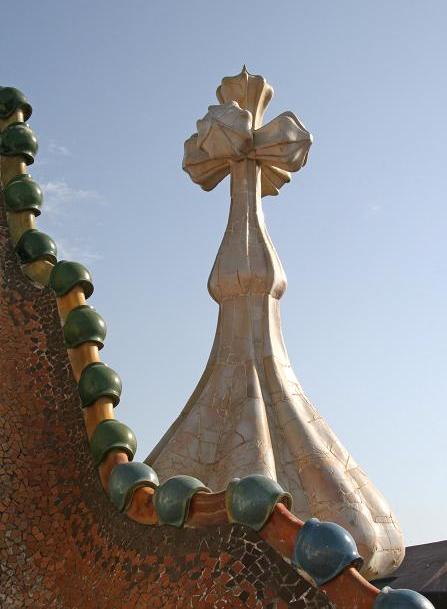
A little round turret on the top, crowned with a four-armed cross, looks like a huge sword thrust into a roof similar to a dragon's back.

Obviously, the tradition of Sant Jordi (Saint George, who killed the dragon), very popular in Catalonia, inspired Gaudí here, as it did in several occasions elsewhere also.

Yet you can see many things rather than a killed dragon and the bones of his victims in the outside of the Casa Batlló. You can see a representation of Venice carnival, with masks, confetti and arrays of colours. Or some kind of a vertical lake, with water reflections, water plants and underwater caves. And finally, all and none of these, but abstract shapes and forms designed for their own sake and in a coherent interaction. In any case, the facade has nothing to do with the natural properties of stone with which the house has been built, and this is typical feature of buildings by Gaudí.

Image
A balcony

His life's work, the Church of the Sagrada Familia — not finished yet, more than 120 years after the building started — is also an explosion of life where plants, animals, human beings and saints palpitate through the stone.

La Casa Batlló was called after the name of its owner, who commissioned Gaudí to tear down the old apartment building and reconstruct a new one. Not only Gaudí conceived the building as an architect, but as a project manager and a foreman. He gave directly orders to the workmen on the scaffolding, telling them exactly where to put each coloured piece.

When I arrived there last Sunday, it was 9:00 am exactly. They were just opening the gates. The night before had been sleepless for many Barcelonians, because of San Juan celebrations. There was still little people in the streets and no tourist had reached the place yet. I was alone. For about 10 minutes, the Casa Batlló was mine.

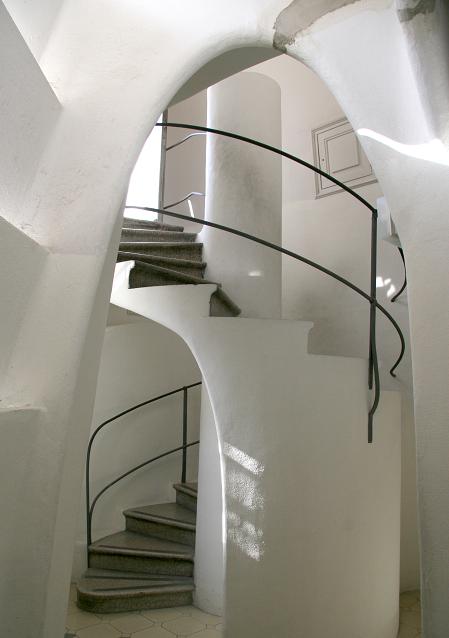
This house is more than a building, it is a myth of art.The windows provide natural light everywhere inside, even to the most interior rooms and stairs, and every nook, every detail contains a surprise. Here come a couple of pictures I took in there. You'll find much more, and better ones, on its dedicated website.

Image
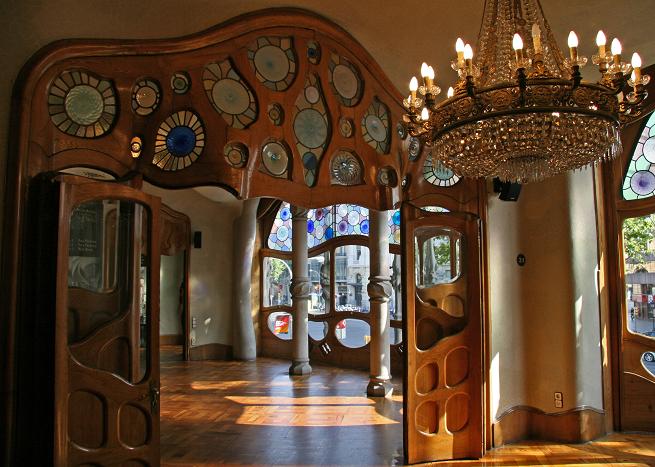
Main room on the first floor
Image
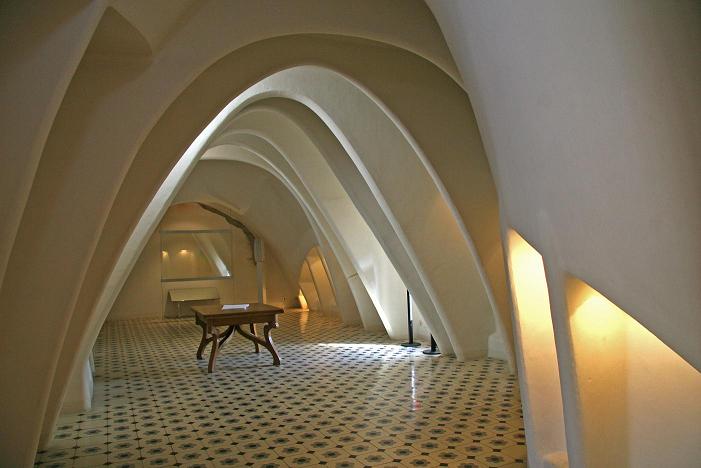
Room on the last floor

Image
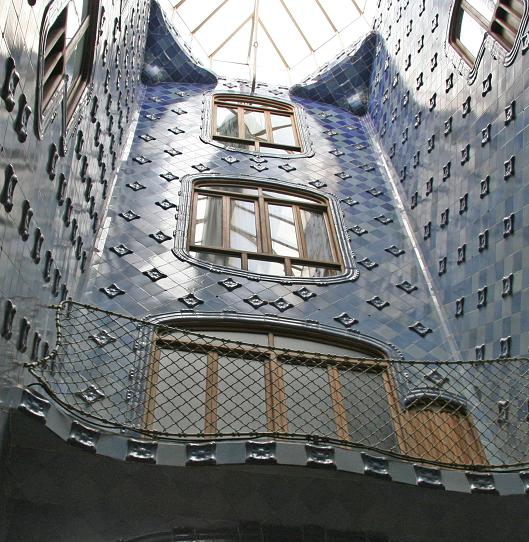
The light shaft

Image
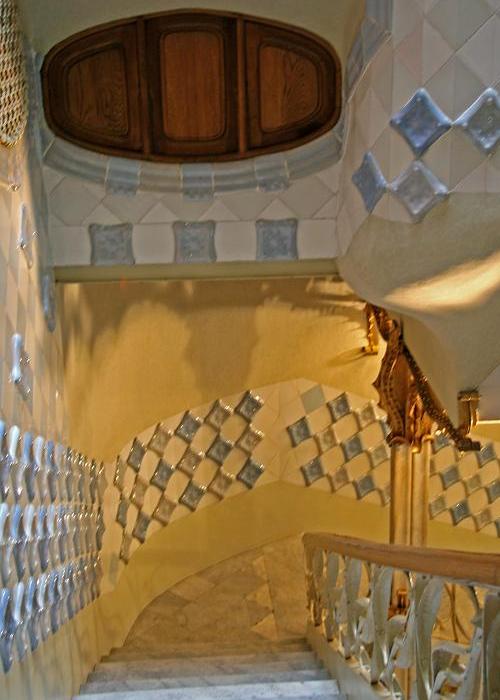
Stairs
Image
Stairs to the roof
Image
Cross on the roof

The Air is on Fire

David Lynch — This man was shot 0.9502 seconds ago.

David Lynch: This man was shot 0.9502 seconds ago.


The Air is on Fire was the name of an exhibition dedicated to David Lynch, I attended a couple of weeks ago at the Fondation Cartier pour l'Art Contemporain in Paris.

ImageDavid Lynch is essentially known as a filmmaker (Elephant Man, Blue Velvet, Lost Highway, Mulholland Drive, Twin Peaks etc.) with unorthodox narrative and visual style. He is also a painter, a photographer, a video artist. The exhibition brought together the various forms of expression he has employed since 1960, installed in an environment he designed, complemented by a series of concerts and projections he created.

David Lynch's universe is unique, dark, often violent, usually with a disconcerting touch of humour though. His static work develops the line of thought outlined in his movies — or maybe it is the opposite. It calls to mind fantasies of his youth, torments of his adult life.

ImageThat said, I found the show as disturbing as Lynch's movies. It made me feel ill at ease on several occasions. Yet I was feeling all the time I was watching at a huge artistic event.

The first part of the exhibition displayed Lynch's paintings, installed by himself. Steel gantries with curtains (that seem directly borrowed from Mulholland Drive or Twin Peaks) supported unframed canvas on which Lynch had glued various things (dolls' heads, clothes, glass eyes, knifes...) that were mixed into the paint afterwards. The paintings often showed scenes of rape and murder that associated violence and irony, the loneliness of people portrayed there reminding me of Francis Bacon's suffering figures sometimes.

ImageSeveral dozens of small pictorial pieces were presented in another room, without a title or a date. These were rough sketches and notes hastily put down on restaurant headed notepapers, paper handkerchiefs, matchboxes, visit cards, etc. These pieces are not decipherable in an objective way, yet they give away Lynch's obsessions and inside thoughts, as a journey deep into the inconscient of the artist.

Lynch's first short films were shown on the lower floor of the building, in a small projection room. Some of them dated back the 1970's, in which you could see the temptation of gore, as well as attempts at blurring significance of events and disclosing only one distorted side of the reality.

ImageOne hundred photographs or so were displayed, that looked like illustrations of his movies: femmes fatales, banal places with stifling atmosphere, and loneliness always. I loved several of them, probably I will write a specific blog about them some day.

Image At the end of the exhibition, a series called Distorted Nudes was displayed: these are digital images Lynch made using old erotic photographs as initial material, that have obvious analogy with the work of the Surrealists. Here also, you could see Lynch's belief that reality is not univocal, that any "normality" probably hides a monstrous reality.

The Air is on Fire is due to end tomorrow. Then, unless you planned to come to Paris this week-end, I strongly suggest you explore its website [click here], that contains several videos, including a tour of the show with David Lynch himself.

The Thorn Humans

Image Recommended accompanying music:
 
[When the War is Over by J.J. Cale & Eric Clapton]

Seeking on the Internet yesterday after last news in Iraq, I unexpectedly found : despite the ongoing conflict across the country, no bird species has gone extinct in the Mesopotamian marshes — that used to be among the most biodiverse regions in the Middle-East — since the last assessments were conducted in the 1970s.

A Field Guide to the Birds of Iraq was even published recently, the authors of which proudly state that it "covers the 387 bird species that have been recorded in Iraq", being the "first comprehensive, fully illustrated field guide to the birds of an Arabic speaking country and first field guide of its kind for Iraq".

Granted, several US soldiers are killed in Iraq every day. Granted again, several hundred thousand Iraqi civilians died because of the war that began 3 years ago, and bombs still kill dozens of men, women and children every day or so. It made me think that is a great pity that they are not Buddhists or Hindus, instead of Christians and Muslims. If they were, they could be reincarnated as birds! Hopefully, they would live and breed then, despite the noise of bombs.

Rostropovich

Mstislav Rostropovich at the Berlin Wall — November 11, 1989
Mstislav Rostropovich plays at the Berlin Wall — November 11, 1989

Mstislav Leopoldovich Rostropovich died today in Moskow, a few days after his 80th birthday. He was not only one of the best cellists ever, but a symbol of freedom and resistance to communist dictatorship.

Farewell, Slava.


M. Rostropovich plays Bach Cello Suite N°1
Related Posts Widget for Blogs by LinkWithin

Home

Atom
Feed
Timeless Music
The Magic Flute
by W. A. Mozart


Timeless Reading
Les Essais
by Michel de Montaigne